Reproduction
A basic understanding of the reproductive biology of ewes and rams will greatly aid in developing and managing an effective breeding schedule. The following chapter provides a brief description of timing of reproductive events in sheep.
Ewes:
Ewes are ‘seasonally polyestrous’. This means that they are sexually active only during a particular season and cannot breed during the remainder of the year. During the time that ewes are sexually active, they have regular estrous cycles. A complete estrous cycle includes development of an egg (ovum) on the ovary, readying of the uterus for pregnancy, a period of receptiveness to the ram (the heat or estrus period), and ends with the release of the egg from the ovary (ovulation). Since ewes are polyestrous (poly meaning ‘many’), there are multiple opportunities (or estrous cycles) for the ewe to conceive during a single breeding season.
Seasonality
Seasonality of estrous is controlled by the hours of light to which the ewe is exposed. In temperate areas of the world, ewes tend to enter a non-reproductive state during the spring and summer, and start cycling in the fall as the day length decreases. As the gestation length for the ewe is ~5 months long, fall breeding means the lambs are born in the spring. Under natural conditions, the warmer weather and ample feed during spring make it a favourable time of the year for lamb survival and growth. In tropical zones, where day length remains relatively constant, ewes tend to remain sexually active throughout the year. Breeds developed in more tropical areas (e.g. Merino, Rambouillet) or breeds selected for out-of-season breeding (e.g. Rideau Arcott) are less governed by the seasons even when moved to temperate areas. Breeds developed in temperate areas, such as the British breeds, tend to have shorter breeding seasons.
Puberty
Puberty in ewes is marked by the first ovulation. Puberty appears to be dependant on body weight. Most ewe lambs will reach puberty by the time they have developed to 50-70% of their body weight. The onset of puberty is influenced by genetic and environmental factors, including the breed, level of nutrition, and the season of birth.
- Breed: In most breeds puberty occurs between 6 to 9 months of age, although some early maturing breeds such as the Finnsheep will reach puberty at 3-4 months.
- Nutrition: Maturation of the reproductive system will be suppressed if there is a threat to the survival of the animal. If the plane of nutrition is not high enough to provide energy requirements for growth and other body functions, puberty will be delayed. In heifers the proportion of body fat has been implicated as a more exact trigger for puberty than body weight or age alone.
- Season of birth: Ewe lambs born in the spring generally reach puberty by the following fall (~6 months of age). Fall born lambs may not reach puberty until the following fall (12 months of age).
Estrous Cycle
The average estrous cycle (time from one ovulation to the next) is typically 17 days in the ewe. However, there can be considerable variation in this time due to differences among breeds and individual ewes. In other livestock species it has been found that although there may be wide variation among individuals, cycle length for the same animal is relatively constant. Environmental stressors, such as poor nutrition and severe weather (cold or heat), may disrupt cycle regularity. Variation in the length of the cycle may also be due to the stage of the breeding season. Cycles may be abnormally long or short at the beginning or end of the breeding season. Ewes are less likely to conceive, or maintain the pregnancy if they do conceive, when bred during the extreme boundaries of the breeding season.
 Estrus or Heat
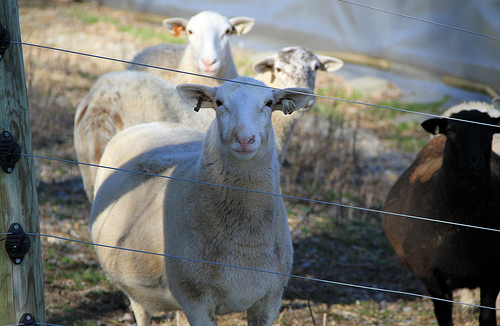
This is the phase of the estrous cycle when the ewe will be receptive to the ram. Complete estrus generally lasts for about 24 to 36 hours in the ewe. Estrus has different stages, characterized by the ewe’s receptivity to the ram. Standing estrus occurs when the ewe will allow the ram to mount and breed. This stage generally lasts ~10-12 hours.
The length of estrus is influenced by:
- Breed
- Stage of the breeding season (tends to be shorter at the beginning and the end of the season)
- Presence of a ram (may be shorter when a ram is present)
- Age (may be shorter for ewe lambs)
Unlike many other livestock species, ewes tend to show very few behavioural and physical signs of estrus. In some cases, ewes may be more restless than usual, the vulva may appear slightly swollen and there may be mucous discharge from the vagina. However, these signs are not observed for most ewes, and estrus is difficult to detect if the ram is not present.
 Ram Effect
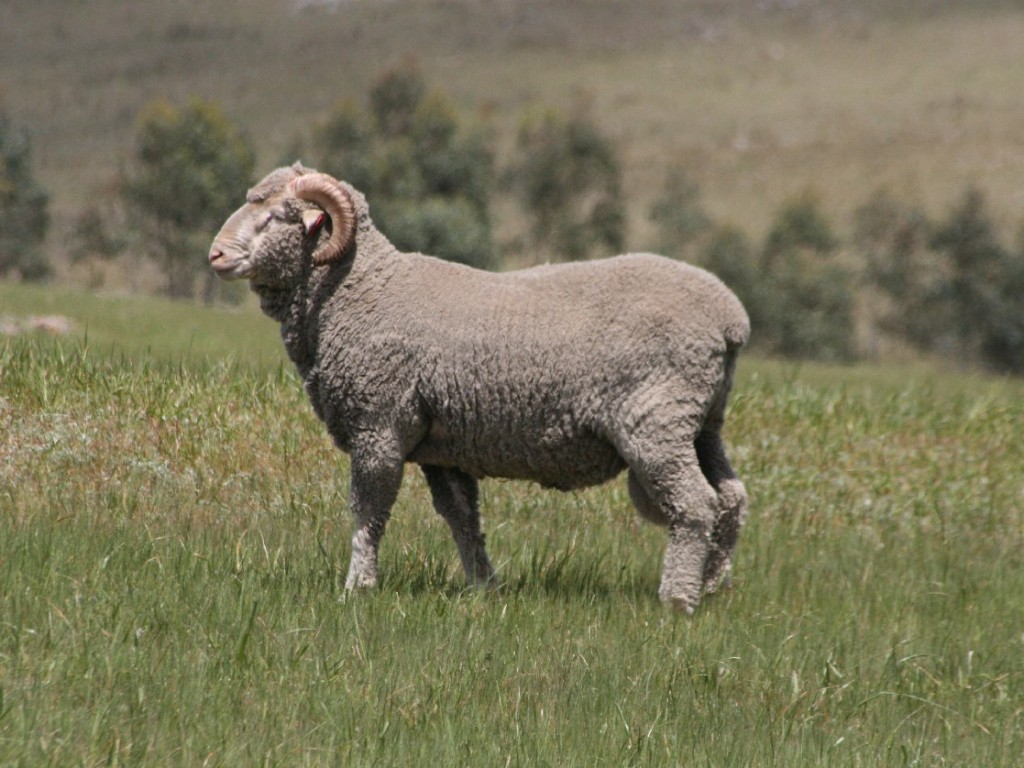
Placing a ram with ewes that are just entering the breeding season will cause most ewes to ovulate within a week, and they will begin cycling regularly within the next cycle. This ‘ram effect’ is thought to be caused by pheromones (scent hormones) released from the ram and detected by the ewe. This effect can be used to help start the breeding season and to synchronize the ewe flock, so they will enter estrus at approximately the same time. This can help concentrate and shorten the lambing season. It has been found that ewes are most fertile during the third or fourth cycle of the breeding season. Using a vasectomized teaser ram will synchronize the flock, but prevents ewes from being bred too early in the season.
Ovulation
Ovulation (the release of the egg(s) from the ovary) generally occurs near the end of the heat period (~24 hours after the onset). The egg(s) will enter the fallopian tubes, and gradually (~72-96 hours after ovulation) will enter the uterus. Standing heat or estrus corresponds with the optimum time for conception, allowing for the transport time of the sperm and the egg to the fallopian tubes. Fertilization of the egg by the sperm (conception) generally takes place while the egg is in the fallopian tubes. Eggs remain viable (capable of being fertilized) for approximately 10 to 25 hours after ovulation.
As sheep often have multiple births, more than one egg may be released during the same estrus period. Although not all ova (eggs) that are release will be fertilized, there is a greater likelihood of multiple pregnancies if the ovulation rate is high. The ovulation rate is dependent on:
- Breed: Most breeds average ~1.5 eggs/estrus. Some very prolific breeds, such as Finnsheep, average 3 eggs/estrus.
- Age: Ovulation rate tends to increase with age, reaching a maximum at 3 to 6 years, and generally declines in older ewes.
- Nutrition: Flushing involves increasing the plane of nutrition before breeding to increase ovulation rate.
Hormonal Control of the Estrous Cycle
Fluctuations in hormone levels control the reproductive system in the ewe. This includes the seasonal cycle as well as the estrous cycle. The hormone melatonin is thought to control the seasonal pattern of the reproductive system. Melatonin production in the brain is controlled by the amount of daylight. Changes in melatonin production through the year act on brain centres controlling the reproductive system to either trigger or inhibit the production of the reproductive hormones. The light perceived by the ewe doesn’t have to be natural light, and controlling light exposure is one method of having ewes cycle out-of-season.
The estrous cycle is controlled through the balance of two hormones produced by the ovary; estrogen and progesterone. The egg develops within a structure called the follicle on the ovary. The cells surrounding the follicle produce estrogen. As the follicle grows and the egg develops, the level of estrogen produced increases. Estrogen is the predominant hormone for approximately 4-5 days in the estrous cycle. When the level of estrogen in the bloodstream reaches a high enough level, it activates an area of the brain that releases a hormone (a gonadotrophin) that causes the egg to ovulate. After ovulation the structure called the corpus luteum (CL) develops in place of the follicle and produces the second ovarian hormone, progesterone.
Progesterone is the predominate hormone through most of the estrous cycle. It is also high throughout gestation in the ewe and acts to maintain the pregnancy. The corpus luteum regresses as the next egg develops. The fall in progesterone and the increase in estrogen will induce estrus behaviour in the ewe (i.e. she will be receptive to the ram). Among other factors, a uterine hormone called prostaglandin causes regression of the CL. Administering external hormones is another means of inducing out-of-season breeding and synchronization of estrus in ewes.
Problems with hormone release may result in a disruption of the cycle, which will decrease fertility. For instance, ovulation may not occur, which will cause the level of estrogen to remain high and halt the progress of the cycle. Alternatively, the corpus luteum may not regress which will cause progesterone to remain predominant. Examination of the reproductive system of a ewe that is not cycling properly may reveal what the problem is, and treatment with external source of a hormone may be enough to remedy the problem. The ewe may be prone to similar disruptions in the future and depending on the value of the ewe, culling may be the best solution.
Gestation
After conception, the fertilized egg(s) moves through the fallopian tube to the uterus. The developing embryo will remain in the uterus for the duration of the pregnancy. The uterus in the ewe consists of two coiled tubes (horns) that join at a midline to form the main part (body) of the uterus. The lamb(s) develop in the horns of the uterus. Once established, the fetus will remain in the same horn throughout the pregnancy.
The placenta (afterbirth) consists of a series of membrane layers that develop from the embryo. Even with a single lamb the placenta will expand to fill the entire uterus. The surface of the placenta that is closest to the uterine surface will develop attachment structures (cotyledons or buttons). Within these structures the fetal and maternal tissues meet, allowing the transfer of nutrients to and waste from the fetus.
The cervix prevents microrganisms from entering the uterus and harming the embryo. The cervix, located at the juncture of the uterus and the vagina, is a muscular band of tissue that remains tightly closed during pregnancy. A thick mucus block is formed during pregnancy to completely seal the cervix, protecting the fetus and the uterus from infection.
The average gestation length in ewes is 147 days or ~five months. The length can vary by approximately a week, depending on:
- Breed (early maturing, prolific breeds tend to have a shorter gestation)
- Ewe age (gestation length increases with age)
- Gender of the fetus (male lambs tend to be carried longer than female lambs)
- Season (spring lambs are carried longer than fall lambs)
Ewes that are stressed (poor nutrition, subclinical disease etc.) may react by resorbing their fetus(es). This means that the fetal membranes are absorbed back into the ewe’s system. Resorption is likely if environmental conditions are perceived by the ewe to be unfavourable for lamb development or if there is a risk to the survival of the ewe. In the case of multiple fetuses, one may be absorbed while the other lamb is retained. Resorption tends to occur early in pregnancy. After a certain stage of pregnancy the fetal material cannot be resorbed by the ewe and problems later on in pregnancy tend to result in abortion (fetal membranes are ejected from the uterus). If lambs die while within the ewe and are not resorbed or aborted, the ewe will quickly become poisoned by the fetus and will die if the lambs are not removed.
Pregnancy checking using ultrasonography will help determine which ewes are bred, and which have multiple pregnancies. This will allow you to cull open ewes early in the season rather than feeding them through the entire gestation period. This also allows you to separate the ewes into groups based on type of pregnancy (single vs multiple) to ensure that ewes under greater nutritional strain are provided with adequate resources to prevent fetal absorption or metabolic problems after lambing.
Postpartum
This is the period after the ewe has lambed, including uterine involution (recovery of the from pregnancy) and the resumption of reproductive activity. Uterine involution is generally complete within a month of lambing. The interval to the first postpartum ovulation will vary depending of the timing of lambing (i.e which season). If ewes lamb during the breeding season the first postpartum ovulation can be within 20 days, although this will not generally be a fertile cycle. As well as the season, other factors such as suckling by lambs, breed, nutrition, and environmental temperature may also have an effect.


