Commercial producers can improve productivity and efficiency by understanding and applying genetic principles. Improvement through genetics can be achieved using two different methods:
1. Selection
2. Crossbreeding
In order for commercial producers raising straightbred, single breed cattle to make genetic improvement, they must utilize selection, and provide an optimal environment for those cattle selected to express their genetic potential. Selection is an excellent tool with traits of moderate to high heritability such as growth rate and carcass traits. However, some of the most important traits related to beef cattle production, such as reproductive rate and calf survival, are of low heritability. This means the success of selection programs for these traits will be very limited.
Crossbreeding provides advantages from two main components, heterosis and complementarity. Heterosis (hybrid vigour) occurs when different breeds are mated together. One way to look at heterosis is that all purebred cattle are considered inbred as a result of breed formation and selection. Inbreeding leads to a reduction in performance, i.e. inbreeding depression. When different breeds are mated the crossbred progeny are less inbred than their parents. As a result the calves perform at a level above the average of their parents.
This is heterosis, or hybrid vigour. Traits with lower heritability tend to exhibit high heterosis. Therefore, heterosis is more important for key traits relating to reproductive efficiency and calf survival, which have low heritabilities and do not respond well to selection (Table 1).
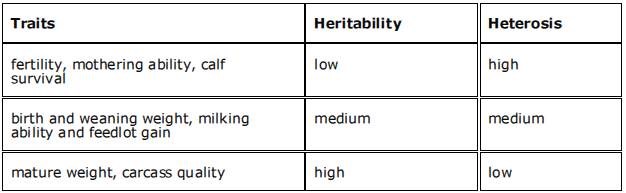
Table 1: Heritability and Heterosis (Hybrid Vigour) Comparison
Each breed has it strengths and weaknesses. Complementarity results when desirable characteristics from different breeds are combined into a crossbred. Crossbreeding achieves a higher frequency of desirable characteristics among crossbreds than that found in either single parent breed. An example of complementarity would be mating a Charolais bull (growth and retail yield) to a Gelbvieh Angus cross cow.
The result — the cow has the milk and the fertility, and the calf has more growth/retail yield. The characteristics gained from the mating complement each other. This effect of breed difference is powerful, but the choice of individuals from within a breed is also very important. Poor choices of breeds and animals from within a breed will have a lasting impact on the success of any crossbreeding plan.
Heterosis in a sound crossbreeding program can increase productivity in the beef cow herd by 20%–25% over a comparable straight breeding program. To fully utilize the potential of a crossbreeding program, the cows themselves must be crossbred. Crossbred cows, when compared with straightbred cows, make better mothers. Crossbred cows wean approximately 15% more pounds of calf/cow exposed than straightbreds. Another advantage is longevity and lifetime production.
Research in Nebraska shows lifetime production and longevity of Hereford X Angus cows (3,258 lbs. weaned over 11 years) and Angus X Hereford cows (3,514 lbs. weaned over 10.6 years) was significantly greater than straightbred Angus (2,837 lbs. weaned over 9.4 years) or Herefords (2,405 lbs. weaned over 8.4 years).
Heterosis Boost with Crossbred Cows
- 10% increase in conception rate
- 10% improvement in calving ease
- 7.5% increase in number of calves raised to weaning
- 5–10% increase in milk yield
Cumulative Effect = 15% increase in pounds weaned/cow exposed.
The advantages of crossbred calves due to heterosis are also significant. An optimum breeding system utilizes both methods of genetic improvement, with the mating of selected, genetically superior individuals in a well-planned crossbreeding program. This exploits both heterosis and complementarity.
Heterosis Advantage of Crossbred Calves
- 5% increase in number calves surviving to weaning.
- 5% heavier weaning weights
- 3% increase in postweaning gain
Combined Advantage = 10% more pounds weaned/calf born
Herd Level Production Improvements From Selection Or Crossbreeding
When calculating, at the herd level, the benefits from heterosis or selection over time, several factors have to be taken into account. Progress due to selection depends not only on the heritability of the trait, but also the intensity of selection, the genetic variation in the population, and the rate at which selected animals enter the herd (replacement rate). This makes the realization of benefits from selection a relatively slow process.
In contrast, benefits from heterosis are expressed at maximum value in each crossbred animal. This means that the payback from starting a crossbreeding system occurs much more quickly than from starting a selection program. For calf traits, maximum herd level heterosis benefits can be realized in the first year of a crossbreeding program, if all calves are crosses.
Figure 1 shows the expected economic benefits due to either selection or crossbreeding over a 5 year period, for the trait of calf livability (calves weaned/calves born). This trait has low heritability, but high heterosis potential. This example illustrates the difficulty in improving traits of low heritability through selection. Even after 5 years, the value of improvement from selection is very low (<$500 per herd), compared with benefits from heterosis (>$13,500). This represents a 34% increase in productivity due to heterosis, compared with the base straightbred herd. The economic benefit from increased calf livability in this case is 41 times greater for a crossbreeding program than for a selection program, over the first 5 years.
Figure 1: Value of Additional Production Due to Selection or Crossbreeding to Improve Calf Livability (1,2,3)
1 Accounts for heritability, selection intensity, genetic variation, cow replacement rate (20%), and parental contributions of sires and dams. Sires selected from top 10 % of population and replacement females from top 40% of heifer calves, for the trait of interest.
2 Heterosis from implementation of a 3 breed rotational crossing program in a straightbred herd. Combination of heterosis due to crossbred calves and retention of crossbred replacement heifers in the herd
3 Calves valued at $1.00/lb, base straightbred herd of 100 cows with 90% conception rate, 90% calf liveability and 500lb weaning weight. Base herd production value of $40,500 per year.
Figure 2 shows the anticipated benefits over time when these two different genetic strategies are used to increase weaning weight. This trait has moderate heritability and moderate heterosis potential. It is typically featured in selection programs in the industry. Although improvement in weaning weight through selection is significant, crossbreeding will result in twice the amount of economic benefit over the initial 5 years.
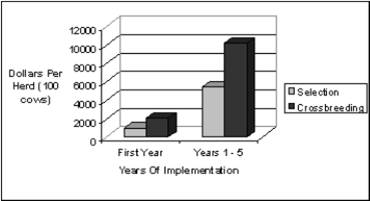
Figure 2: Value of Additional Weaning Weight Due to Selection or Crossbreeding (1)
1 Accounts for heritability, selection intensity, genetic variation, cow replacement rate (20%), and parental contributions of sires and dams. Sires selected from top 10 % of population and replacement females from top 40% of heifer calves, for the trait of interest.
Three of the key production traits in cow-calf systems are conception rate, calf livability and weaning weight. The cumulative combined impact of heterosis for these traits, over an initial 5–year period, would be an improvement of 16% in value of production, relative to a base straightbred herd. In contrast, a selection program would be expected to increase value of production by only 3%, relative to the base herd (assuming that selection for multiple traits was as efficient as for a single trait).
This demonstrates the very large potential benefits of crossbreeding in cow-calf production. If the option of purchasing hybrid females as a means of initiating a crossbreeding program were considered, the benefits from heterosis would accumulate even more quickly. It is important to note that both selection and crossbreeding may be practiced at the same time. A strategic plan which utilized both crossbreeding and selection would optimize the use of genetics in the beef herd.



