 Starting the Bed
When you have built your bed, put in a layer of bedding (feed) about 100 mm deep and give it a thorough soaking. Allow it to drain for twenty-four hours before you introduce your worms. When the time comes to put your worms in, simply sprinkle them across the surface. They will quickly burrow down. You will then have started as a worm farmer, and the sky’s the limit for you!
Watch your worms carefully at first. Use a thermometer (one from a Fowlers bottling outfit is ideal) and test the bed temperature so that you become familiar with worm behaviour at different temperatures. The favoured temperature for Reds and Tigers is 18° to 23°C, while Blues prefer a higher range of 20° to 27°C. Turn the bed lightly with a fork to see if the worms are favouring a particular part of it If they are congregating around the edges, there is something wrong with the bedding. It may be loo hot — over 27°C — which will probably mean that you are using fresh manure and have laid it on thicker than the ended 100 mm deep. The worms then go to the sides the bedding is cooler. Remove some of the feed by scraping y and soak the rest of it again.
Feeding
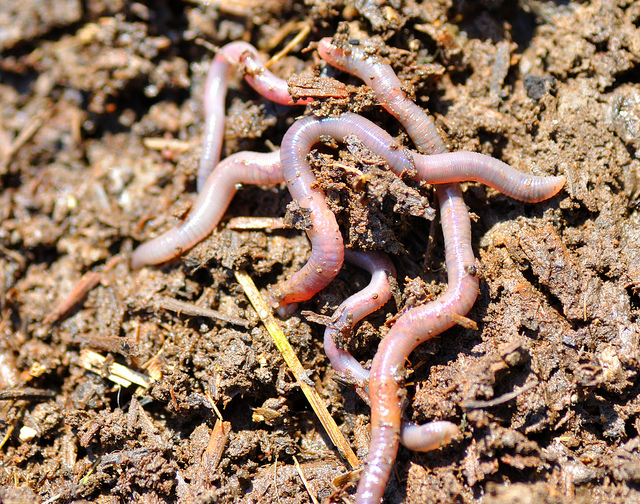
While you are gaining experience and first-hand knowledge of worm farming, try to match the application of feed just a little ahead of the rate of eating. You will quickly come to recognise the difference between castings and feed. A freshly fed bed has a lumpy irregular surface. After a couple of days the lumps disappear and the top of the bed becomes smooth. This tells you that the worms are eating what you last gave them and are ready for more You can check by disturbing the surface just a little. The sub-surface should be of a completely different character - dark and crumbly.
You must take care not to overfeed. Commercial worms are top-feeders, and if you consistently give feed faster than it is eaten, the worms will more up, leaving uneaten food behind them.
Commonsense is the key to feeding worms. A dense population will require heavy and frequent feeding. If the population is light, then feed a little and as required. To determine your best feeding rate, check by turning the bed. Always use a fork for this never a spade. Of all things worms  dislike, being cut in half by a spade is the highest on their list
DANGER!
If overfeeding is combined with over-watering or unusually heavy rain, excess water will displace the oxygen in the bed. The inevitable result is that the uneaten feed below the worms will turn anaerobic and sour. This doesn’t happen frequently but, while you are still a beginner, you should check your feeding rate by turning portions of the bed with a fork and inspecting the exposed bedding. If you see any uneaten feed, stop feeding until a future check shows castings only. You can then safely resume feeding.
If you smell any unpleasant odours, any at all, then the bed is probably souring and you risk the loss of your worms through Sour Crop. Worms with Sour Crop develop lumps behind the clitcllum To counteract souring you must immediately turn the bed with a fork to aerate it and, if it is moist to the point of being wet, dig in some drainage channels.



