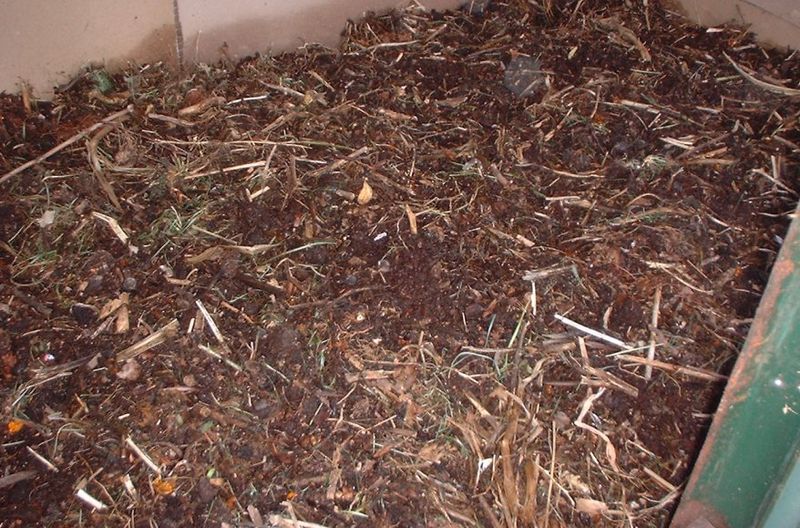
Earthworm Bin
Instead of or as well as the worms, you can sell their castings and this is becoming a very exciting prospect in worm farming. You can sell them in bulk to supply the inexhaustible market for re-conditioning of degraded soils or bagged for domestic use. There is also a very substantial potential for manufacturing germinating and potting mixes using worm castings as a base.
Remember, though, that the worm’s food is reflected in their castings and, just as you will get castings high in potassium if the worms are given food high in potassium, if there is a substance toxic to plants present in their food it will also be in their castings. For example, if you were to feed your worms exclusively on cardboard cartons, the boron contained in the glue would be reflected in the castings at levels which could be toxic to some plants. Find out the ingredients which have been used to produce your feed and if in any doubt use as many different kinds of feed as possible.
You can sell castings for use as:
Activated Compost
A particularly good soil conditioner is compost to which 10 to 20 per cent of vermicast has been added. Compost on its own is not a fertiliser, but organic material to bind the soil and increase its moisture-holding ability. Vermicast adds an organic fertiliser containing soil-benevolent bacteria which will use the compost for energy to produce aggregate forming polysaccharides it also contributes worm capsules. The young worms hatched from these capsules will do particularly well, feeding on the compost you have provided for them.
Don’t forget, also, that through vermicompost it is possible to establish a worm population throughout the garden, bringing with it all the benefits of soil productivity and, in these days of constantly increasing excess water charges, greater soil moisture holding stability. Worm-populated soil can retain over 6.5 times the moisture of similar soil without worms. This means less water is needed to achieve the same result, which is money in your pocket Activated compost is the product of the domestic waste converter, the Earthworm Composter.
Fertiliser
This can be sprinkled around the plant base and lightly dug in. Alternatively, you can broadcast it by hand, or use a seed spreader. Always water well and mix in. Another method is to mix it with water and apply with a watering can, spray rose removed. Large scale application can be by means of a conventional fertiliser spreader. Or, you can mix the castings with water and use a liquid manure spreader. Remember always to mix castings into the soil to gain the best results.

Worm Castings, Attribution Ceridwen
Germinating mix In pure form, castings will provide a superior rate of germination and the seedlings produced will be unusually healthy.
Potting Mix
Twenty to thirty per cent vermicast, mixed with any other medium which does not have a nitrogen demand, is an excellent formula which will provide sufficient nutrition to sustain vigorous healthy growth for up to six months.
Soil Conditioner
A good sprinkle of castings around 2 to 3 mm deep worked 25 to 50 mm into quite barren soil and watered well will produce amazing results for the first season’s plants. It’s never too late to apply castings and each successive year will see further improvement, especially if more are applied each year.
Tree Planting
Responsible farmers are carrying out fairly large-scale tree planting programmes these days. Sometimes, the failure rate can have a dampening effect on enthusiasm and on the hip pocket. If 1 to 2 kilos of castings are used to bed in each tree, a high success rate will usually result.



