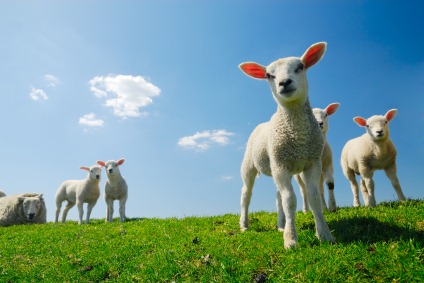
 As with all free market livestock commodities, lamb price fluctuates throughout the year and from year to year. Before you decide when to market your lambs it is important to learn as much as possible about typical price patterns and what to expect when marketing lambs of different weights. You may wish to market lambs at different stages to take advantage of various marketing opportunities, rather than relying on a single market for one weight range.
Market Cycles
Long-term Cycles
Long-term price cycles tend to last for several years and continue to repeat the same pattern over a long period. Changes in price trends (either up or down) are due to changes in product volume, feed availability and cost partially dependent on weather), international and inter-provincial trade activities, and the overall state of the economy. The lamb market is based on free market trade and is not controlled by a marketing board or quota system. In this type of market, the number of producers often triggers the changes in the long-term cycle. If prices have been high for several years, the number of new producers entering the industry will increase. If demand remains the same eventually there will be an oversupply of the product. With more product on the market, the price falls and the cycle will repeat. Although the sheep industry does go through these cycles, it is estimated that only ~41% of the demand for lamb is provided domestically. There is ample room for the industry to grow if imported lamb is replaced with domestic product.
Seasonal Cycles
To a certain extent prices in all livestock markets tend to follow seasonal patterns and conform to the pattern every year. Seasonality in price occurs as a result of the interaction of consumer demand and the supply of the product. Fluctuations in consumer demand for lamb are largely based on cultural traditions, from centuries-old religious celebrations to more recent rituals, such as barbeque season. On a seasonal basis, changes in product supply are due to sheep biology and the prevalence of various management practices, such as out-of-season breeding. The influence of supply and demand lead to distinct seasonal price patterns in each of the lamb weight groups.
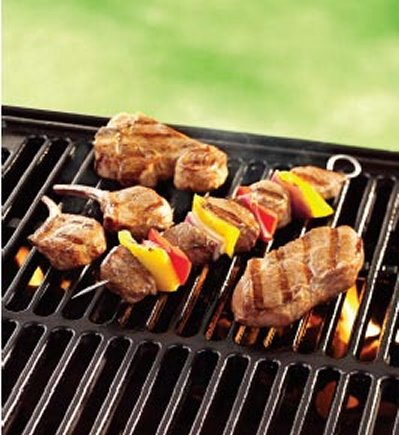
Lamb Barbecue
i. Market Data:
Lamb Barbecue
To gain a clearer picture of the changes that occur during the year, it is advantageous to look at market data from past years. The supply of lambs under 65lbs increases dramatically at specific times during the year, whereas changes in the 65-79lb group are prolonged and consistent. Generally speaking, prices in all groups are highest for the first few months of the year. They fall relatively quickly from mid April until mid June, at which time the decline levels off. The lowest prices of the year tend to occur in the late summer and early fall. Although price per pound is higher for the lighter lambs, the price received per head is higher for lambs over 80lbs. The extra cost of feeding lambs to higher weights should be taken into account when considering marketing heavier lambs.
ii. Sheep Biology and the Markets:
Traditional fluctuations in the supply of lamb throughout the year are in part due to the seasonal nature of sheep reproduction. Left to their own inclinations, sheep will breed during the shortening day lengths of the fall and lamb in mid to late spring. Although more producers are going to year-round or out of season breeding systems, many producers have a single lambing season in the spring. The supply of lamb, therefore, tends to increase after mid-June and peaks in August and September. The price paid is influenced by the availability of the product, and the time of peak supply generally corresponds with the lowest prices. More operations using year round productions systems would decrease the seasonal nature of the sheep industry. This type of operation is not for everyone, however, as there are often increased overhead and labour requirements. You must also choose a breed of sheep that is adapted to reproduce out of season and/or consider using methods of controlling the estrous cycle.
ii. Holidays and Ethnic Markets:
Lamb holds a significant meaning in the observances of many major religions, and lamb and mutton are dietary staples in many countries. A large portion Ontario’s population increase is due to immigration. As ethnic diversity increases, the traditional patterns of supply and demand for lamb in Ontario may change. As such, there is substantial advantage in learning about the type of lambs preferred for these markets. In particular, the Islamic faith is estimated to be one of the fastest growing religions in Canada. Lamb is a traditional dish for many important events and celebrations. As well as the holidays listed below, demand for lamb may increase before the summer long weekends and prior to various other ethnic observances.
Easter Eggs
Western or Roman Easter: Easter lambs should be freshly weaned (milk fed) and not older than 3 months of age. Numbers of lambs under 65 lb begin to increase approximately three weeks before Easter, and peaks during the week before Easter. Numbers of 65-79lb lambs tends to increase during this time as well.
• March 24, 2011
• April 8, 2012
• March 31, 2013
Eastern or Greek Orthodox Easter: Generally speaking the same type of lamb preferred for Western Easter is preferred for Orthodox Easter. Orthodox Easter very often falls on the same day or within a week of Western Easter, making it difficult to determine demand and supply patterns from past data.
April 4, 2010
• April 24, 2011
• April 15, 2012
• May 5, 2013
Passover: Passover is an eight-day Jewish observance, which generally falls in close proximity to Easter.
• April 19-26, 2011
• April 7- 14 2012
• Mar 26- April 2, 2013
Christmas: Lambs preferred for the Christmas market are similar to those preferred for Easter (ie. light weight and milk fed). Out-of-season breeding is required to produce the favoured type of lamb for this market. Christmas will fall on December 25 for the foreseeable future.
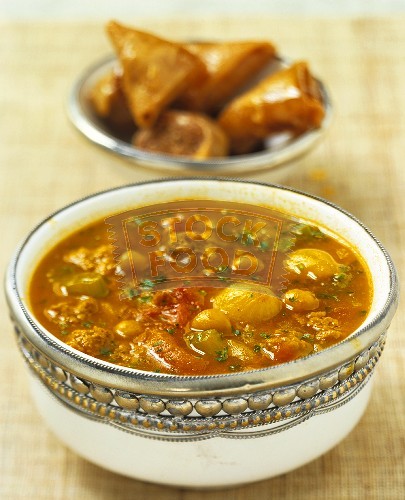
Ramadan soup with lamb and chick-peas
Ramadan: Ramadan is the Islamic holy month. During the month Muslims fast during the daylight hours, but often prepare special foods for family and friends after the sun has set. Lambs can be either male (castrated or intact) or female and not older than one year of age. Preferred lambs are between 60-80lbs live weight and not overly fat. The first day of observance can vary slightly from the dates stated (see the Note on the Hijah or Islamic Calendar below).
• August 11, 2010
• August 1, 2011
• July 20, 2012
• July 9, 2013
Id al Fitr: Id al Fitr is the Festival of breaking of the Ramadan fast, and occurs at the end of the month of Ramadan. Generally the same type of lamb is preferred as for Ramadan.
• September 10, 2010
• August 30, 2011
• August 19, 2012
• August 8, 2013
Id al Adha: Id al Adha, the festival of sacrifice, is one of the most important observances in the Islamic faith. Lambs should be under a year of age and be unblemished. Blemishes may include open wounds, torn ears or other physical unsoundness. In some cases, wethers and lambs with docked tails may not be acceptable. This observance may also be referred to as Qurbani. Although this term more correctly refers to the actual act of slaughtering the animal.
• November 17, 2010
• November 6, 2011
• October 26, 2012
• October 15, 2013
Note on the Hijah or Islamic Calendar:
One of the more confusing aspects of marketing lamb for Islamic holidays is that these events do not occur within specific seasons or on fixed dates of the Gregorian (Western) calendar. Since ~638 AD, the timing of these observances has been determined using the Islamic (Hijah) calendar. This calendar has twelve months with each new month beginning at sunset on the day the crescent moon appears. As the calendar is based on lunar activity, the 12-month rotation occurs in approximately 354 days. Therefore the months move backwards through the seasons and occur approximately 11 days earlier every year according to the Western calendar. The start of each month of the Hijah calendar is based on actual sightings of the moon and/or astronomical calculations. The importance of sightings versus calculations varies from place to place, with some relying heavily on physical sightings and others using only calculations. If sightings are required, the first day of the month may vary slightly from the predicted starting date depending on atmospheric conditions and other events affecting the sightings.