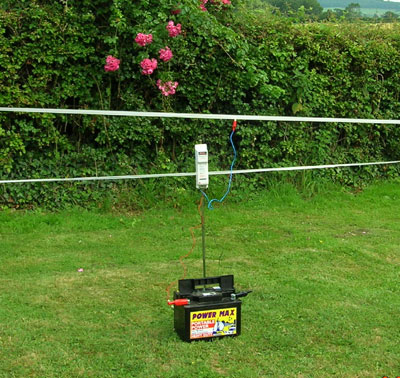
 An electric fence is a psychological and physical barrier that keeps farm animals in and wild animals and vermin out - even over long distances.
How electric fencing works
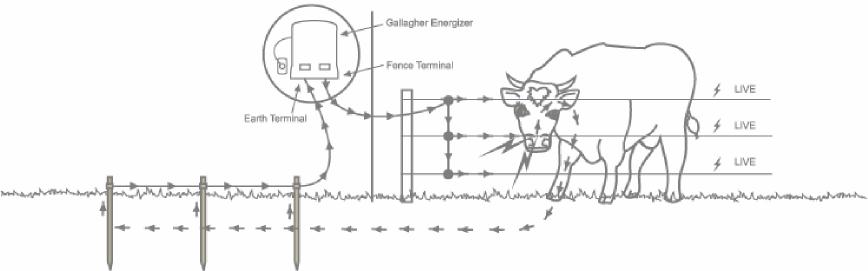
A pulsed electric current is sent along the fence wire, about one pulse per second, from an energizer which is earthed. When the animal touches the fence it completes the circuit between the fence and the ground and receives a short, sharp but safe shock. The shock is sufficiently memorable that the animal never forgets.
Why Electrified Fences Work
Electric current (AMPS) only flows when a circuit is completed between a positive and negative terminal.
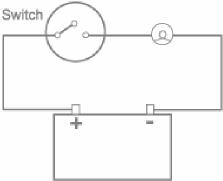
Diagram A In this diagram the current cannot flow from the positive terminal to the negative terminal because the switch is open.
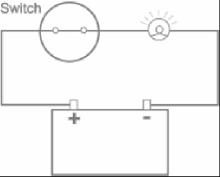
Diagram B In this diagram the switch is now closed, allowing the current to flow from the positive terminal through the light bulb (lighting the bulb) to the negative terminal.
An electric fence circuit is made on a larger scale. The energizer fence terminal (positive) is connected to the insulated fences wires, and the energizer earth terminal (negative) is connected to galvanised metal stakes driven into the ground.
The same ‘circuit completion’ (as in Diagram B) is necessary before the animal gets a short, sharp but safe shock. An animal standing on the ground and touching the electrified wires will complete the circuit like the closed switch in Diagram B above. The shock is sufficiently memorable that the animal never forgets.
Because the electric fence is also a psychological barrier, it does not require great strength to be effective. However, it must be well designed and constructed to absorb some pressure from animals, snow and wind. The energizer must have enough power for the length of the fence and for the animals being controlled.


