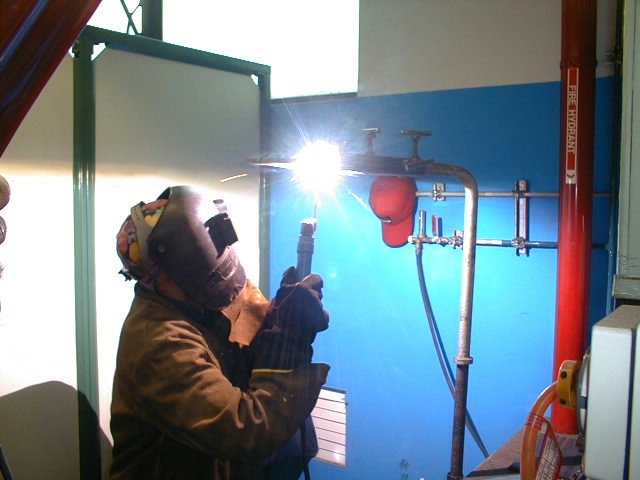
 How to Weld Metal
When deciding how to weld metal you first need to determine the type of metals you are planning to work with. While there are many different types such as stainless, cast iron and bronze, we will assume for this article that we want to learn how to weld metals such as mild steel and aluminum.
Mild steel is the most commonly used of all metals and would be what you would purchase from your local merchant for your construction projects. This includes profiles such as thin sheet metal, tubing, pipe, angle iron, square and round hollow sections and flat and round bar.
The difference between pipe and tubing is generally the wall thickness and the methods of manufacture. Pipe is made in thickness of around 1/8″ up to 1/4″ for general work and in heavy industry pipes have even much thicker walls depending on the application.
Welding mild steel pipe is best carried out using a Mig welder or by using arc welding or stick welding. In cases where pipe work is a line for fluids the butt welds would generally need to be of xray quality and have no imperfections. This type of weld would also be performed by using the Tig process especially for smaller pipes and using stainless steel pipe.
Tubing is a lighter construction and is used for furniture making and light structural work, and range up to 1/8″ in wall thicknesses. Welding this type of material is best done using a Mig welder as they can be turned down to lower power settings, although arc welding can be used it requires more skill from the operator to avoid burning through the tube wall.
For general purpose welding a Mig welder is the most versatile machine to use, they can be used for both metals and aluminum provided you use the appropriate wire to suit the job. A machine of around 250 amps is all that would be required in a small workshop or for home use. While learning how to weld aluminum is more difficult to do than how to weld steel both can be accomplished by anyone with a little practice and guidance.
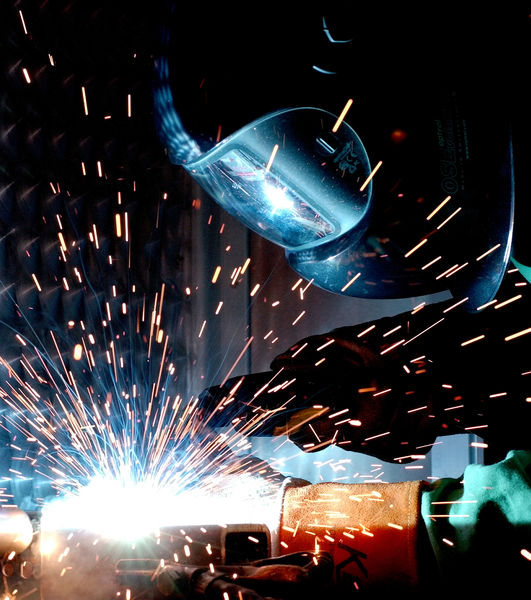 Mig Welding | How to Mig Weld
Mig welding is commonly referred to as gas metal arc welding (GMAW), this type of welding is today the most popular and versatile method of welding. It is used in production and maintenance work and can be applied to heavy engineering, light engineering and construction work to auto body work. For example production line robotic welders in auto manufacture are Mig welders. Mig welding is perfect for day to day factory work as well as being ideal for the home or small workshop.
Mig welding uses a power source and a wire feeder that feeds the wire electrode through the welding gun to the weld. The wire feed consists of a set of drive wheels for the wire and a constant speed motor to turn the drive wheels. The wire electrode comes in various coil sizes, or spools depending on the welds to be performed. These spools can be mild steel, stainless steel or aluminum in accordance to the job, and can contain hundreds and even thousands of feet/meters of wire. Most Welding machines have various functions allowing timed feeds and variable speeds.
The wire is feed through a cable that also contains a shielding gas hose and allows the electrode to run smoothly without bending or kinking. The shielding gas, or inert gas protects the weld from contamination during the welding process. Welding wires can differ with solid wires used for aluminum, stainless steel and mild steel, but also flux cored wires are also used for use on heavy steelwork.. A gasless wire is available for mild steel, this is useful in outdoor or on site situations where a gas bottle is impractical or breezes are a concern by blowing away any protective gases.
Inert gasses are gasses that will not react with metals or other gasses. With mig welding Inert gases are used to create a protective bubble around the arc and molten metal while the welding is being done. This gas is generally pure argon gas for aluminum and argon sheilding gas for mild steel applications.
Mig welding can be used to weld steel, stainless steel and aluminum , all requires slightly different gasses welding wires, and amperage settings. and due to the work requirements the heavier the metal being welded the more powerful welding machine needs to be.
For home mig welders a machine rated between 140 and 220 amps is most likely the best choice. This would allow working on metal thicknesses from 1/16″ up to 1/4″ including pipes, tubes, flat bar, round bar, angle iron, sheet metals and square hollow sections.
How To Mig Weld
Learning how to use a mig is not as difficult as it may seem. It is is the easiest method of welding and is a valuable skill to learn both for your personal use and projects or as a spring board to employment. When you Learn the skills required your home workshop will never be the same, you will be able to tackle all kinds of projects such as furniture, work benches , brackets, racks, chassis and frames, gates, repair broken parts and even larger projects such as house beams and steel deck framework.
If you seek employment, your new skills will open many new doors for you. There is a constant demand for semi skilled and skilled welders in fields such as production work, light and heavy engineering. Then there is the big money welder jobs in the oil and mineral industries. Once you learn Mig welding you also have the opportunity to start your own business.
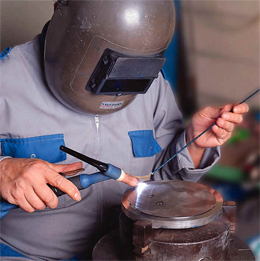 Tig Welding
Gas tungsten arc welding (GTAW), known as tungsten inert gas (TIG) welding, is an arc welding process that uses a non consumable tungsten electrode to produce the weld.
The weld area is protected from atmospheric contamination by a shielding gas (usually an inert gas such as argon), and a filler metal such as aluminum or stainless steel is normally used, though some welds, known as autogenous welds, do not require it. In this instance the metals are simply fused together. A constant-current welding power supply produces energy which is conducted across the arc through a column of highly ionized gas and metal vapors known as plasma.
Gas tungsten arc welding is most commonly used to weld stainless steel and light nonferrous materials, such as aluminum and magnesium, but it can be applied to nearly all metals, with notable exceptions being lead and zinc. Its applications involving carbon steels are limited not because of process restrictions, but because of the existence of more economical steel welding techniques, such as mig welding and arc welding. Tig welding can be performed in a variety of other-than-flat positions, depending on the skill of the welder and the materials being welded, although when learning How To Tig Weld the preferred practice position would be flat or down hand.
Tig welding process gives the operator greater control over the weld than competing procedures such as shielded metal arc and gas metal arc welding, allowing for stronger, higher quality welds. However, tig is comparatively more complex and difficult to master, and is significantly slower than most other welding techniques such as mig or arc welding. A related process, plasma arc welding, uses a slightly different welding torch to create a more focused welding arc and as a result is often automated.
Manual gas tungsten arc welding is often considered the most difficult of all the welding processes commonly used in industry. Because the welder must maintain a short arc length, great care and skill are required to prevent contact between the electrode and the work piece. Unlike other welding processes, learning hot to tig weld normally requires two hands, since most applications require that the welder manually feed a filler metal into the weld area with one hand while manipulating the welding torch in the other. However, some welds combining thin materials (fusion welds) can be accomplished without filler metal; most notably edge, corner and butt joints.
Although tig welding at first appears complicated the skill is easy to acquire through practice and tuition and when accomplished is the one of most satisfying and rewarding of welding operations. Reasons for this are very little cleaning of the weld is required; the finished weld is neat & tidy allowing an artistic feel to the work. Examples of quality tig welds are seen on bicycle frames, marine fittings, interior kitchen fittings and steel artwork.
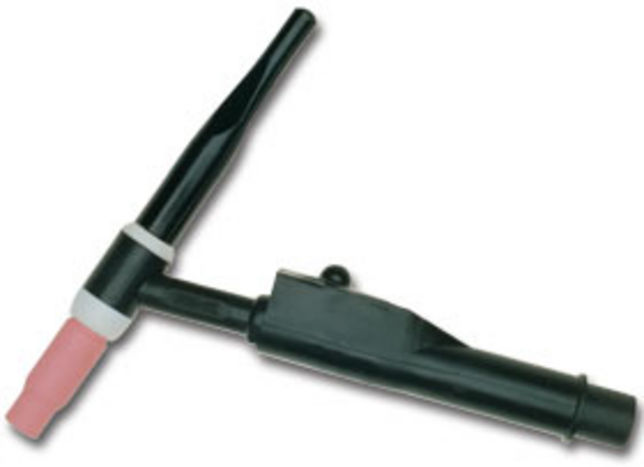 How to Tig Weld
Learning how to tig weld is similar in a way to oxy-acetylene welding. The work area to be welded is first heated to the point where fusion between the two parts can occur and a filler rod is introduced to help in the process. While on thinner sheet metals a skilled tig welder can fuse the parts together without a filler rod, a filler material is needed in most applications to build up the weld and give strength to the weld.
How to tig weld involves using a specialized welding torch that utilizes a tungsten electrode to create the arc. This electrode remains intact during the process and is held above the part to be welded just far enough to create an electric arc, about 5 to 10 mm. This arc heats and fuses the parts to be joined and also melts the filler material into the weld.
Tig welding requires more skill from the operator than it does for using mig welders or an arc welder. To use a tig welder the operator must manipulate the welding torch in one hand to control the length and size of the welding pool, to which the filler welding rod is added to the joint as needed using the other hand.
The tig welding process is much slower than mig welding and arc welding, and learning how to mig weld is an easier process. The advantage however is that the finish from manual tig welding is far superior and is perfect for welds on equipment and parts such stainless steel marine fittings, high performance bicycles and in the food manufacturing industries. These welds are visually appealing, strong, pure and require little or no clean up.
Tig welding machines are specialized welding equipment and can be used for welding mild steel, aluminum, stainless steel, brass and bronze, cast iron and precious metals such as gold, silver and titanium.


