 Water is an essential nutrient for all animals. It is important for both animal welfare and business profitability that cattle have an adequate supply of good quality water. Amount and quality of water required vary between species of livestock, between classes of stock within the species, and in response to the environment in which the stock are running (see Table 2).
The suitability of water for stock use is determined by the following factors:
• water quality, which includes salinity, acidity, toxic elements and compounds, and algal growth;
• environmental factors such as air temperature and feed quality;
• animal factors, which include breed differences and age and condition of stock.
Water quality
Quality of water is broadly defined as its fitness for consumption by livestock to maintain satisfactory production. The principal factors affecting water quality are as follows.
Salinity
The main factor which determines the suitability of water for stock is the proportion of dissolved salts in the water. Dissolved salts in water are expressed in milligrams per litre (equivalent to parts per million – ppm) or in terms of the electrical conductivity of the water, measured in decisiemens per metre (dS/m) or microsiemens per centimetre (µS/cm). Maximum advisable levels are shown in Table 1.
(1 dS/m = 1000 µS/cm = approx. 640 mg/L or 640 ppm.)
Generally, surface waters are low in salts compared with artesian or underground water. Many factors influence the concentration of salts that animals can tolerate in their drinking water. Salinity increases the intake of water by animals, partly through the taste and partly to allow greater water turnover so that the body can regulate the salt balance.
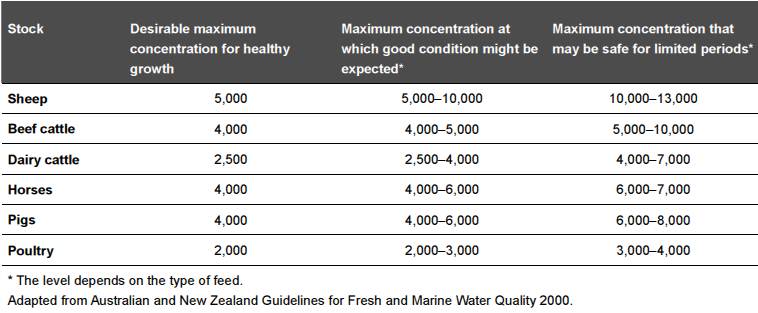
Table 1: Tolerances of livestock to total dissolved solids (salinity) in drinking water (mg/L)
Acidity or alkalinity (pH)
Water with a pH value below 6.5 (acid) or above 8.5 (alkaline) can cause digestive upsets in stock, resulting in rejection of the water, depressed appetite and consequent loss of production. If this problem is present, animals may perish, even when they apparently have adequate water.
Adding alum can correct high pH, but this should be undertaken with care as alum is highly acidic. Likewise, water with a pH below 6.5 can be treated by adding lime.
Toxic elements and compounds
Water is a potential source of important minerals and other compounds. However, the concentration of these substances can reach toxic levels, particularly in underground water.
There are a number of elements which, if present in high enough concentrations, can lower livestock productivity. These include iron, magnesium, arsenic, lead, mercury, selenium and the fluorides. Where productivity losses are suspected, the problem can be investigated by a veterinarian or livestock adviser. Such an investigation would include a detailed water analysis, combined with an examination of affected stock.
Algae growth or bloom
Algae occur naturally in both fresh and brackish waters. They respond to sunlight and fertilisers, and when environmental conditions are right, algal growth may occur that can make water unpalatable to stock.
Algal blooms are excessive growth of particular algal species. Blooms are most likely to occur when the water is still, warm and contains high nutrient levels.
All algal blooms can cause water use problems. However of most concern are those caused by blue-green algae, as a number of these are toxic.
Currently in NSW, only Coptrol Aquatic Algicide®, Cupricide Algicide® and Cupricide 110 Algicide® are approved for the control of blue-green algae and some other algae types. They must be used in strict accordance with their label conditions and directions. These products are registered for use in farm dams, rice paddies and irrigation conveyance systems. They must not be used in rivers, streams, creeks, wetlands, lakes or billabongs, and water treated with these products must not be allowed to spill into these water bodies.
Environmental factors
Temperature
In hot weather, animals use more water for evaporative cooling. Water consumption can increase by 78 per cent under extreme conditions. The provision of shade will largely relieve this situation. In normal conditions with good quality water, consumption in summer will be about 40 per cent higher than in winter. However, with salty water the summer intake may be 50 to 80 per cent higher than consumption in the cooler months.
The amount of water that stock drink also depends on the temperature of the water. Generally, animals prefer water at or below body temperature and avoid warmer water. Cool water is preferred in hot conditions.
Marginal quality water may become unsatisfactory during summer because animals drink more because of high temperatures and drier pasture. The salinity of some water may also increase because of evaporation from troughs, bore drains and shallow tanks.
Drought
During drought, stock require more water as they are forced to select more fibrous and less digestible feed. This extra water is used to maintain the movement of the coarse feed in the gut. As drought worsens and stock become weaker, marginal waters may become unsuitable as the animals’ tolerance of the salt decreases.
Feeding salt or salt-based licks or blocks during dry periods increases water intake. If water quality is marginal, this added salt intake may depress appetite and cause digestive upsets – the opposite of the supplement’s purpose.
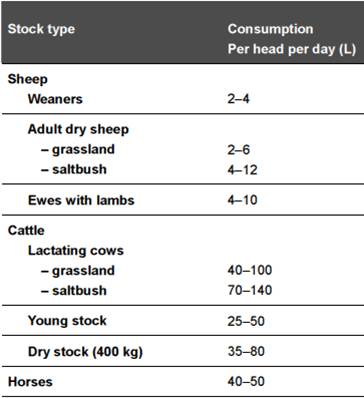
Table 2: Average water requirements of stock
Table 2: Average water requirements of stock
Pasture composition
The diet of stock has a large influence on their water requirement. Good green pasture can supply all an animal’s water needs. Good pasture allows stock to use water which would normally be unsuitable at higher levels of consumption.
Stock on dry pasture need increased water consumption to utilise the less digestible fodder.
In pastoral areas, stock grazing saltbush or other chenopod plants require large quantities of relatively low-salinity water. This is because of the high level of salt in the diet and the need for a high water turnover to maintain the salt balance in the body.
Animal factors
Age and condition of stock
Young animals, heavily pregnant or lactating females, and aged or weakened stock are less tolerant of saline water. In weaner sheep, high salinity depresses growth rate and wool production, and causes scouring.
Breed differences
Cattle of the Bos indicus or Bos indicus-infused breeds drink less water under hot conditions than do Bos taurus breeds (British or European breeds).
The consumption of water can be affected by the cleanliness of the watering point.
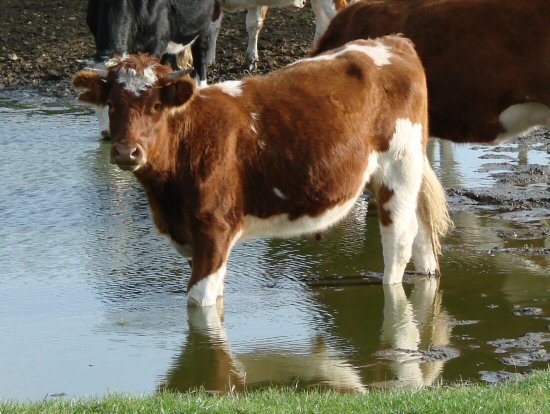
Where the water level in an earth tank is low, animals may be forced to wade through mud to get to the water. Due to the boggy surroundings, the water becomes heavily contaminated with suspended soil and faeces, which can make stock reject the water. Also, animals in weak condition may become bogged and die.
Such dams should be fenced off and the water pumped or gravitated to temporary troughing. This will ensure maximum use of the available water by avoiding fouling, and will remove the risk of stock losses from bogging.
Troughs used in watering systems should be drained and cleaned regularly. Algae grow in troughs, producing unpleasant odours in the water which can repel stock. Salinity also builds up due to evaporation if troughs are not drained.
The frequency of cleaning depends mainly on the temperature, which affects intake and the rates of evaporation and algae growth. The type of stock will also have some influence on the frequency of cleaning, as tolerance of contamination varies according to the requirements of the particular class of stock.
Contamination of trough water need only be very slight to cause problems with some stock.
Care should be taken when introducing stock to extensive paddocks or unfamiliar watering systems. When introducing stock to a new paddock, make sure they are familiar with the location of the watering point and are drinking the water, particularly in pastoral areas. If water quality is marginal or unknown, check newly introduced stock during the first week to ensure that there is no problem.
Watering radius
In pastoral areas, cattle normally graze within a radius of about 5 km.
If stock require more water due to lactation, salinity or dry feed, they may need to drink more than once a day. This will reduce their foraging radius and the area of the paddock being used.



