Some tips for keeping your rabbits healthy and free from disease:
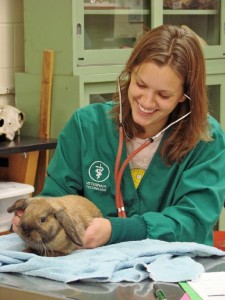
Be familiar with the symptoms of rabbit disease
- Be familiar with the symptoms of rabbit disease
- Build a rabbit hutch [cage] which can be easily cleaned and will keep your rabbit safe from the elements of weather. Build a roomy and comfortable hutch or cage. Your rabbit must remain dry and free of drafts. Place the hutch in an area where it will avoid dampness and excessive heat.
- Keep all your hutches and equipment clean. This will help you to avoid most infectious diseases and injuries.
- Learn to recognize rabbit diseases and treat at the first sign of illness should it become necessary.
- Isolate ALL new arrivals for two to four weeks. Water and feed them after the rest of the herd has been cared for.
- Beware of lending or borrowing rabbits for breeding. This is a good way to bring disease to your herd.
If you suspect something is wrong with your rabbit please do not wait – go to the vet immediately. Signs include bleeding, broken bones, watery diarrhea, no poop for more than 12 hours, not eating/drinking, un-responsive/lethargic/listless behavior, screaming, constant LOUD teeth chatter. Be safe not sorry. Go to the vet!
Viral Hemorrhagic Disease: What Is VHD?
Rabbit Viral Hemorrhagic Disease (VHD) is a highly contagious disease caused by a calicivirus that affects only rabbits of the Oryctolagus cuniculus species. This includes wild and domesticated European rabbits, from which our own domesticated rabbits are descended. It has not been known to affect any North American native rabbits or hares, such as cottontails, snowshoe hares and jackrabbits. VHD is also known by several other acronyms: RHD (Rabbit Hemorrhagic Disease), RCV (Rabbit Calicivirus), and RCD (Rabbit Calicivirus Disease). VHD was first seen in China in 1984, and has since spread to Mexico, Continental Europe, Israel, the UK, Australia and New Zealand.
Symptoms may include:
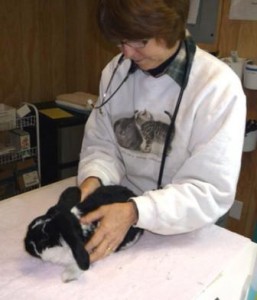
Calicivirus is a very hardy virus
- Loss of appetite
- Lethargy
- High Fever
- Spasms
- Sudden death
VHD, however, is often a very swift and sudden killer, giving little warning. Rabbits may die without showing any symptoms at all. Some bleeding from the nose, mouth and rectum is sometimes seen. Any sudden rabbit death is suspicious and should be reported to your veterinarian or the State Veterinarian as a possible case of VHD
- The incubation period of this disease is very short, and rabbits may die within 48 hours of exposure to the virus that causes VHD.
- The death rate of rabbits exposed to this virus is very high, between 50 and 100%, with the latter number probably being closer to actual mortality rates. Rabbits who survive this disease are carriers and shed the virus for at least 42 days, perhaps longer.
- Rabbit calicivirus is a very hardy virus, remaining viable in the environment for 105 days at 68F (i.e. remains stable for 105 days at room temperature) and for 225 days at 39F. It resists freezing.
- There is no known cure for VHD. Vaccinations are available in countries where the disease in endemic, but there is no vaccine currently available in the US.
How VHD is spread:
As was mentioned, VHD is highly contagious. It can be spread by:
- Contact of a rabbit with inanimate objects contaminated by the virus (i.e. via fomites). Such object would include clothing, shoes, and car and truck tires.
- Direct contact of a rabbit with an infected rabbit or the feces of an infected rabbit.
- Contact with rabbit products such as fur, meat or wool from infected rabbits.
- Insects, birds, and animals such as rodents are known to spread the virus by acting as indirect hosts. They can transport the disease, for example, from an infected rabbit to an unaffected rabbit.
- Humans can spread the virus to their rabbits if they have been in contact with infected rabbits or in contact with objects contaminated by the virus, including feces from an infected rabbit.
How to Protect Your Rabbits:
- House your rabbits indoors. We strongly suggest that they be kept indoors, or in enclosed environments. Rabbits who live or exercise outdoors are more at risk for contracting this disease.
- Wash your hands thoroughly before handling your rabbits, particularly when you come home from places where other rabbits may have been, or where people who have been in contact with rabbits may have been. This would include places such as feed stores, pet stores, fair grounds, humane societies, etc.
- Change your clothes and wash your hands after handling or coming in contact with rabbits. Wash these clothes twice in hot water before you wear them around your rabbit.
- If you volunteer at a shelter, then have some special clothes and shoes that you wear only at the shelter. You may want to wear plastic bags over your shoes, secured with a rubber band. When you leave the shelter, remove the bags and dispose of them before you get into your car, making sure not to touch the outside of the bag. Follow clothes laundering instructions above, and shoe disinfecting instructions below. This protects the shelter rabbits as well as your own. The same considerations apply to anyone who sees rabbits at work and also has rabbits at home.
- Adopt a “no shoes in the house” policy, or keep your bunnies from running in high traffic areas of your home. To disinfect shoes that may have been contaminated, you need to place the shoes in a foot bath that contains one of the following: 10% bleach solution, 2% 1-Stroke Disinfectant, Parvosol, or parvoviricide disinfectant. You may wish to speak with your veterinarian about how to obtain these. The shoes must be in contact with the disinfectant for at least ten minutes. The foot bath is recommended as it is important that during the ten minute disinfection time that the disinfectant remains wet. Merely spraying shoes with disinfectant and leaving them to dry is not effective.
- Know your sources of hay and feed and if they are near areas of any outbreaks.
- Minimize insects in your home by installing window and door screens. Eliminate mosquitoes and flies from your home.
- Quarantine any new rabbit for 5 days. Always handle quarantined rabbits last, and keep all supplies for them separate from your other rabbit’s supplies.
- To disinfect objects, use one of the disinfectants above, remembering that it must stay in contact with the item and remain wet for at least ten minutes.
What You Can Do:

Shared information helps save rabbits
Educating yourself and others about VHD is one of the best ways to help protect your rabbits. Don’t panic, but get involved on spreading the word to others in the rabbit community. Informing veterinarians, shelters, pet stores that sell rabbits and fellow rabbit lovers about VHD is important to helping to protect all rabbits. Make copies of this article to show your local vets, etc., and refer them to above websites. The VHD in the US Coalition website has informational flyers that you can download and distribute as well. Your help is needed to spread the word!
Most Important: Protect all Rabbits from VHD;
Unexplained and suspicious rabbit deaths, especially when they occur in clusters of several rabbits dying in a short period of time, should be reported to your local veterinarian. All veterinarians are being instructed to report any suspicious deaths to the State Veterinarian. This is very important to prevent the spread of this awful disease. If you suspect that you have a possible case of VHD, do not bury the body or take it out of the house, but call your vet to learn the proper handling procedures. To conceal an infected rabbit or knowledge of a VHD infection is to sentence many other rabbits to death as well. In areas of the world other than the US it is advised that you contact your local veterinarian about these issues.