Breed:Swedish Vallhund
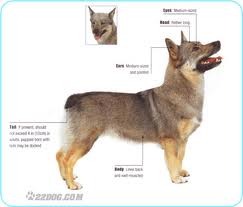
Swedish Vallhund working dog.
Temperament: active, easy to please
Maintenance: low - medium
Lifespan: up to 15 years
Recommended for: families, active people
History:
Swedish Vallhunds or ‘Vasgotaspets’ as they’re known in Sweden were developed as an all-purpose farm dog. Good all rounders, they are traditionally used to control vermin, herd cattle, guard stock and act as watch dog. However the Vallhund is not by nature aggressive. When guarding, it will simply alert its owner of strangers or predators by barking.
Very little is known about the origins of the breed. Its Spitz-type appearance suggests that it may have originated in the cold Arctic regions of the north. Likewise, its similarity to the Pembroke corgi cannot be ignored, thus leading to the theory that the ancestry of the Swedish Vallhund lies with the vikings, perhaps returning to Scandinavia with similar dogs after having settled in Pembrokeshire, Wales.
By the 1960s the Swedish Kennel Club undertook a breeding program to enhance the breed’s working capability. Despite their working heritage, Swedish Vallhunds are today kept more commonly as companion animals. The breed first arrived in Australia in 1981 but numbers are still small.
Appearance:
It is not uncommon for the Swedish Vallhund to be mistaken for the Corgi, much to the disappointment of Vallhund owners. Although similar, there are some significant and identifiable differences. Like the Cardigan Welsh Corgi, the Swedish Vallhund is a true dwarf. Unlike the Corgi, the
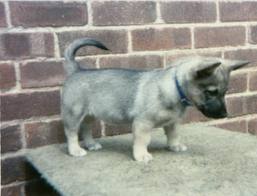
Swedish Vallhund Puppy
Vallhund is born with a short tail. It carries a dominant gene causing the dog to have a bob tail about 10cm long. The Swedish Vallhund is a well built muscular dog, with longer legs than the Corgi plus a shorter body and a finer, more fox-like head.
The Swedish Vallhund is widely regard as a more robust and active dog. The outer coat is thick and harsh with a water resistant under coat. The coat colour about the head is lighter, with a mask appearance. A lighter marking, called a harness mark, is also present over the shoulders. Colours are varying shades of grey through to red. The coat colour is sable-like with dark guard hairs.
Temperament:
The Swedish Vallhund is an active, fun-loving dog with a friendly temperament. Its likely Spitz origins are demonstrated by the breed’s pack mentality, however this is not as extreme as can be seen with the Alaskan Malamute or Samoyed. Also true to the Spitz breed, it may be stubborn, but early obedience training can overcome this issue and will prove very rewarding. This breed requires an owner who will demonstrate themselves as the pack leader, not the dog’s equal. This status will ensure that the Vallhund does not become unmanageable and domineering. The Swedish Vallhund’s pack origins also ring true when it comes to company. They will prefer the company of other dogs or their owner rather than being alone. They are intelligent and very inquisitive
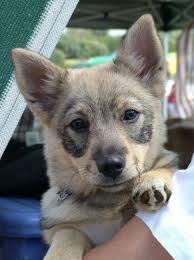
Swedish Vallhund Working Dog.
dogs. Vallhund owners say the dogs are ‘sticky beaks’ and like to know exactly what’s going on.
Care and maintenance:
The thick undercoat of the Vallhund sheds once a year. This fine hair will stick to everything, so the dog needs to be brushed at least once a day to clear the coat. At other times, 5 to 10 minutes grooming once a week will suffice. Owners recommend a bath about once a month for a pet dog. While the Swedish Vallhund is an active dog that enjoys exercise, it doesn’t require exhaustive running all the time. Simple companionship with its owners will suffice.
Health and lifespan:
15 to 17 years is the expected lifespan of a healthy dog. The gene pool is small in Australia, which may lead to some difficulties due to poor breeding practices. Poor temperament is one such factor. There are also problems linked to the bob tail gene. Records of breeds carrying this gene (such as stumpy tail cattle dogs) show that spina bifida, the absence of an anus (a lethal condition), ear deformities and variable tail lengths are undesirable linked conditions. These conditions have not yet been reported in Australia in the Swedish Vallhunds. However for the welfare of all dogs, it is probably better to have a veterinary surgeon remove a dog’s tail rather than breed tail-less dogs. Better still, leave the dog with a normal, long tail.
Sourced From: www.burkesbackyard.com.au/factsheets/Dogs/Swedish-Vallhund/649


