KEY MESSAGES
- The correct supply of protein and energy is required to maintain good rumen function for the efficient conversion of feed into meat.
- Supply the rumen microbes with the nutrients that are limiting in the sheep’s diet for cost-effective supplementary feeding.
Supplementary Feeding
Sheep are supplementary fed for either survival, or for production: reproduction, lactation, weight gain or wool growth. Efficient supplementary feeding of sheep for meat production aims to supply sheep with the main nutrients that are deficient in their normal basal diet.
The main nutrients that limit growth are energy and protein. Both nutrients are required for healthy rumen function and the efficient conversion of feed into meat products.
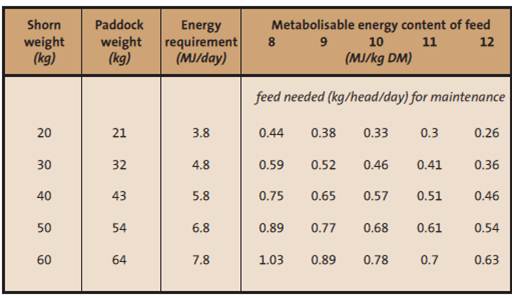
Table 1. The energy (megajoules per day) and kilograms of feed needed to maintain sheep of different weights
Feeding for energy
Table 1. The energy (megajoules per day) and kilograms of feed needed to maintain sheep of different weights
To maintain liveweight, each day a sheep will require about 10 per cent of its bodyweight as metabolisable energy plus a further 1.8 megajoules of energy. For example, a 50 kilogram sheep requires 5 + 1.8 or 6.8 megajoules of metabolisable energy per day (see Table 1). This estimate appears to be generous and there are examples of 50 kilogram sheep during confinement feeding, maintaining their weight when fed a diet to supply only 5.5 megajoules of metabolisable energy per day. That is, about 80 per cent of the recommended requirement for maintenance.
The average metabolisable energy content of oaten grain is 10.7 megajoules per kilogram of dry matter (see Table 2). The 50 kilogram sheep in the example above will therefore need 635 grams of oats each day (6.8 megajoules divided by 10.7 megajoules multiplied by 1000) to maintain liveweight. In reality, about 700 grams of oats would need to be fed to take into account the 8 per cent moisture in the oaten grain and any wastage that may occur during feeding.
Lupins contain more metabolisable energy than oats (at about 13.7 megajoules per kilogram of dry matter) and therefore fewer lupins are required to maintain the liveweight of sheep. A 50 kilogram sheep would maintain liveweight on about 500 to 550 grams of lupins per day.
When feeding for energy it is best to work out the cost of each megajoule of metabolisable energy to determine which feed is most economical. For example, oaten grain with 10.7 megajoules per kilogram of dry matter and 7 per cent moisture priced at $100 per tonne, costs around 11 cents per kilogram of dry matter. The price per megajoule of metabolisable energy is therefore 11 divided by 11 or one cent per megajoule.
This calculation can be done with any feed using the current price per kilogram for that feed.
How to use Table 1:
A 50 kilogram sheep (shorn) needs 6.8 megajoules of metabolisable energy per day to maintain its liveweight.This can be supplied with 0.54 kilograms of a feed that contains 12 megajoule per kilogram (for example wheat grain) or 0.68 kilograms of a feed such as oats containing 10 megajoules of metabolisable energy per kilogram.
Lupins
Feeding for protein and good rumen function
Lupins
To use the energy supplied in the diet efficiently, a good source of protein must also be provided. Supplementary feeding with feeds that are high in energy but low in protein will lead to poor rumen function and inefficient conversion of feed into meat products. This is because the microbes in the rumen need a protein source to reproduce and grow and to maintain their population.
If the protein in the diet is low, the microbial population declines and consequently less microbial protein is available to the sheep for growth. In addition, if the microbial population is lowered, there are fewer microbes to break down the feed eaten by the animal and feed is wasted through inefficient digestion. Feed intake also will be reduced as a result of the slowing of digestion in the rumen since the rate at which feed particles are broken down and leave the rumen will decline. Thus, there will be less space available in the rumen for more new food to enter.
An example of this is when adult sheep are fed straw alone to maintain their liveweight. Straw is made up largely of complex carbohydrates (energy) and is inherently low in protein - as little as three per cent crude protein content. Because of this, the rumen microbes become deficient in protein and are not able to maintain their population. Less microbial protein is then available for the sheep to convert into muscle or meat.
As the microbial population declines, the straw can not be fully digested and the energy it contains remains unavailable to the sheep. This reduction in digestion causes the feed to bulk up in the rumen of the animal and will lower its rate of feed intake. All of these factors combine to cause the animal to lose weight and body condition.
In this case, adding a protein rich feed such as lupins would improve the protein supply to the rumen microbes which in turn will allow the sheep to make better use of the energy available in the straw. As little as 80 grams of lupins per day may provide the extra protein required by an adult sheep grazing dry pastures or cereal stubbles or being fed a low-quality hay.
The protein and energy contents of feeds can vary widely between and within paddocks and years, and between varieties and for different fertiliser inputs, so it is important to have feeds tested for protein and energy levels. Knowing the protein and energy contents of feeds is particularly important when growing sheep out for meat production; it will help with ration formulation and for comparing the costs of different feeds on a nutrient basis as well as reducing wastage of feedstuffs. The ranges in protein and metabolisable energy contents of some common feeds fed to sheep in Western Australia are given in Tables 2 to 5 in this section.
Lambs Eating Grain
Lambs Eating Grain
Problems with grain supplements
Apart from being a good source of protein, lupins also have a major advantage over cereal grains and most other grain legumes because they contain virtually no starch (a form of carbohydrate). The starch in these other grains is rapidly fermented in the rumen to produce acidic conditions (that is, a lowering of pH). A low pH will eventually kill the fibre digesting microbes in the rumen and consequently reduce the amount of energy and protein that becomes available to the sheep. In this situation, the sheep will reduce their feed intake and substitute the supplementary grain for dry roughage.
In the worst case scenario, there may even be a ‘negative efficiency of supplementation’ when the intake of the basal forage is reduced by more than the amount of supplementary grain eaten. In other words, the consumption of the supplementary feed actually causes the animal to lose weight rather than maintain or gain weight. This is typical of what can happen when sheep are supplemented with cereal grain at the end of the pasture growing season. In this case, feeding a small amount of lupin grain is the best form of supplementary feeding to supply protein and energy to encourage the utilisation of the dry roughage.
Although lupins are a good source of protein, the nitrogen (N) to sulphur (S) ratio can be too wide and cause deficiencies of particular amino acids in the animal. In this case, microbial protein synthesis may be reduced and the protein supplied to the sheep’s small intestine may not contain adequate sulphur amino acids for both wool and muscle growth.
A wide N:S ratio can be overcome by providing a mineral supplement containing sulphate sulphur or by providing the sheep with a supplement of organic sulphur in the form of expeller canola meal to supply extra sulphur amino acids to the small intestine.
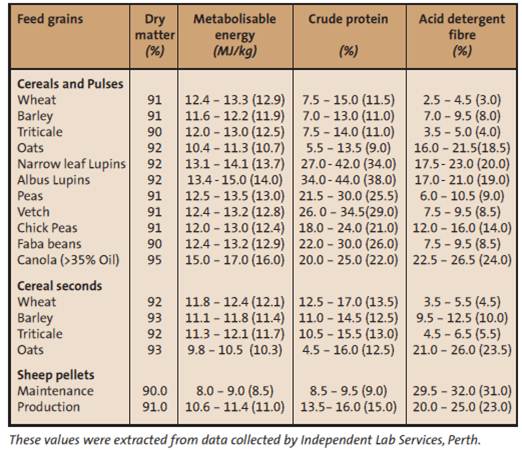
Table 2. Grain-based sheep feeds: the dry matter, energy, protein and fibre contents (dry matter basis). The average across the range of values is shown in brackets.
Successful supplementary feeding
A good indicator of the time to start supplementary feeding is to note when sheep be
gin to access water points towards the end of the pasture growing season. The sheep seeking water indicates that the pasture is beginning to dry off and lose its nutritional value to stock. At this point it is important to start trailing out some lupins (about 50 grams per head per day) to maintain a supply of protein and non-starch energy to the sheep, especially young sheep that have a high nutrient requirement for growth. Young sheep will not have experienced lupins before and for them to recognise lupins as a feed it is important to start feeding lupins to the lambs with their mothers before they are weaned. This allows the ewes to teach the lambs all about eating supplements of lupins.
As the feed quality drops off, it is prudent to increase the supply of lupins up to about 200 grams per day. Feeding above this level of lupins may lead to a substitution effect whereby the sheep will wait for the next feed of lupins rather than go out and eat more of the dry forage. If weaner growth falls below 100 grams per day they will need to be moved to a new paddock with more dry feed available, or better quality feed. Young sheep will often require a complete mineral mix to maintain good growth rates, particularly if the dry feed has had essential minerals leached out from being rained on.
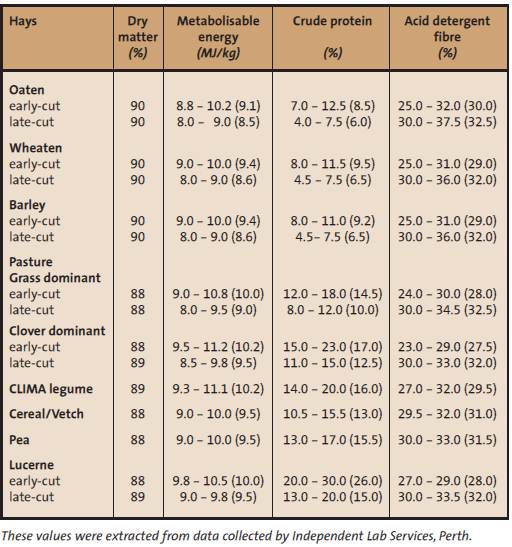
Table 3. Hays fed to sheep: the dry matter, energy, protein and fibre contents (dry matter basis). The average across the range of values is shown in brackets.
When feeding supplements to sheep, the goal is to achieve the maximum production returns from the minimum costs of feed inputs. An understanding of the special energy and protein requirements of the microbial population in the rumen can help to achieve this. The most important point to remember is to supply the correct balance and form of protein and energy to the microbes in the rumen. In short, cost effective supplementary feeding of sheep is really about supplying the rumen microbes with the nutrients that are limiting in the basal diet.
All feeds contain some water and it is important to compare feeds on a dry-matter basis to eliminate the differences in water. The protein content of a feed can vary widely with season and feed-type. In most years oaten grain is relatively low in protein (7 to 10 percent on a dry matter basis) and will need to be supplemented with lupins to supply adequate protein for growing sheep or lactating ewes.
However, a high proportion of the light oaten grain from the 2000 growing season was high in protein (12 to 16 per cent on a dry matter basis). This allowed many producers to reduce, by half, the amount of lupins in the feed mix fed to maintain sheep which resulted in a big saving because lupins were in extremely short supply and consequently were very expensive.
Table 4. Straws and stubbles fed to sheep: the dry matter, energy, protein and fibre contents (dry matter basis). The average across the range of values is shown in brackets.
Oaten grains can also vary by as much as 1.5 megajoules of metabolisable energy per kilogram of dry matter between high and low lignin oat varieties. Therefore, it is important to have feeds tested for energy and protein contents so that you can be sure the sheep are receiving the correct amount of energy and protein for maintenance or growth as well as to provide them with the most cost-effective diet.
Early-cut hays generally have higher energy and protein contents than later-cut hays (see Table 3). Legume-based hays have higher protein contents than cereal-based hays. As with grains and pulses, the protein content of hays will vary with the growing season and agronomic practices making it important to have hays tested so that precise feed-rations can be calculated. In most cases cereal hays and late-cut pasture hays will need to be supplemented with lupins to provide adequate protein to growing sheep and lactating ewes.
Generally stubbles and straws that have low values for protein and metabolisable energy are of little nutritional value for sheep apart from providing fibre (see Table 4). They will need to be supplemented with a grain to maintain adult sheep and certainly to grow out weaners. However, many of the stubbles from the 2000 growing season had high values for protein and metabolisable energy and were a valuable feed resource.
Table 5. Chaff-cart residues: the dry matter, energy, protein and fibre contents (dry matter basis). The average across the range of values is shown in brackets.
Chaff-cart residues will maintain adult sheep, but they may need to be supplemented with additional protein if the protein content of the diet consumed falls below seven per cent. The average contents of the nutrients in chaff-cart residues are given in Table 5.
Further reading
Farmnote 74/2000. Achieving production targets for prime lambs.
Farmnote 35/95. Supplementing weaner sheep grazed on oat stubbles with sandplain lupin seed.
Farmnote 65/91. Selection of supplementary feeds.
Farmnote 79/91. Lupins versus feed blocks for sheep.
Farmnote 56/89. Hand feeding sheep; add finely ground limestone to grain.
Farmnote 99/85. Boosting nitrogen content of oats for sheep feed.


