Guidelines for managing sporadic diseases
Develop a routine to record details of diseased cattle or deaths whenever they occur. You also need to decide how and where to keep a record of:
• When an animal is suspected of having a disease;
• When an animal has died;
• When an animal unexpectedly fails to meet a production target.
This is particularly important for large-herd operations where more than one stock person looks after the cattle. Records need to include the individual animal identification, the mob or herd the animal belonged to, their immediate grazing history and all previous animal health treatments.
Animal identification tags and computer software programs for record-keeping are commercially available.
Electronic tags make animals traceable when they leave the property and will enable the installation of automated record-keeping systems to store information electronically. This includes animal health records and production records such as liveweights, calves weaned and other monitors of animal productivity.
You can implement any recognised quality assurance program based on keeping good records and established veterinary codes of practice for cattle health and welfare. This may also provide access to new markets and/or better prices.
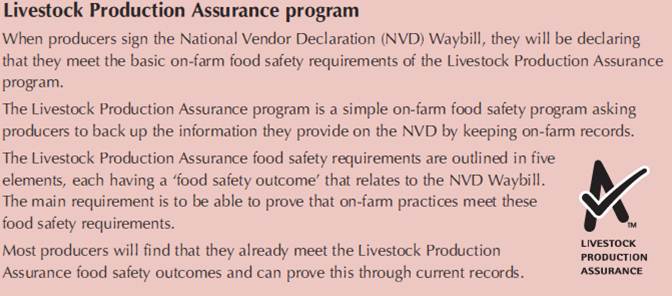
MLA has developed a Livestock Production Assurance program based on the cattle National Vendor Declaration (NVD) Waybill. This is a key tool underpinning Australia’s food safety reputation for cattle. Producers use the NVD to declare valuable information about the food safety status of cattle being sold. An example of the NVD Waybill for cattle, and instructions on how to fill in the sections, are provided in National Vendor Declaration (NVD) Waybill for cattle.
Feedback from abattoirs can provide an early warning of the incidence of disease in the herd. Where possible it is recommended that you collect abattoir feedback whenever cattle are slaughtered.
If an uncommon or unexplained health problem occurs, seek professional advice from your local veterinarian or state department of agriculture. In these cases your records provide crucial information. The state department animal health websites are listed in National Vendor Declaration (NVD) Waybill for cattle.
Regardless of the system used, you need to be aware of state and national codes of practice. These are available on the government websites listed in Disease information sources.
Also check that there are no toxic plants or contaminated feeds accessible to your herd. A selection of references for the identification of toxic plants and noxious weeds is included in References to identification of toxic plants and noxious weeds.
What to measure and when
Regularly observe your animals grazing at pasture and weigh them occasionally to record:
• Pasture and animal condition score;
• Liveweight gain for comparison against that expected from the feed on offer (FOO); and
• Cow breeding (reproductive) performance.
Note: you do not have to weigh every animal every time, a sample of about 10–20% is sufficient to estimate and monitor a mob’s liveweight gain or loss.
Also record:
• Any dead and/or diseased animals;
• Information on identification and/or management of noxious weeds and toxic plants (see Identification of toxic plants and noxious weeds);
• Information collected from abattoir feedback, whenever cattle are sold and this information is available.