General Information:
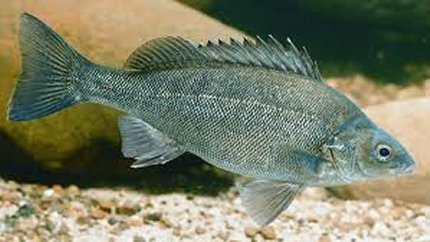 Silver perch occur naturally in the Murray- Darling systems with other populations also found within south-eastern Queensland. They prefer to inhabit open waters rather than heavily snagged areas.
Abundance of Silver perch has declined over the past few decades due to habitat destruction and is now a protected fish in South Australia. It is therefore not permitted to take these fish from the wild.
Silver perch have been known to grow up to 6kg however fish over 3kg are now rare. Silver perch have a number of characteristics that make it suitable for aquaculture.
They are generally a hardy fish achieving survival rates of up to 90% and grow rapidly. They are noncannibalistic in nature and readily school therefore allowing them to be reared in high densities.
Reproduction:
In there natural habitat silver perch require a rise in water level, coupled with water temperatures of about 230 C to induce spawning, which normally occurs from mid-spring to late summer.
Males mature at 2 – 3 years of age while females reach maturity at 3 – 4 years. During spawning females release on average 160,000 eggs which hatch within 36 hours. Fish larvae will commence feeding after five days once the yolk sacs have been absorbed.
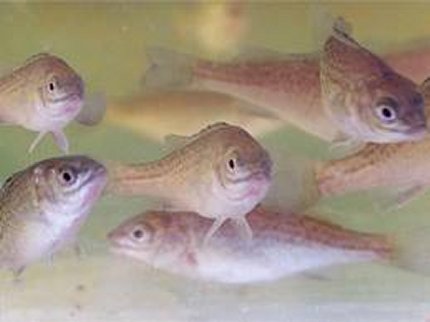 As regular spawning of silver perch in dams is unreliable, Narrandera Fisheries Research Station in NSW have developed techniques to induce silver perch to spawn. Female broodstock are injected with human chronic gonadotrophin (HCG) and are placed into tanks with mature male where eggs are fertilised naturally.
A large broodstock female weighing around 1.8kg has the potential to produce up to 500,000 eggs which are around 0.7 – 1.3 mm in diameter when released and between 2.3 – 3.0 mm approximately 15 minutes after fertilisation.
Fertilised eggs will take around 30 hours to hatch under ideal temperature conditions. Larvae are then reared in ponds containing zooplankton until they pass through fry stage reach fingerling stage after around 3 – 4 months.
The hatchery stage of the operation is extremely specialised requiring broodstock fish, spawning and incubation facilities and a relatively high level of technical expertise.
Most growers chose to purchase fingerlings from specialised hatcheries for grow out. Presently there are no hatcheries located in South Australia for silver perch however this may change in the future.
The majority of hatcheries are located in New South Wales and Victoria and a list is provided at the end of this fact sheet.
Diet:
Silver perch commence feeding around 6 days after fertilisation with larvae feeding on both phytoplankton and zooplankton. During fingerling and adult stage, silver perch become omnivorous and will feed extensively on zooplankton, particularly larger ostracods. They will also consume shrimps and other crustaceans, filamentous algae, aquatic insects, molluscs and aquatic plants.
Artificial diets have been developed for both fingerling and adult silver perch This is in the form of a pellet which is made in proportion to the size of the fish’s mouth during different stages of development. Fingerlings are fed up to 7.5% body weight per day and large fish are up to 3% body weight per day however this will depend on climate and management of the aquaculture system.
Pellets consist of approximately 32 - 36% protein coupled with lipids, carbohydrates, vitamins and minerals that provide the optimum dietary requirements necessary for silver perch growth. In well managed aquaculture ponds, food conversion ratios (FCR) of 1.5-2.0:1.0 (weight of fish produced : weight of feed consumed) can be expected. This ratio may be a little lower when fish are grown in recirculation systems.
Growth:
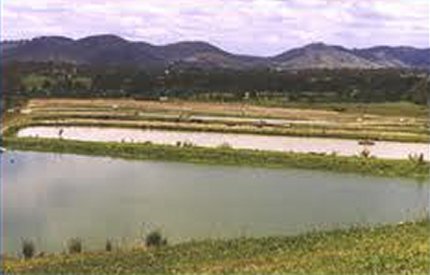 The majority of silver perch is produced in ponds however currently there are some trials being undertaken in New South Wales and Victoria using recirculating systems.
It will most likely be some time before conclusive results for recirculation system culture is obtained however initial results have indicated that silver perch aquaculture has greater economically viability using ponds.
Fingerlings that have been weaned onto commercial diets are available from a number of hatcheries located in New South Wales and Victoria.
Recommended stocking rates for silver perch fingerlings in nursery ponds are 20,000 – 100,000 fish/ha. After 2 – 3 months fingerlings should be harvested, graded and restocked at 5,000 – 21,000 fish/ha in growout facilities.
Results from research undertaken in New South Wales has shown the silver perch can be grown successfully at stocking densities of up to 10 tonne/ha. With correct management techniques, it has been proven that silver perch will reach market size of 600 – 800g in approximately 18 months.
This will depend however on local climatic conditions especially temperature and rainfall.
Marketing:
Silver perch posses excellent eating qualities with a high meat recovery of 40% and white and finely textured flesh. Fish are purged in clean water before sale to remove the “muddy flavour” and ensure that a high quality product reaches the markets.
Fish are sold direct to restaurants and wholesale markets such and Sydney and Melbourne. Growers regularly receive $9 - $10 per kilogram farm gate for their live product.
Many fish between 600g and 800g are sold live however product is also sold chilled whole, gilled and gutted, and fillets. The New South Wales Silver Perch Growers Association also consider the fish to be an excellent smoked product.
Information Sourced From:



