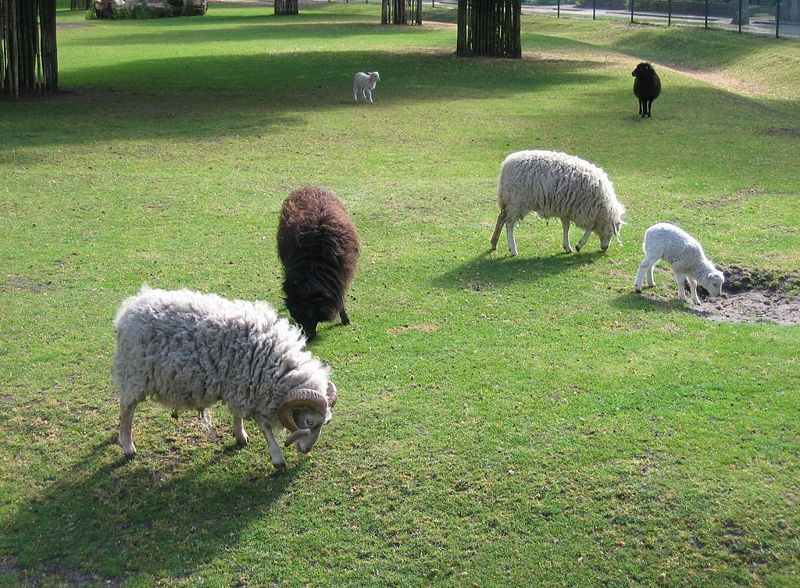
 The following summary provides an overall picture of when different management practices will occur throughout a reproductive cycle. Although it does provide the basics, it will not fit every operation and should be expanded or modified to accommodate the management priorities of each sheep farm.
Before Breeding Season
Ewes
- Check udders for evidence of previous mastitis and/or Maedi-Visna (hard lumps etc.), and that both teats look functional
- Check mouths for missing teeth or other problems
- Check ewe production and age records
- Cull ewes that are not sound or have lower productivity than desirable, and replace with ewe lambs
- Flush ewes:
- 1 pound grain/day or move to lush pasture 2-3 weeks before breeding (increases plane of nutrition increases fertility and ovulation rate)
- If ewes are overconditioned, the effect of flushing will be lessened.
- If necessary, vaccinate ewes for vibriosis and enzootic abortion (EAE) 2-3 weeks before breeding
- May wish to deworm at this time as well
- Replace any lost tags
Rams
- Evaluate sire production records. Cull and replace any rams with lower than desired productivity.
- Check for general health and condition.
- Check scrotal area (testis and epididymis) for any unusual lumps (Brucellosis)
- May wish to tested for sperm quality (not commonly done)
- Rams will spend a decreased amount of time resting and feeding at the beginning of the breeding season, therefore, for approximately 1-2 months before breeding season ensure rams are provided a good maintenance or flushing ration depending on their body condition. The plane of nutrition before breeding season will also have an effect on fertility, as sperm development takes ~50 days in rams.
- Replace any lost tags
 Breeding
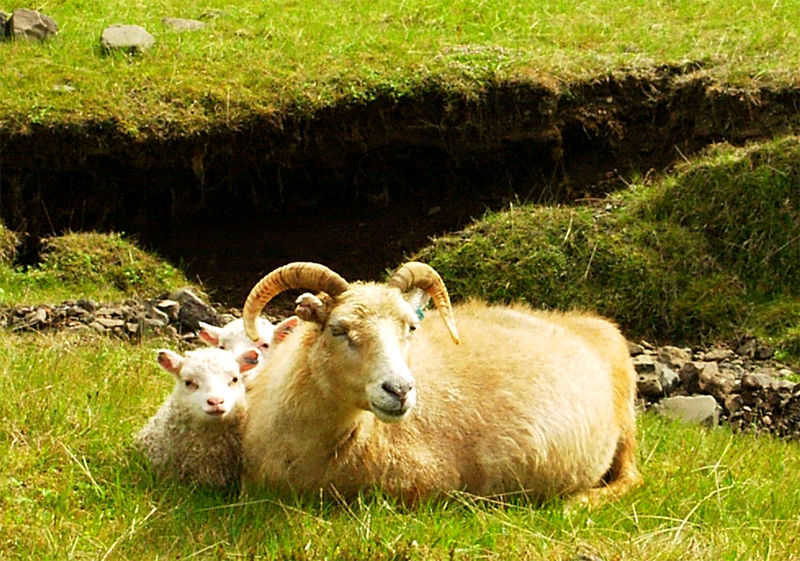
- The ovulation rates in ewes tend to be lower at the first part of the breeding season. Running vasectomized or teaser ram with ewes for a few weeks early in the season tends to increase fertility and synchronize their estrous cycles (more condensed lambing).
- Allow at least 1 mature ram or 2 ram lambs per 50 ewes.
- Use a ram marking harness or painted brisket to monitor breeding. Changed colours (from lighter to darker shades every 17 days).
- Typical breeding seasons span ~2-3 estrous (34 to 51 days). You may wish to allow ewe lambs an extra cycle longer than normal (68 days). Remove rams at the end of the season.
Early Pregnancy (First 15 Weeks)
- Feed according to body condition (put thin ewes into a separate pen and provide extra feed)
- Mature ewes do not need a very high plane of nutrition at this point of pregnancy. Feed a maintenance diet of clean, but lower quality hay.
- Ewe lambs are still growing and should receive good quality roughages and grain (about 20 percent of the ration) during this period.
- If you vaccinate for abortion diseases, ewe lambs and new ewes in the flock should receive their second shot during mid-gestation.
Six Weeks Before Lambing
- Increase energy in diet gradually to prevent pregnancy toxemia. An example of a feeding schedule is:
~6 weeks before lambing, feed 1/4 to 3/4 pound grain/ewe/day
~2 weeks before lambing 1 pound per ewe per day
- Shear or crutch ewes before lambing. Control ticks and lice immediately after shearing.
- May wish to treat for internal parasites and trim feet at this time as well.
- Vaccinate ewes for Clostridial diseases (including tetanus).
- If white muscle is a problem in your area, feed selenium-vitamin E OR use an injectable solution
- Check facilities and equipment to be sure everything is ready for lambing, this includes making provisions for additional help for doing night checks etc.
 Lambing
- Although average gestation is 148 days, the first lambs generally appear 142 days after turning the rams in with the ewes.
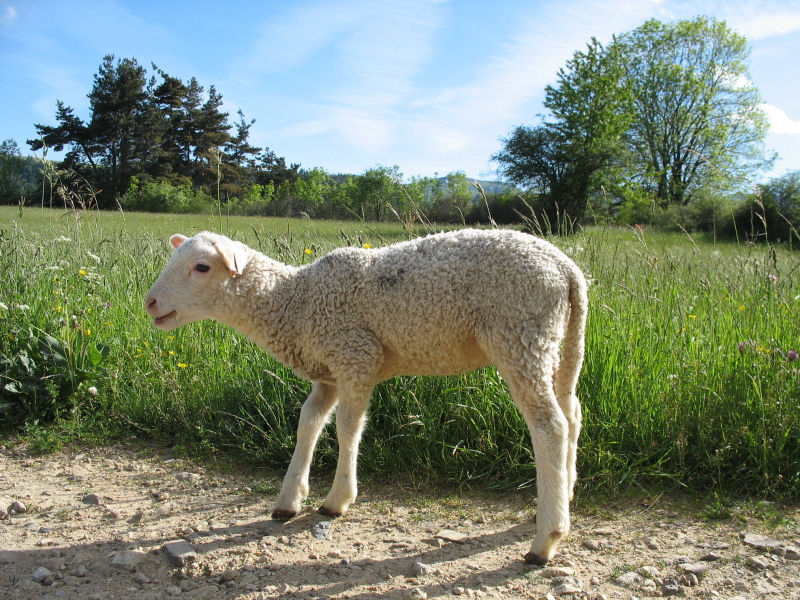
- Most lambs are lost just after birth and extra effort at lambing pays off with more lambs at weaning time. Be prepared to do checks through the night as well as during the day.
- Put ewe and lambs in lambing pen after lambing (not before).
- Grain feeding the ewes during the first three days after lambing is not necessary
- Most ewes will lamb without incident. It is best to monitor their progress, but not to handle them or get too close unless it looks like she may be having problems. Learn the signs of a ewe in trouble (typical time for each stage of labour etc.) and know the basics of how to assist if necessary.
- Disinfect lamb’s navel with iodine as soon as possible after birth.
- Be sure both teats are functioning and that the lambs nurse and are looking ‘happy’
- Some ewes may be able to nurse more than 2 lambs successfully; however, you may want to remove extra lambs. These lambs may be bottle fed or fostered to ewes with single lambs.
- Castrate and tail dock lambs before 1 week of age. Vaccine with sore mouth vaccine if it has been a problem in the past. Ear tag or otherwise identify the lamb(s). If the ewes were NOT given Se:E supplement during pregnancy, inject lambs soon after birth.
- If all is well, turn ewe and lambs out of the lambing pen after ~3 days
- House ewes with single and multiple lamb separately and feed according to requirements (ewes with multiple lambs require more energy to maintain lactation)
- Deworm ewes to prevent postpartum rise in worms
Lambing to Weaning
- Feed ewes according to number of lambs.
- Provide creep feed for lambs (especially those born during the winter and early spring).
- Vaccinate lambs for overeating disease (Type D Clostridia) at five weeks and seven weeks of age.
Weaning
- Lambs should be weaned between 50 and 60 days of age or when they weigh at least 40 pounds and are eating creep and drinking water. (remove ewes from sight and sound of the lamb pens if possible, if lambs not eating creep may consider using a ‘teacher’ animal (older lamb or yearling replacement animal)
- Vaccinate for Type D clostridia again, 2 weeks before putting lambs on finishing ration
- Decrease ewes’ energy intake ~1 week prior to and for ~2 weeks after weaning (feed low quality forage and remove grain). This helps decrease milk production and lessens the chance of mastitis.
- Handle the ewes as little as possible for about 10 days following weaning, to protect their udders until milk production has decreased.
Weaning to Pre-Breeding
- If ewes go to pasture, treat for internal parasites.
- Feed a maintenance ration to the ewes.
- Don’t over condition ewes prior to breeding.