 Use Sheep Behaviour to Your Advantage
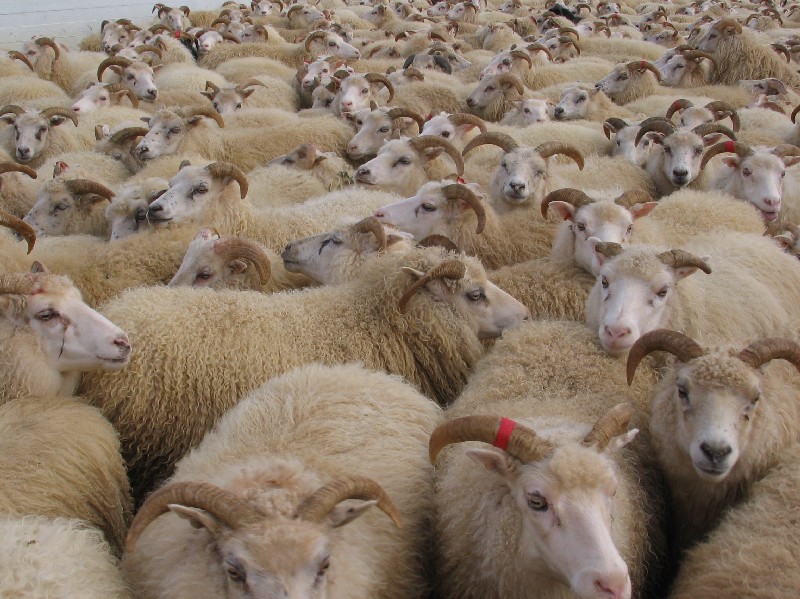
Producers who understand sheep behaviour can use this knowledge to their advantage in all aspects of sheep production and management. Whether setting up and using handling and shearing facilities, moving the flock to a new pasture, or catching an individual sheep, taking their behaviour into account ensures the job is completed in an efficient, low-stress manner.
Some important aspects of sheep behaviour as it relates to handling and movement include:
- Sheep do not like to be enclosed in a tight environment and will move on their own accord into large areas.
- Sheep move toward other sheep willingly
- Sheep move away from workers and dogs
- Sheep have good long-term memories (relative) especially with respect to unpleasant experiences.
- If given a choice, sheep prefer to move over flat areas before up an incline, and up an incline before moving down it.
- Sheep prefer to move from a darkened area towards a lighter area, but avoid contrasts in light.
- Sheep flow better through facilities if the same paths and flow directions are used every time.
- Stationary sheep are motivated to move by the sight of sheep running away.
- Sheep will balk or stop forward movement when they see sheep moving in the opposite direction.
- Sheep will move faster through a long, narrow pen or area, than through a square pen.
- Sheep move better through the handling chute (race) if they cannot see the operator.
- Sheep will more willingly move toward an open area than toward what they perceive as a dead end.
- Very young lambs that become separated from their dams will want to return to the area where they first became separated.
- Sheep react negatively (as do all livestock) to loud noises and yelling and barking.
- Young sheep move through facilities easier when their first move through is with well trained older sheep.
Many years of observation, by people who have worked with sheep under a wide range of conditions, have gone into establishing the above-listed points of sheep behaviour. They illustrate that certain actions and reactions by sheep are very predictable, and can be used to the producer’s advantage in all aspects of sheep management. Those producers who incorporate aspects of sheep behaviour into management of their flock will see positive results in the ease of moving groups, willingness of sheep to enter and be processed in handling facilities, and fewer stress indicators in the animals and handlers.
References:
Kondinin Group. 1990. Yards ‘n’ Yakka.
MidWest Planning Services. 1994. Sheep Equipment Handbook.
Border Collie
Herding Dogs
Border Collie
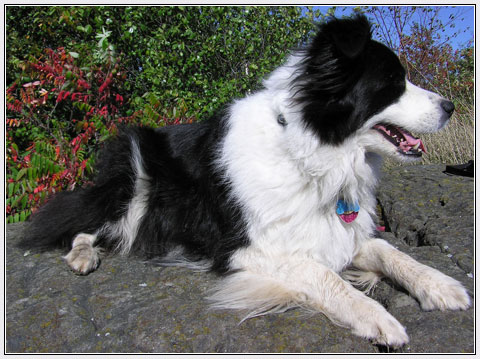
A well-trained dog can save the producer a great deal of effort when herding and moving sheep. Many breeds of dogs are used on sheep farms throughout the world. In Canada, the black (or brown) and white Border Collie is perhaps the most popular. In selecting a dog, make enquiries, watch sheep dog trials and, if possible, enlist the aid of an experienced handler. A purebred dog is by no means essential, but a well-trained dog is. Most breeds of herding dogs have strong instincts to stalk and chase livestock. If these instincts have not been properly channeled through training, dogs will generally do more harm than good by chasing sheep in the wrong direction, running through the flock, or becoming overly aggressive towards the sheep.
Even with well-trained dogs (depending on their temperament), you may wish to restrict their use to gathering sheep in large areas, rather than in small pens or handling systems. Dogs may become overly excited with sheep in confined areas, particularly if the flock isn’t moving well. The sheep will remember the frightening experience and may be reluctant to enter the handling system the next time. If you buy a professionally trained dog, be sure to take some time to learn commands that the dog will understand; improperly trained people may be just as frustrating for dogs, as poorly trained dogs are to shepherds.
Author: Anita O’Brien, Sheep and Goat Specialist, OMAFRA


