 Sources of Replacement Stock:
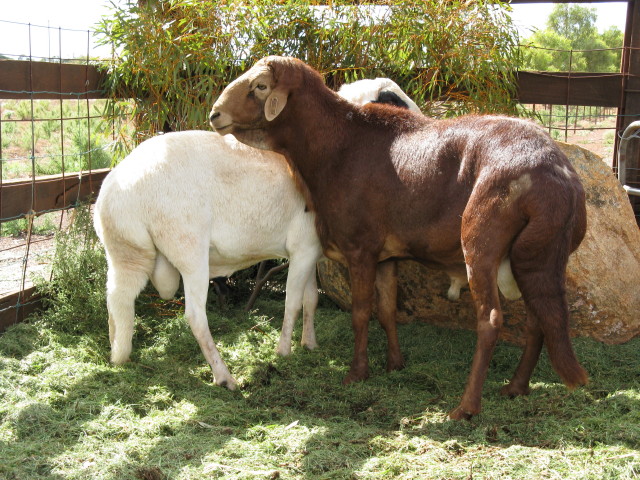
Carefully considering where to buy new animals will help ensure your new stock is healthy and will help improve the genetic potential of your flock. It is always best to buy breeding stock from breeders who are known for providing productive, healthily animals.
1. Public auctions:
Buying breeding stock from auction marts is not generally a good idea. Although prices may be low, there is a good chance that the animals are culls. This means that they may be poor producers and/or have health problems. As well, if they are being sold as culls it is likely that few precautions were taken to avoid their contact with other animals, which means there is an increased risk that they have been exposed to various diseases.
2. Purebred sales:
Purebred sales, such as those conducted by breed organizations or the Purebred Sheep Breeders of Ontario, are significantly different from auction marts in that animals are sold specifically as breeding stock. Therefore, the breeder’s reputation is at stake if poor quality or diseased animals are sold. An advantage of attending a sheep sale is the opportunity to observe and compare sheep coming from a variety of breeders at one time. The main disadvantage is an increased risk of disease transmission from one flock to another, even if precautions are taken to avoid direct contact between animals.
3. Private sales:
Buying through private sales helps to further minimize the risk of purchasing diseased sheep, since the new stock will be taken straight from the breeder’s farm to the new flock. Visiting the breeder’s farm, will give you an opportunity to discuss flock health history and to look at the parent stock. Producers selling stock privately will often advertise in agricultural publications, such as Ontario Sheep News, Ontario Farmer, Better Farming, etc. The Purebred Sheep Breeders of Ontario or the Canadian Sheep Breeders Association also maintain a list of producers selling stock.

4. Within flock replacements
Many sheep producers raise their own replacement stock, particularly ewe lambs. This helps minimize the risk of introducing new diseases, as fewer animals are brought into the flock. However, to introduce new genetics and prevent inbreeding, it is necessary to bring in some new stock (often rams).
5. Artificial insemination and embryo transfer:
An increasing number of producers, generally purebred breeders, have a closed flock system. This means that no new animals are brought into the flock and any animals that have left the flock are not reintroduced.
As this would eventually cause inbreeding problems, artificial insemination and (to a lesser extent) embryo transfer are used to bring new genetics into the flock. Artificial insemination is also an excellent means of introducing very high quality genetics without having to purchase a top quality ram.
Selection Criteria:
Economically Important Traits
Decisions regarding which stock to buy or which lambs to retain for replacements will depend on how pleased you are with your flock’s present level of productivity. Naturally, not all traits have equal economic value. For example, the number of lambs born per ewe, lamb survival, and weaning weights are very important when it comes to profitability, and provide a direct reflection of the quality of your ewes. Post weaning average daily gain is important for producers who retain ownership of the lambs until slaughter.
Fleece traits generally have a smaller effect on profitability on most sheep operations in Ontario. If your flock is weak in certain areas of production, try to choose new stock that will improve the overall performance for this trait.
Performance Information
To make genetic improvements efficiently, you must have an idea of your flock’s current productivity and be able to compare it with the productively of stock from other sources. Therefore, record keeping and precise animal identification records are very important for genetic improvement programs. Data such as the type of birth (single, twin, etc.), weaning weight, and postweaning growth rate, are essential in assessing the genetic merit of your sheep. If you market your lambs directly to the packing plant or abattoir, it may be possible to receive carcass trait (rail grade) information. Alternatively, some producers measure indicators of the lean meat yield in live animals using ultrasonography (e.g. backfat and ribeye measurements). As these traits are moderately heritable, selection of breeding stock based on these measurements can result in rapid improvements in lamb quality.
Genetic improvement programs, such as the Sheep Flock Improvement Program, compare data collected on individuals to data measured on relatives and other sheep in the flock. Using genetic connections (common bloodlines) with other flocks allows genetic evaluations to be conducted on a province or industry wide basis, rather than simply doing comparisons within a herd. These evaluations (‘estimated progeny differences’ or EPD’s) are the best genetic tool available to livestock breeders today.
When considering how much emphasis to put the performance of past generations, remember that an animal has 50% of its genes in common with each parent, 25% of its genes in common with each grandparent, 12.5% of its genes in common with each great-grandparent, etc. As a result, ancestors that appear many generations back in the pedigree make only a tiny genetic contribution to the present generation.
 Health and Conformation
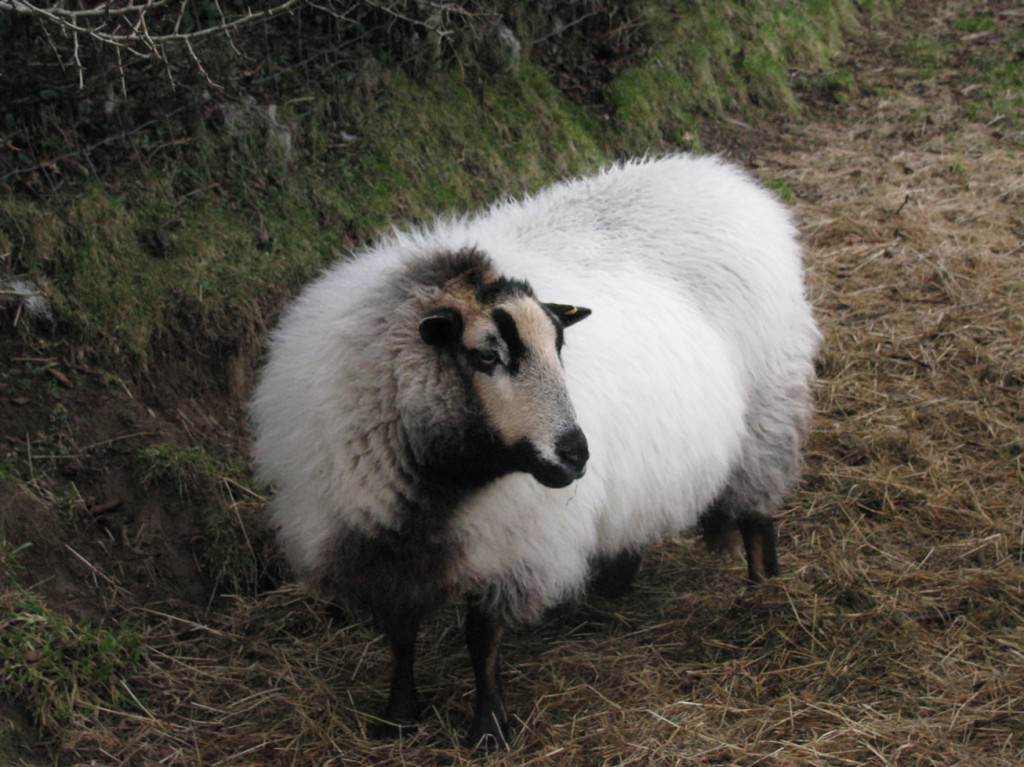
Even animals with remarkable genetic potential must be physically sound and healthy to be considered for breeding stock. Many aspect of the animal’s conformation are highly heritable, and therefore, will likely be passed to their lambs. The vast majority of infectious diseases that pop up in otherwise clean flocks originated with purchased breeding stock. Taking time to review a breeder’s flock and production history will more than pay off if a persistent and costly disease is avoided. Take the same precautions when purchasing goats, as they are affected by many of the same diseases as sheep.
Flock Health:
Visiting the farm of a breeder, will give you an opportunity to have a first hand look at the flock for possible health problems and to ask about the general management of the flock (i.e. vaccination and deworming schedule, Maedi-Visna status, Ontario Sheep Health Program certification).
When looking at the flock watch carefully for lame sheep, signs of caseous lymphadenitis, sore mouth, excessive coughing, laboured breathing and the general body condition of the flock. Ask about history of abortions in the flock, or if any other outbreaks of disease had occurred in recent years. The conformation and condition of sheep in heavy fleece will be difficult to assess, and may require a ‘hand’s-on’ appraisal.
Individual Animals:
Conformation: The ‘ideal’ conformation for sheep will vary among breeds. Generally, however, any aspects of the conformation that would affect growth, reproductive performance, or longevity must be considered before using an animal for breeding.
Legs: Animals that have poor legs (e.g crooked legs, weak pasterns, over at the knee etc.) will tend to have fewer productive years and will need to be culled at an earlier age. Look for sheep that have short, strong pasterns and straight legs. If possible, look at the animal straight on (front and back) and from the sides to detect any deformities. Watching the animal move will provide an indication of stiffness or discomfort.
Body: Generally speaking, look for an animal with a wide chest, smooth shoulders, deep through the heart area, long body (particularly from the last rib to the tail), and has a well-muscled hindquarters.
Type of Birth (single or multiple): Your first choice should always be sheep from a multiple birth.
Sheep skull
Age and Teeth:
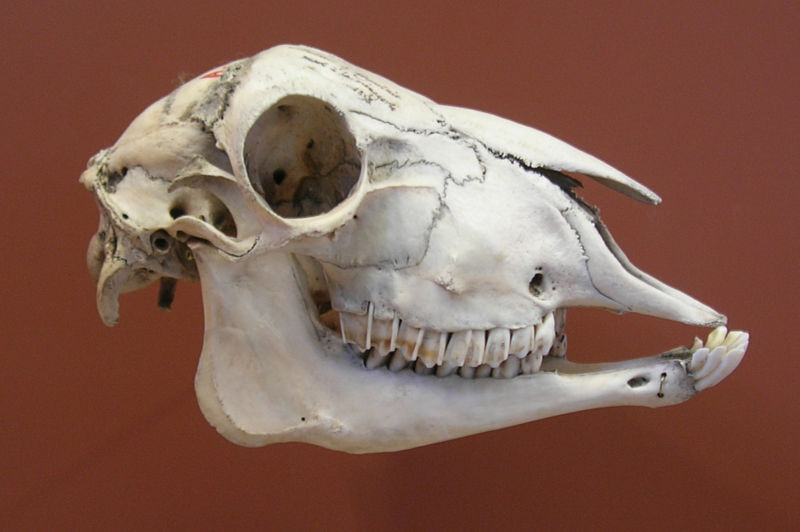
Sheep skull
Purebred animals will have letters tattooed in their ears, indicating the year of birth. In the case of a crossbred or other non-registered animals, the appearance of the animal and examination of the teeth will give you a general idea of the age of the animal. Adult sheep have 3 sets of premolars and 3 molars on each side of the mouth on both the top and bottom jaws (24 in all). The front of the lower jaw is equipped with eight incisor teeth. As with all ruminants, sheep do not have teeth on the front of the top jaw, but a hardened pad that intercepts with the bottom teeth. Although changes occur with the molars during growth, it is generally the incisor teeth that are examined to determine the age of live animals.
By three weeks of age, lambs will have eight incisor milk teeth. The milk teeth are significantly smaller and narrower than the permanent incisors. With each successive year, a pair of milk teeth is replaced by permanent ones. When the sheep is four years of age, it will have eight permanent incisors. After four years of age it is more difficult to determine the exact age, however, wear and condition of the teeth will be an indication of whether the animal is worth buying. Sheep that have been well cared for and properly fed will often maintain a full mouth until they are seven to nine years of age. In less optimum conditions, sheep may begin to lose their teeth at five to six years of age. Sheep with “broken mouths” (missing teeth) should not be considered as breeding stock. They may have a difficult time maintaining condition, as they will be less able to efficiently utilize feed.
Ewes:
Age: Buying ewes that have lambed before provides an opportunity to gather information on their fertility and the quality of their lambs. However, high quality ewes may be expensive and many people buy replacement ewes as yearlings (ewe lambs). As well, ewes generally reach peak productivity at four to six years of age and buying young ewes will help ensure they have many productive years ahead of them.
Udder: If ewes have lambed previously, check their udders to be sure there are no lumps or hard areas indicating past bouts of mastitis. Look for ewes with udders held close to their bodies. Ewes with low udders are more prone to injury and mastitis. Teat size and shape is also important. Very large teats may create nursing problems for newborn lambs.
Ram
Rams:
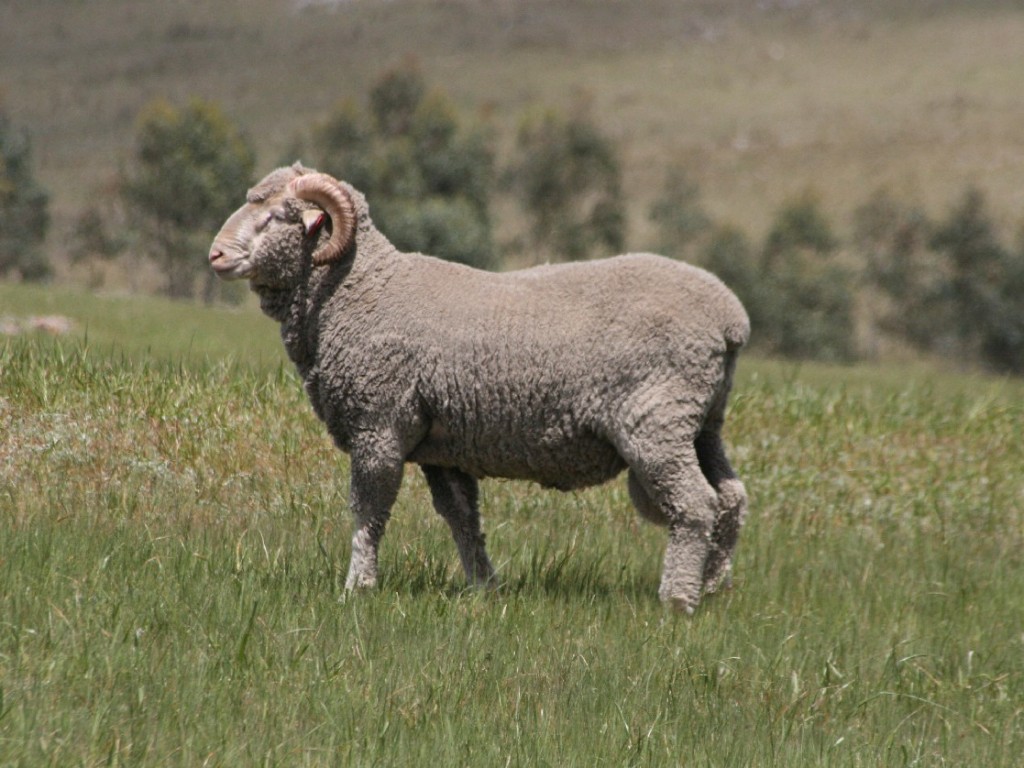
Ram
Age: As you will be relying on one ram to breed upwards of 35 ewes, it is important to have an indication of his past breeding performance. As with ewes, good quality, proven rams will generally be more expensive than unproven yearlings. Ram lambs should not be expected to breed as many ewes as a mature ram.
Fertility: Semen tests, if available, are useful in detecting rams that are sterile or have impaired fertility. Many producers check the testes size as an indication that the reproductive system is functional.
Check testis for any abnormalities, such as lumps etc, to avoid buying a ram with epididymitis. If the ram is very expensive, you may wish to have an official health check performed by a veterinarian.
Wool: Although wool is not often the primary reason for raising sheep, if given the choice select sheep with dense, uniform, high quality fleeces, with no dark fibres to help increase the overall quality of your wool.
The appearance of a sheep’s wool also gives some clues regarding its overall health. If the wool looks patchy or rubbed suspect external parasite (keds, lice), or if the wool looks ‘bloomless’ the animal many be suffering from malnutrition, vitamin deficiencies, or a subclinical disease.
After purchase:
Take precautions to reduce stress and the risk of injury while transporting your sheep. Avoid overcrowding animals and check the truck/trailer for any sharp objects. Used ample bedding to prevent animals from slipping. If the vehicle has been used to ship animals from other flocks, be sure it is thoroughly cleaned and disinfected before loading. Once your new animals have arrived on your farm, you may wish to vaccinate them for common diseases and treat for parasites. If you already have sheep on your property, quarantine the new sheep for a few weeks and watch them carefully for any signs of disease or lameness before mixing them with the rest of the flock.