Beef producers in Southern Australia operate in a range of production environments, from high rainfall and irrigation areas with fertile soils to low rainfall areas with poorer soils. They have access to a wide range of beef markets, each requiring a different product.
These different markets include those shown in Table 1.
To maximise profit, producers need to “target” a particular beef market, taking account of their production environment.
Targeting a market is simply ensuring that the type of cattle produced are suited to meeting the specific requirements of that market, given the particular environment.
Table 1 Examples of markets with specific requirements
Crossbreeding enables producers to combine the desirable characteristics of parent breeds in their progeny, and to quickly change the direction of a breeding program when required.
For example, if the breeding program aims to increase the muscling of a pure British breed herd from an average muscle score of D to an average of C+, this could be achieved in one generation if a highly muscled European bull was introduced to the herd. See Figure 1 for explanation of muscle scores.
It could take anywhere from two to five generations to achieve the same goal by selecting within a breed.
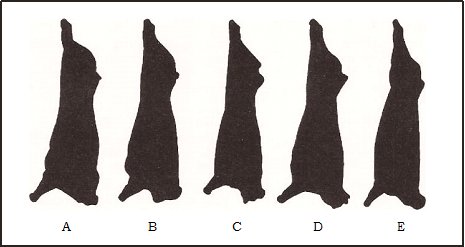
Figure 1 Muscle Scores
Careful choice of breeding stock is the key to a successful crossbreeding program. There are important differences between breed averages in almost all of the commercially important characteristics ofcattle, so breed is a useful guide to suitability for a particular purpose.
It must also be recognised that, for almost all characteristics, there is considerable variation within any breed. Careful selection of individual animals is very important.