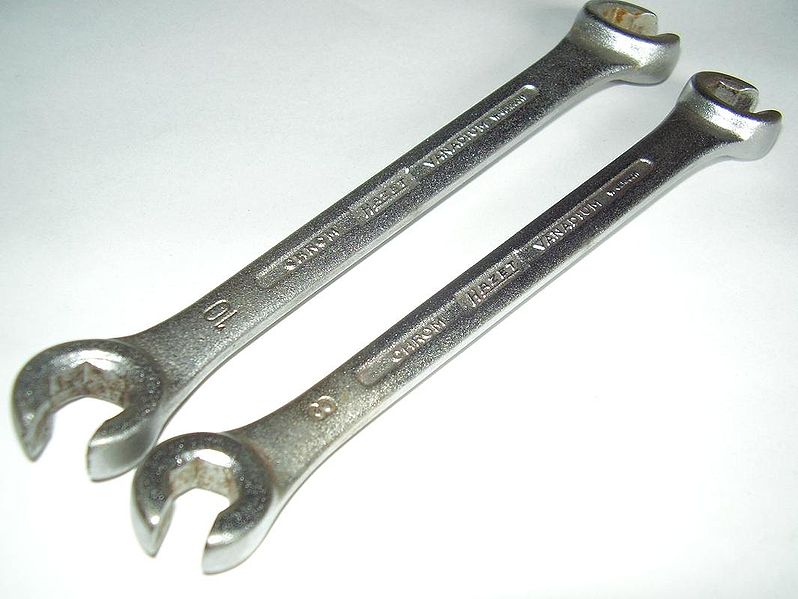
Wrenches Picture by Gamsbart
Objective:
To be able to use hand held tools in a safe manner.
Background:
The following is a list of major hand held tools that are common to most farm shops:
Wrenches: When placing an adjustable wrench on a nut, make sure the adjustable jaw faces the operator; then pull the wrench toward the operator. Use socket wrenches for hard-to-reach places. Never use a pipe wrench on nuts because the corners of the nuts or bolts are likely to break the teeth of the wrench jaws, making it unsafe for future use. Manufacturers make wrenches of different sizes. So the amount of leverage obtained with the wrench handle is the maximum application; it is unsafe to add more leverage with a length of pipe.
Hammers: When replacing hammer handles, make sure they fit the hammer head. Wedge the handle securely in the head and make sure that it is free of splinters and cracks. Never strike hardened steel surfaces with a steel hammer. Use a soft metal hammer or one with a plastic, wood or rawhide head when striking steel surfaces. Always wear safety glasses to protect your eyes from flying objects. Inspect sledge hammers carefully before each use. Use the right type of hammer for the specific job.
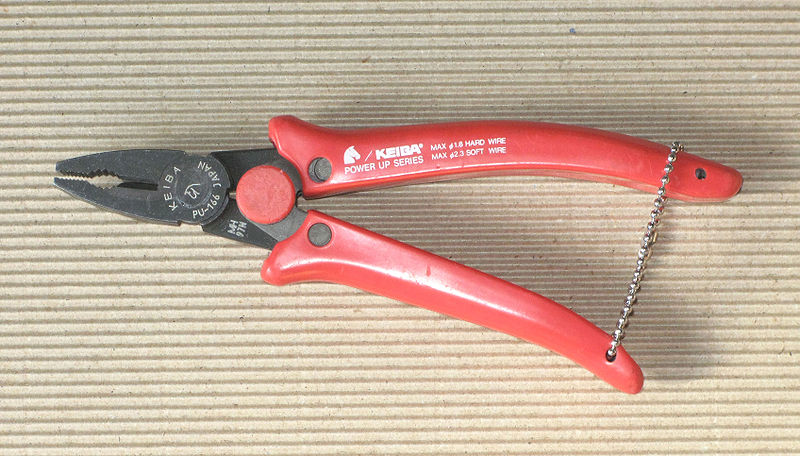
Pliers: Photo by M338
Pliers: Never substitute pliers for another tool such as a wrench to complete the task. It may cause the bolt heads to become chewed. Pliers cannot grip nuts and bolts securely and will slip. If working with electricity use hand insulated grips. Make sure the protective coverings are free from cracks or holes. Use a vise when cutting wire with the pliers. Hold the open end of the wire with your free hand to prevent the cutoff piece from flying through the air. If a vise is not available, use your foot to secure the wire and always use safety glasses.
Other tools available in the shop are to be used for the specific job intended. Crowbars should be used only for jobs that require prying. Files must be cleaned with a file card when finished using. Do not strike the file against another piece of metal. Hand hooks must be kept sharp to prevent slipping when in use. They should be stored with the point in cork to reduce accidents. Scrappers must be kept in good, sharp condition for best results.
Review the Following Points
- Use the right tool for the intended job
- Always wear safety glasses/goggles to prevent serious eye damage.
- It is unsafe to add more leverage to any tool by use of an extension.
- Use the shop vise when the job requires.