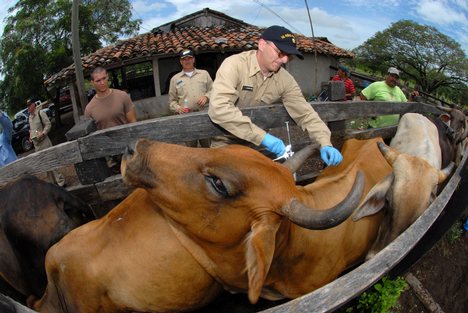
 Guidelines for implementing a vaccination program
Vaccination is effective in preventing some common cattle diseases. Base the decision to vaccinate on whether the potential loss is more than the cost of a vaccination program, or if the disease poses a human health risk.
Identify the diseases that can infect cattle (and people) and can be vaccinated against in your beef enterprise. These include:
• Clostridial diseases
• Vibriosis
• Trichomoniasis
• Leptospirosis
• Mucosal disease
Seek local advice from your veterinarian or state department of agriculture. A table to help determine the presence of these diseases treatable by vaccination is presented in Diagnostic tool to detect presence of diseases.
If your enterprise is at risk of disease, determine whether a vaccination program will be cost-effective. Conditions and vaccines for prevention of common cattle diseases lists vaccines available for common cattle diseases. If you do have to vaccinate, the timing of the treatment is important. The right times for vaccinating different classes of cattle are presented in Vaccination strategies.
Zoonotic diseases (those that affect both cattle and humans) are listed in Zoonotic diseases of cattle. They include:
• Leptospirosis
• Q-fever
• Campylobacteriosis
• Milkers nodule
• Brucellosis
• Tuberculosis
• Cryptosporidiosis
• Yersiniosis
• Salmonella
• Listeriosis
• Ringworm
• Anthrax
It is critical that a thorough risk assessment is conducted on the likelihood of you, or anyone that may come into contact with your animals, contracting one of these zoonotic diseases. If there is any risk at all, a vaccination program should be implemented or a management system put in place that is guaranteed to prevent transmission of the disease.
What to measure and when
If you have not already done so, assess your beef enterprise’s current disease risk status then reassess whenever conditions that affect the disease occur, or the enterprise changes to include new or different classes of stock.
The following should be monitored regularly:
• The conditions likely to lead to the development of common cattle diseases (see Conditions and vaccines for prevention of common cattle diseases);
• The presence of signs of disease treatable by vaccination (see Diagnostic tool to detect presence of diseases);
• The potential loss compared to the cost of a vaccination program;
• Recent cattle prices, to determine the cost-effectiveness of vaccination.
Note: The timing of the vaccination for different classes of cattle is important (see Vaccination strategies).


