Grooming rabbits:
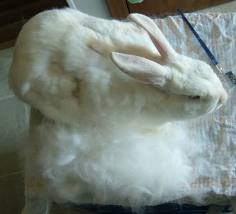
Brushing is a good way of bonding with your rabbit
A rabbit will typically shed once every three months with certain molts being particularly bad. It is important to remove as much loose hair from your bunny by brushing or plucking for several reasons;
- Rabbits are very clean animals and will constantly groom themselves. As they do so, they will ingest much of the loose hair on their body. Because rabbits cannot throw up, any hair they ingest needs to be passed through their digestive system before exiting their body.
- Ingesting too much hair may lead to hairball blockages and GI Stasis which can eventually lead to death.
- Regular brushing will keep your rabbits coat shiny and healthier looking
- Make brushing a part of regular scheduled grooming times. This will allow you to keep a check of ears, eyes, nails, teeth, scent glands and do a once over for any other medical issues.
- Brushing is a good time to bond with your bunnies as many will love it as part of their social interaction with you.
Rabbit hair removal techniques:
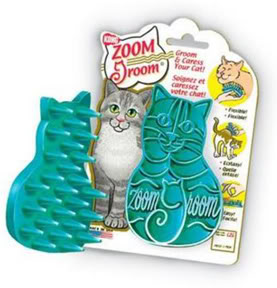
A Zoom Groom
Brushing Tools - using a brush or other grooming tool to remove the loose hair on your bunny. See the sections below on suggested brushes and groomers.
Plucking - Gently plucking the loose hairs from your bunny. Move your hands all over the bunny lightly pulling on the fur as you go. You will get handfuls of loose hairs when your bunny is in full molt. The key is to do this gently so you are removing hairs that are falling off by themselves and not yanking on hairs still attached to your bunny.
Wet Hands - wet your hands, shake them off so they are just damp and run your hands along your bunny. You will see lots of the loose hairs stick to your hands. Rinse and repeat.
How Often Should I Brush my Bunny?
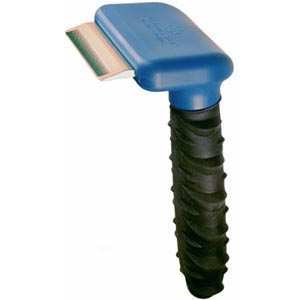
A Furminator
A rabbit should be brushed once a week when they are not shedding and every day during a moult.
A once a week brushing will get off any loose stray hairs that the rabbit may ingest. It is also a good way to get your bunny used to being groomed so when you have to do more extensive grooming, they are familiar with the process.
During shedding you should brush your rabbit daily to get as much hair as you can off the bunny before they ingest it while grooming themselves or their mate. Long Haired Rabbits (such as Angoras, Fuzzy Lops etc.) should be brushed on a daily basis even when not shedding. Their long coats are prone to mats and tangles, so it is recommended to brush them daily. They may also require clipping and shaving.
Types of brushes and groomers:
There are many many kinds of brushes and grooming tools you can try with your bunny. Here are a couple of recommended ones that work well;
The Zoom Groom: This is the miracle groomer for many people. It may not look like much, but it works miracles for
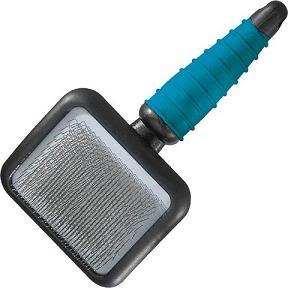
A Slicker
picking up loose hairs. Brush your bunny without putting too much pressure. The rubber nubs will catch and hold the loose hairs in your bunny’s coat. A word of warning - keep out of the reach of bunnies - it’s made of rubber and rabbits tend to like chewing them.
Wire Slicker Brush: This brush should be used with caution. Rabbit skin is very delicate and a wire slicker brush can poke and hurt them. They should be used very gently and never directly against their skin.This brush is good for getting the hairs from the undercoat of the rabbit as it will grab on to those tiny fuzzy hairs.
Lintroller: The lint roller you use to get fur off your clothing also works remarkably well to get fur off your rabbit. They are gentle enough that it will not pull out hairs that were not ready to come out on their own. This can be used on a daily basis to keep the loose fur under control.
The Shed Ender or Furminator: Professional grooming tools such as the shed ender or the furminator work to
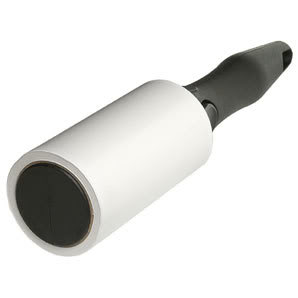
A Lintroller
remove loose hairs form the undercoat of the rabbit. To use this groomer, you run your hand in the opposite direction of hair growth (to expose the undercoat), then comb gently in the direction of hair growth. You should use this tool with caution as the tines of the comb can poke your rabbit’s delicate skin. There are many other types - experimentation is best to find what will work with your bunnies fur type. Not all rabbits have the same type of fur, therefore the same type of brush or comb will not work on every bunny. Try different kinds until you have success.
.
.
Bathing rabbits:
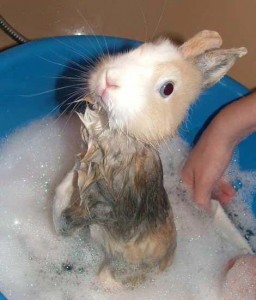
Rabbits usually don't like being wet
Although a rare bunny may grow up swimming in the family pool and going on camping trips where she paddles around in the lake, the vast majority of rabbits, like their ancestors, do not relish getting wet. Even an occasional bath is quite stressful to the average rabbit, and is not recommended.
NEVER-unless your veterinarian advises it to bring down a fever-should you give a sick rabbit a bath. Because seemingly healthy rabbits can have undiagnosed problems, it’s best not to subject them to the stress of a bath. If your rabbit is very badly infested with fleas, there’s a good chance that he is already compromised and may go into shock when bathed. There are many safe alternatives to flea control (see these under “Fleas,” above). Also, a thoroughly wet rabbit takes a very long time to dry, so spot cleaning the dirty area with an application of baby cornstarch (available at any supermarket in the baby section) (do not use talcum, as it is carcinogenic) and then gently combing out the dirt with a fine flea comb is better than a wet bath. A wet rabbit can quickly become hypothermic. If your rabbit is wet to the skin for any reason, be sure to thoroughly blow dry the bunny until even the undercoat is dry and fluffy. Normal rabbit body temperature ranges from 101oF - 103oF. Because rabbit skin is very delicate, and rabbits are sensitive to heat, never use a blow dryer on a setting higher than “warm,” and constantly monitor the temperature of the air on the bunny’s skin by placing your hand in its path.
Rabbit Fleas:
A flea comb is a non-toxic device that takes more patience, but is both physically and psychologically rewarding. Most rabbits learn to love the attention of being flea combed, and it can be used as a supplement to your main flea-control program. Consult your vet if flea control or associated health issues become a problem.
Warning:
Frontline (fipronil) has been linked to neurological damage and death in rabbits, although this product is apparently safe for dogs and cats. The manufacturer (Merial) has placed a warning on the Frontline label stating that Frontline should never be used on rabbits.
Flea powders, even those considered safe for cats and kittens or advertised as “rabbit safe”, are not recommended for use on rabbits.
Flea shampoos, even those considered safe for cats and kittens or advertised as “rabbit safe”, are not recommended for use on rabbits. Bathing of rabbits, in general, is strongly discouraged because the stress of the bath itself can cause serious health problems, and has in some cases been linked to the death of the rabbit. Flea baths or dips are NOT recommended for this reason. For environmental flea control, sprays and “bombs” are not recommended, as they may leave harmful residue that the rabbit can ingest.
Tip:
Try taking your bunny to a place where they are not familiar - on top a table, in a bathroom, on the counter top, on a bed etc. Place them to sit and using whichever technique you choose, groom and brush your bunny in the direction of hair growth. Have a couple treats on hand to reward your bunny for sitting still or just to keep them occupied while you brush.