Some tips for keeping your rabbits healthy and free from disease:
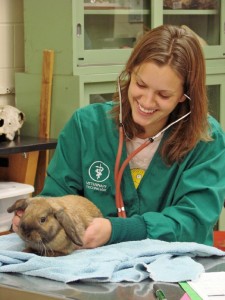
Build a rabbit hutch [cage] which can be easily cleaned and will keep your rabbit safe from the elements of weather. Build a roomy and comfortable hutch or cage. Your rabbit must remain dry and free of drafts. Place the hutch in an area where it will avoid dampness and excessive heat.
Keep all your hutches and equipment clean. This will help you to avoid most infectious diseases and injuries.
Learn to recognize rabbit diseases and treat at the first sign of illness should it become necessary.
Isolate ALL new arrivals for two to four weeks. Water and feed them after the rest of the herd has been cared for.
Beware of lending or borrowing rabbits for breeding. This is a good way to bring disease to your herd.
If you suspect something is wrong with your rabbit please do not wait - go to the vet immediately. Signs include bleeding, broken bones, watery diarrhea, no poop for more than 12 hours, not eating/drinking, un-responsive/lethargic/listless behavior, screaming, constant LOUD teeth chatter. Be safe not sorry. Go to the vet!
Pasteurella multocida Infection in Rabbits:
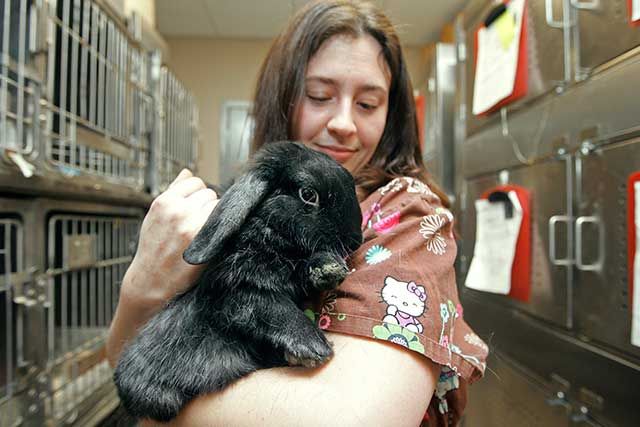
Be familiar with the symptoms of various rabbit diseases
Pasteurella multocida is a well known cause of morbidity and mortality in rabbits. The predominant syndrome is upper respiratory disease or “snuffles.” P. multocida is often endemic in rabbit colonies and the acquisition of infection in young rabbits is correlated to the prevalence in adult rabbits. If young rabbits are removed early from infected adults, the chance of infection for the young decreases. Rabbit colonies free of P. multocida infection have been established by fostering cesarean-derived neonates onto P. multocida-free does or by treating does with antibiotics prior to kindling and up to weaning of kits. Transmission is mainly by direct contact with nasal secretions from infected rabbits and may be greatest when rhinitis induces sneezing and aerosolization of secretions. The bacteria can survive for days in moist secretions or water. P. multocida gains entry to the respiratory tract primarily through the nares, and once infection is established, may colonize also the paranasal sinuses, middle ears, lacrimal ducts, thoracic organs, and genitalia. Occasionally rabbits harbor chronic infections of internal tissues or organs, such as middle ears or lungs, without any signs of rhinitis and are negative for P. multocida by nasal culture.
Colonization and disease is influenced by factors related to both host and pathogen. Different strains of P. multocida have been isolated from rabbits. They are classified by capsular type and serotype; A is the most common in rabbits in the U.S., but A:3 and other A and D serotypes exist. More severe disease has been associated with A:3 and D strains. Bacterial capsular polysaccharides are important in inhibiting phagocytosis; lipopolysaccharides confer resistance to complement and bactericidal activity of serum. Pili (fimbria), which are filamentous appendages elaborated by bacteria, have receptors which may help P. multocida stick to and colonize mucous membranes. Toxin production is another factor which influences virulence; toxin produced by bacteria can cause disease by itself and in sites removed from where the bacteria reside. This has been shown with purified toxin from P. multocida. A syndrome of atrophic rhinitis or degeneration of the nasal turbinates has been associated with toxin-producing strains of P. multocida in rabbits. Both capsular types D and A have been shown to produce toxin. Preexisting or simultaneous infections with other respiratory bacteria such as Bordetella bronchiseptica, may influence the ability of P. multocida to colonize and debilitate the tissues.
Ability of the rabbit to resist P. multocida infection depends, in part, on health of the exposed mucosa, and probably on rapid production of mucosal antibodies (IgA) which will inhibit growth of the bacteria. High levels of humoral antibodies (IgG) are not associated with elimination of infection but rather with chronic infection. Thus measurement of P. multocida IgG antibodies in serum is helpful in detecting infections inaccessible to culture in the live rabbit. Attempts to induce immunity and protection using bacterins, potassium thiocyanate extracts or attenuated live bacteria have failed to prevent pasteurellosis over time. However, some unvaccinated, untreated rabbits exposed to P. multocida resist infection altogether and of those with infection a significant number resist disease. The factors which enable that resistance to occur are of great interest. Recent and ongoing studies involve determining whether immunity may be induced using specific and highly purified fractions of P. multocida as antigens in vaccines and whether these antigens can be used diagnostically.
SUMMARY: 10 Practical Points about Pasteurella multocida in Rabbits
-

Knowing the symptoms of disease aids rabbit health
Not all rabbits carry P. multocida.
- If removed from sources of infection early, a rabbit may never acquire P. multocida infection.
- Not all rabbits with P. multocida get sick.
- P. multocida is still the most common cause of respiratory disease, primarily rhinitis, in rabbits.
- Some P. multocida strains are more virulent than others, but most clinical laboratories cannot differentiate strains.
- Chronic infection and disease can occur in areas of the body inaccessible to culture.
- Hidden infections sometimes may be detected by radiology, or serology.
- Some rabbits are able to resist or clear mild infection without treatment.
- Rabbits with disease due to P. multocida infection should be treated with appropriate antibiotics.
- Some rabbits with chronic infections or deep abscesses may not improve but be stabilized with antibiotics. Many owners are willing to use antibiotics on a long term basis.
Author:
Barbara Deeb DVM MS Assistant Professor Dept. of Comparative Medicine University of Washington.
Also sourced advice from Mirella Brown in Canada on when it is necessary to contact a vet.