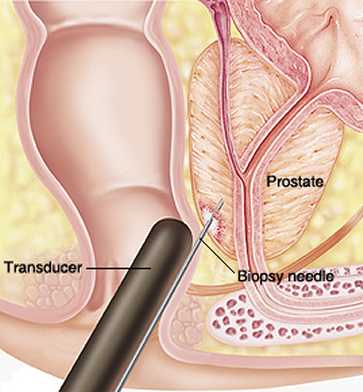
Prostate biopsy
Diagnosis
Your doctor will confirm the diagnosis with a number of tests. You may have some or all of the following tests. Prostate specific antigen blood test Prostate specific antigen (PSA) is a protein made by both normal prostate cells and cancerous prostate cells. Other factors can also increase PSA levels in your blood, including inflammation in the prostate, benign prostate enlargement or prostate cancer.
PSA levels are measured using a regular blood test. Because PSA levels can be variable, it is common for your doctor to use results from more than one blood test. Some men with prostate cancer have normal PSA levels, and only one in three men with an elevated PSA level has cancer. As it is not a definitive test, a PSA test is normally used with other tests to diagnose prostate cancer.
Digital rectal examination
The digital rectal examination (DRE) involves a doctor inserting a gloved finger into your rectum to feel the back of the prostate gland. If your doctor feels a hardened area or an odd shape, further tests will be done. The DRE may be uncomfortable but is rarely painful. It is unlikely to pick up a small cancer or one the finger can’t reach. Doing this test with a PSA test improves the chance of finding early cancer.
Biopsy
A biopsy is when a small piece of tissue is removed from the prostate for examination under a microscope. It is done if the PSA test or DRE show abnormalities. The biopsy determines whether you have prostate cancer, how abnormal the tissue is and how fast the cancer might grow (the grade).
Tell your doctor if you are on any medications, including herbal medicines, before your biopsy to reduce the risk of problems. A biopsy is done with ultrasound guidance. An ultrasound probe called a transrectal ultrasound (TRUS) is passed into the rectum. The TRUS is about the size of a thumb. It shows the shape and texture of the prostate on a screen. The ultrasound picture helps guide the doctor to insert a small needle from the probe through the rectum into the prostate. About 6–18 samples of tissue are taken from different parts of the prostate.
Most biopsies are done with some form of anaesthetic. It may be uncomfortable and there may be some bleeding. You will be given antibiotics to reduce the possibility of infection.
Further tests
If the biopsy shows you have prostate cancer, other tests may be done to work out the stage of the cancer.
Blood tests
Blood samples may be taken regularly to monitor your PSA level, check your health and see if the prostate cancer has spread.
Bone scan
A bone scan can show whether the cancer has spread to your bones. A small amount of radioactive material (called technetium) is injected into a vein. Technetium is attracted to newly growing bone cells, which may indicate cancer spread. After 1–2 hours, you will have a body scan. This painless scan will show where the technetium is. It will not make you radioactive.
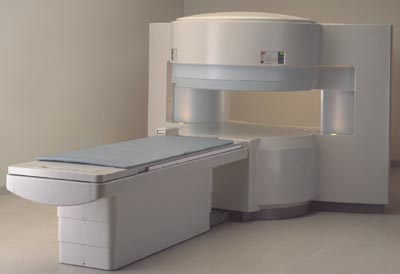
MRI scanning machine.
MRI scan
The magnetic resonance imaging (MRI) scan uses radio waves and magnetism to build up detailed cross-section pictures of the body. The scan involves lying on an examination table inside a metal cylinder – a large magnet – that is open at both ends. The MRI is sometimes performed using a probe inserted into the rectum. If the prostate cancer is advanced, an MRI can help to confirm if the cancer is contained within the prostate. The dye injected into your vein for a CT or MRI scan, called a contrast solution, may contain iodine. If you are allergic to iodine, fish or dyes, let the person performing the scan know in advance.
CT scan
A CT (computerised tomography) scan is a type of x-ray procedure. It uses x-ray beams to take pictures of the inside of your body and can show if the cancer has spread to the lymph nodes of the pelvis and abdomen. A dye is injected into a vein, probably in your arm, to help make the scan pictures clearer. This may make you feel hot all over for a few minutes. You will then lie flat on a table while the CT scanner, which is large and round like a doughnut, moves in and out of the scanner. The test is painless and takes about 10–30 minutes. Most men are able to go home when their scan is done.



