 Guidelines when considering using different breed types
Profitable crossbreeding
Bill Hoffman, NSW Agriculture, Casino, NSW
(Excerpt from a 2004 presentation by Bill Hoffman at Grafton Research Centre. The paper is based on progress information from the regional evaluations of breeds being conducted under the umbrella of the Beef Quality CRC, with MLA funding). The focus is on sale cattle and as such does not cover attributes relevant to the breeding herd, such as reproduction.
1. Background
Selecting a profitable crossbreeding system that will work within the many constraints that most beef cattle producers operate under can be complex.
2. Important aspects to consider
When selecting a possible crossbreeding system, producers need to:
2.1 Consider the overarching constraints such as:
-Market options
-Environment (pastures, seasonal conditions)
-Existing preferences (for breed, selling methods, etc.)
-Overall goals for the business.
2.2 Recognise drivers of profit – a key driver of profit is gross income which
is a direct reflection of number sold multiplied by the average value.
Value is influenced by quality and weight.
Quality is difficult to describe but will normally be associated with:
-Specification compliance (fat etc)
-Yield (dressing % and retail beef yield – RBY)
-Eating quality (intra muscular fat – IMF, etc.)
3. Breeding for a market
The ranking of these quality indicators will change according to the target market. Broadly the beef market may be broken into three segments:
-High marbling trade (marble score greater than MS 2).
-Table beef trade (high eating quality).
-Manufacturing beef
Before setting breeding objectives for the herd and developing a breeding plan, beef producers need to focus on the traits that are important in regard to the target market.
Most likely the following traits will be included:
-Weight
-Fat depth
-Yield characteristics (muscling)
-Intra muscular fat (marbling)
The ranking of, and the weightings given to, the above traits will vary significantly between the high marbling versus the table beef market segments.
4. Some options for satisfying these markets
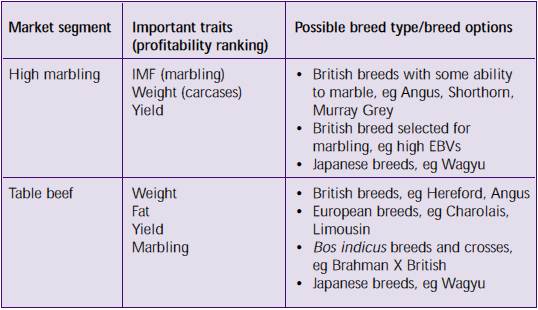
How breeding systems can exploit genetics
Source: MLA EDGEnetwork ‘Effective Breeding Workshop Notes’
Sources of genetic differences
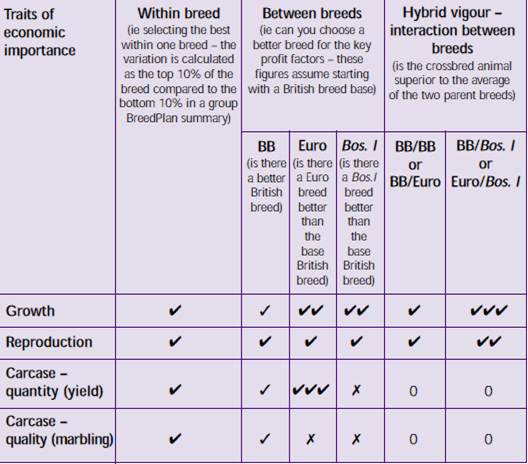
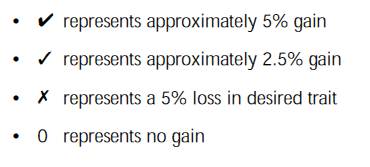
Potential to change key factors
– Japanese B3 example filled in for a case study herd
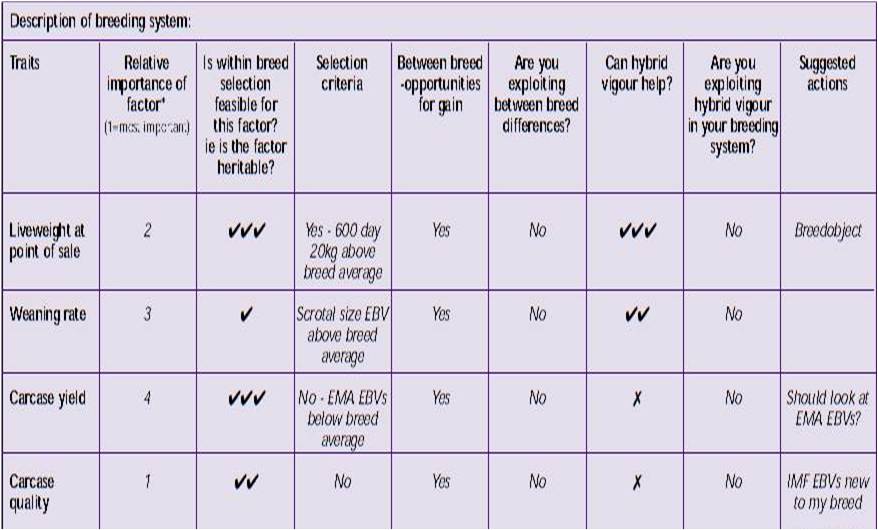
*Indexing programs such as BreedObject, assist to determine the relative importance of traits more accurately.