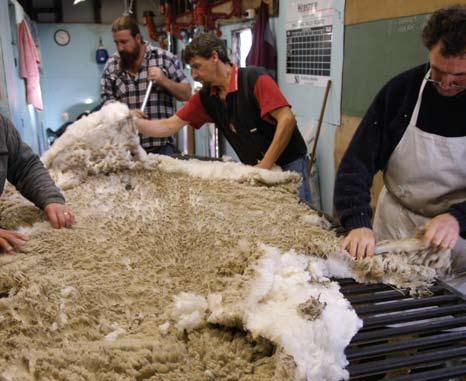
 Background information
The Australian Wool Exchange (AWEX) Code of Practice for the preparation of Australian Wool Clips describes the recommended practices and standards. The code aims to:
- Prepare uniform, consistent, reliable, predictable, low risk lines of wool suitable for the diverse needs of wool processing and so maximise competition from buyers for the wool;
- Present a product free of contamination that is correctly documented, described and packaged.
Clips prepared to the Code of Practice will meet the needs of wool processors and attract the maximum competition at auction to maximise the return.
Australian wool is renowned worldwide for its whiteness and cleanliness and, consequently, commands premiums compared to wools from other countries.
Contamination of the Australian Merino wool clip has mostly been associated with dark fibres originating from urine stains and isolated pigmentation found in the fleece. In recent years the introduction of exotic sheep breeds has brought a new and increasing source of dark and medullated fibre contamination. This contamination costs about $100 million each year to remove or correct by picking out from fabric after weaving.
Key decisions, critical actions and benchmarks
Cost of production
Cost of production (COP) is a key factor affecting the profitability of wool producing businesses. COP, measured in dollars per kilogram of clean wool, is an indication of the outlay needed to produce each kg of wool (see tool 1.7 in
Plan for Success and other COP tools including the Elders COP calculator).
Calculating the cost of production (in cents per kilogram) is an important step in assessing and improving the performance of a wool growing enterprise. COP is most useful when calculated over two or more years, to track trends and influences over time.
The key benefits of knowing COP are to:
- Provide a benchmark to measure the performance of your wool enterprise year on year.
- Enable a comparison of the efficiency of your enterprise annually with other wool producers.
- Identify any opportunities for improvement and where your enterprise is performing well
- Help set a target sale price which will achieve a satisfactory profit margin and help determine the right time and price to market your wool.
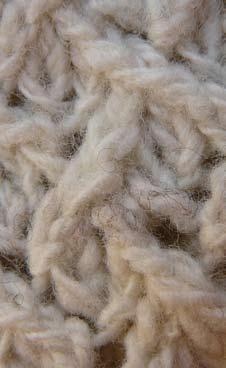
Single dark fibres in a white or pastel fabric need picking out at a cost of more than 10 cents per kilogram
Single dark fibres in a white or pastel fabric need picking out at a cost of more than 10 cents per kilogram
Managing shearing
Shearing management and wool harvesting practices can have a big influence on quality of wool sold. Tool 2.4 contains basic guidelines to assist with planning for shearing, wool preparation and classing.
Dark and medullated fibre contamination
AWI-funded research by CSIRO developed the dark and medullated fibre (DMF) test for use on wool core-samples routinely used for yield and micron testing by the Australian Wool Testing Authority (AWTA). For around $40 (+GST), the voluntary DMF test:
- Enables Australia’s white-wool producers to promote their wool as such to buyers
- Provides buyers and processors with a reliable and quantified measure of the level of dark and/or medullated fibre risk in sale lots.
The Dark and Medullated Fibre Risk (DMFR) Scheme is a voluntary declaration that rates clips for contamination risk and advises purchasers of Australian wool of the likely level of contamination of white wool from traditional natural pigmentation or stains and new sources such as exotic breeds.
The DMFR declaration requires Australian Merino wool producers to formally identify the following information on their wool classer’s specification or associated declaration form:
- If their stock have been in contact with exotic sheep breeds
- If crutched
- If crutched within 3 months of shearing
- Age
- Sex
- Wool description.
Tool 2.3 describes how this information contributes to the ratings. If the classer’s specification form does not include a section for this information, a separate declaration form is available from wool brokers.
Wool producers can nominate all, some, or certain lines in their wool clip for inclusion in the voluntary declaration scheme.
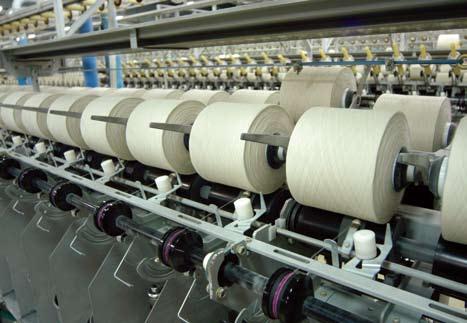
Eco / organic wool
Recent market research indicates that there is a growing niche market for ‘eco’ and organically grown wool. Ethical wool products are those made from fibre grown in an environmentally sustainable manner (see procedure 5.4 in Protect Your Farm’s Natural Assets) and that recognise animal welfare (see procedure 11.5 in Healthy and Contented Sheep), human rights and social justice standards.
While this is a niche market, it is likely that the demand for ethical and organic wool will increase substantially over the next five years. The EU Eco-label provides one such voluntary opportunity where productsare certified for their ‘kindness to the environment’. In the case of wool products, this includes chemical residues on raw wool falling below certain prescribed levels. The Australian wool industry is well placed to supply these niche markets. The EU Ecolabel provides some simple rules about chemical use for greasy wool that sheep producers can aim to meet (see tool 2.5).
Best practice chemical use
Guidelines are being developed to enable the most cost-effective external parasite (lice and blowflies) control and achieve environmental protection, human safety and quality of final product (wool and meat). Tool 2.6 describes currently recommended practices for the use of chemicals (pesticides) to control lice and blowflies on sheep.
Read
Preparation of Australian Wool Clips: the Code of Practice 2007–2009: the Australian standard for preparing wool to meet the needs of wool processors.
It contains recommended practices and technical explanations for wool producers and woolclassers to help maintain Australia’s reputation as the world’s premier supplier of a quality natural fibre. Contact The Woolclasser Registrar on (02) 9428 6100 or email registrar@awex.com.au for your copy.
BOARDTalk: the quarterly Wool classer Newsletter published by AWEX. For previous copies, visit: http://www.awex.com.au/scripts/nc.dll?AWEX.721054:STANDARD:462977925:pc=PC_10
Fact Sheet: ‘Guidelines for producing European (EU) eco-label, low or nil residue wool’: www.agric.wa.gov.au/pls/portal30/docs/FOLDER/IKMP/PW/AH/CHEM/FSNILLOWRESGUIDELINES.PDF
Visual Assessment Scores: a national set of standardised visual scores to consistently describe, record and class sheep conformation, wool quality and breech traits. To order your free copy, call the AWI Helpline on 1800 070 099 (free within Australia).
View
AWI Cost of Production Calculator for Wool: calculating your cost of production is an important step in assessing flock profitability and a first step to making change: http://www.woolcheque.com.au/ LivePage.aspx?pageId=89
Elders Business Tools: includes the Elders Cost of Production on-line calculator: http://wool.elders.com.au/businesstools.asp
AWEX Code of Practice for Woolclassers: visit the AWEX website for your copy:
http://www.awex.com.au/scripts/nc.dll?AWEX.65680:STANDARD:1693608426:pc=PC_15
Monitor AWI and AWEX websites to keep abreast of current developments:
- www.wool.com.au
- www.awex.com.au
AWTA Raw Wool Testing Services: summary of the major services AWTA provides to the industry, and descriptions of the processes used to achieve test results: http://www.awta.com.au/Publications/Marketing/Raw_Wool_Servic/Testing_the_Clip.htm
Dark and Medullated Fibres Program: protecting the reputation of Australian White Merino Wool:
- DMF testing: http://www.awta.com.au/Publications/Marketing/Dark_Fibre/Dark_Fibre.pdf
- DMFR scheme, including links to DMF declaration forms for wool producers: http://www.awta.com.au/Publications/Marketing/DMF_Risk/DMFR_Scheme.htm
- EU Eco-label web site: www.ec.europa.eu/environment/ecolabel/index_en.htm
Farmnote 30/2002: a good overview of the issues posed by wool residues, published by the Department of Agriculture and Food WA: www.agric.wa.gov.au/pls/portal30/docs/folder/ikmp/aap/sl/wool/fn030_2002.pdf.
AWI Wool Handling and Shed Skills DVD: a Training DVD for wool handlers covering throwing, skirting, rolling and other shed responsibilities. Other DVDs in the series include Novice Shearer Training, Improvers / Professional Shearer Training and Gear Maintenance and Grinding. To order your free DVDs, call the AWI Helpline on 1800 070 099 (free within Australia).
Attend
Woolclasser education courses: prior to being registered by AWEX as a woolclasser, individuals need to undertake a wool classing training course. Find out more about wool classing courses by contacting your nearest TAFE or training organization, contacting AWEX on (02) 9428 6140 or emailing: industryservices@awex.com.au
Note: To access the tools mentioned in the text go to the source website. www.makingmorefromsheep.com.au


