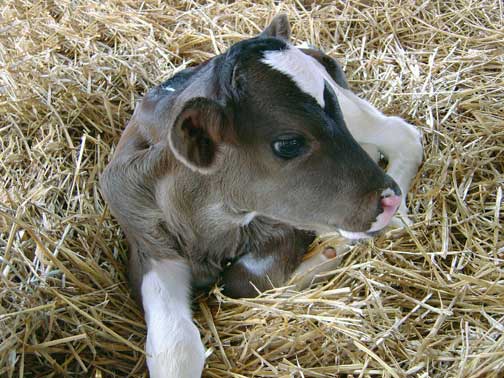
 The pregnant yearling heifer should continue to gain during her second winter at a rate of approximately one pound per day up to calving. At this point in time the heifer needs additional nutrients to meet her own needs, for continued growth, as well as, for gestation. These pregnant growing heifers must be handled as a separate management group.
Calving Management
The two main problems facing cow-calf operators in breeding replacement heifers to calve at two years of age are greater difficulty at calving and poor conception rate after calving.
More two-year-old heifers require assistance at the first calving than three-year-olds. In most cases 20 to 30% of two-year-old first calf heifers will require assistance. A recent Benchmark Study conducted by Ontario Veterinary College showed that an average of 22% of first calf two-year-olds required assistance. It is important then that these first calf heifers be managed and fed separately to ensure that they do not become over or under conditioned and that calving be monitored more closely in order that assistance can be provided if and when necessary.
Feed restriction during the latter stages of pregnancy is not a wise approach to managing first calf heifers. Research has shown that feeding below recommended levels will only slightly reduce the birth weight of calves, unless a severe restriction in energy is imposed. However, this does not necessarily reduce calving difficulty because reduced energy intake reduces the size of the heifer herself. Specifically the pelvic opening is reduced in underfed heifers and no reduction in calving difficulty is observed. Underfeeding heifers does result in heifers weak at the time of calving, lower calf survival rates, less milk for calf growth and rebreeding is more difficult. Overfeeding, in late pregnancy causing heifers to become overly fat, is associated with increased calving difficulty and should be avoided.
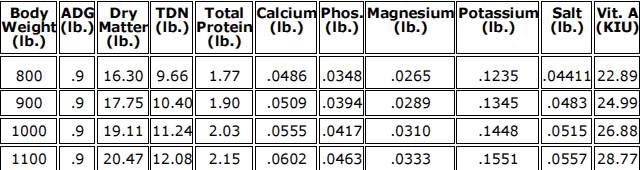
Table 1: Daily Nutrient Requirements of Bred Yearling Heifers (Last 1/3 pregnancy)
Preventing Calving Difficulty (Dystocia)
Calving difficulty in two-year-old heifers is caused by undersized heifers or oversized calves. These are not one in the same. Birth weight is controlled mainly by genetics and is considered to be the primary cause of calving difficulty. This trait is highly heritable and has a significant correlation with calving difficulty which reinforces the need for the recording of accurate birth weights of breeding animals in order to help reduce the incidence of dystocia. Proper development and growth of replacement beef heifers is in the control of cattle producers. Considerations for minimizing calving difficulty:
1. Mate yearling heifers to low risk bulls;
• A proven bull for calving ease
• A moderate to low birth weight bull of her own breed
2. Feed pregnant heifers adequately: do not underfeed or overfeed.
3. Give first-calf 2-year-old heifers extra attention at calving time.
4. Know when and how to give assistance and when to consult a veterinarian.
5. Within a herd, select replacements from among the larger (older and growthier) heifers.
6. For long term progress in a herd, select sires having above average EPDs for maternal calving ease.
7. Possible use of pelvimetry to cull replacement heifers with extremely small pelvises.
Calving problems in two-year-old heifers are very common. Permanent solutions to the problem demand long range breeding and management goals for the future of the breeding herd. Calving ease should be a priority for all.
Feeding Lactating First Calf Heifers
The second major problem associated with calving two-year-olds is failure to conceive. Lactation is a much more severe strain than gestation on the young female. Normal body development is retarded, at least temporarily and some heifers may be permanently stunted unless proper nutrition is provided.
The heifers’ nutrient requirements are greatest during this period because she must maintain her body, nurse a calf, recover from calving, cycle, rebreed and continue to grow. If adequate nutrition is not provided this two-year-old heifer may fail to rebreed.
The daily nutrient requirements of a nursing heifer are indicated in table 2.
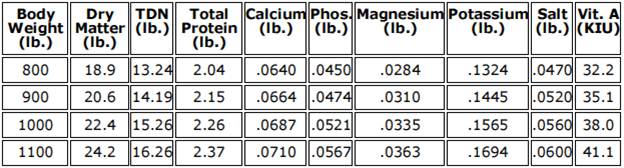
Table 2. Daily Nutrient Requirements of the First Calf Heifer (condition score 3, ADG .75, nursing a calf)
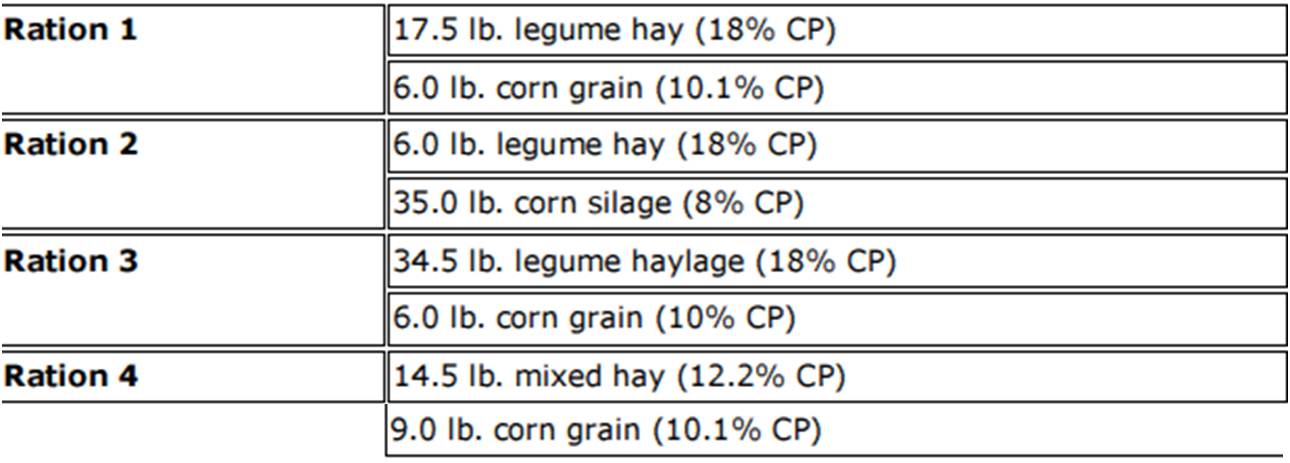
Prior to pasture, top quality forage must be fed with adequate supplementation of energy (grain) to ensure adequate continued growth, milk production and early conception. If feed supplies are not adequate to maintain heifers in good body condition, early weaning of the calf crop may be a consideration in preparing the pregnant second calf “heifer” for winter. These heifers still need preferential treatment in terms of nutrients for growth and gestation. They should be managed and fed separately from the mature cow herd.
Producers not willing to commit themselves to higher levels of nutrition and management for raising replacement heifers to calve as two-year-olds have the alternatives of calving heifers approaching three years of age or buying in replacement heifers and/or young cows. Each producer needs a system that works and optimizes production.
Successful management and feeding of replacement beef heifers is a real challenge for most cow-calf producers. Feeding to meet the nutritional requirements for growth, pregnancy, milk production and rebreeding is a major part of a total management program.



