 What is BSE?
Bovine spongiform encephalopathy (BSE, often called ‘mad cow disease’) is a disease that causes brain changes and death in cattle. BSE does not occur in Australia. Overseas the disease has been shown to spread through meat products fed to cattle. New South Wales has banned the feeding of all animal products, including fish meals and feathers (called ‘restricted animal material’) to ruminant animals such as cattle, sheep, goats and deer.
These bans provide insurance against any spread of the disease in Australia and satisfy the requirements of our meat export markets.
The connection between poultry litter and BSE.
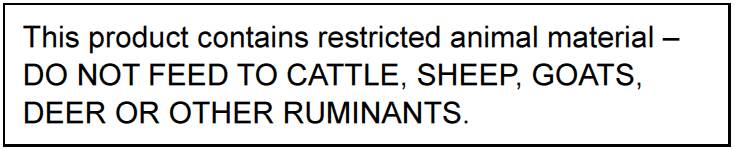
Most poultry feeds include a significant proportion of meat meal. Note that poultry feeds which include meat meal should have the following statement on their delivery dockets:
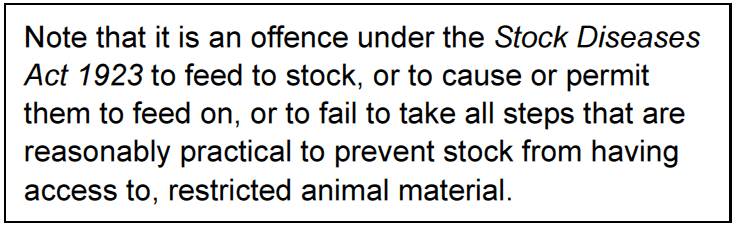
Stock such as cattle and sheep can be exposed to this meat meal by being allowed access to litter or manure containing spilled poultry feed. Such litter or manure could be within sheds, stacked for removal, stacked for composting, stacked awaiting spreading or spread on paddocks.
Protecting stock from risk.
You can take the following actions to ensure that stock on properties to which you deliver poultry litter or manure, or on which you spread these materials, are not put at risk.
Make sure your truck’s bin does not leak.
If your truck leaks, litter or manure may fall out into paddocks where stock animals can graze it. Trucks carrying litter should be properly secured.
Do not dump or spread litter in paddocks containing stock.
Since it is essential that cattle, sheep, goats or deer do not eat poultry litter you should not dump litter, or spread it, on paddocks which have stock animals grazing in them. Litter should only be dumped into a fenced off area in such a paddock. Ask the client where else you can dump the litter or manure so stock do not have access.
 If you are spreading litter the client should be advised to remove the stock before you spread the litter, and to keep them out of the paddocks for at least the next three weeks.
If the client insists you dump or spread the material in a paddock containing stock you could advise the nearest office of the Department of Primary Industries.
If you spread litter for clients, only spread it at recommended rates.
Poultry litter should only be spread on paddocks at the recommended rate of approximately 15 m3 / ha. If this rate is exceeded there could still be litter on the pasture when stock are returned to the paddocks to graze it. Litter should be spread in accordance with the NSW DPI Primefact 534 Best practice guidelines for using poultry litter on pastures.
Provide advice to purchasers of poultry litter.
When you deliver poultry litter to farmers you could provide them with a copy of the Departmental Primefact 534 Best practice guidelines for using poultry litter on pastures or refer them to the website.
 Author.
Lee Cook



