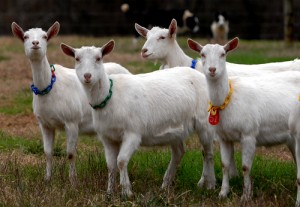
 It is important that you are able to recognise those plants in your area that are toxic, particularly those which are toxic to goats. In terms of managing the threat posed by toxic plants there are a number of factors that you need to consider:
• Poisonous plants may include pasture species at certain growth stages, native species and garden plants.
• When animals are hungry they may gorge themselves on things that they would otherwise avoid. Therefore, do not introduce hungry goats to areas where toxic plants are known to be growing. If in doubt, let a few tasters in for a short period of time to check that the area is safe.
• Goats are curious animals and they will readily try something new. Be aware that goats may start eating poisonous plants when moved to a new area.

goat feeding on capeweed
• Herbicide treatments tend to increase the palatability of plants, including toxic plants.
• The relative toxicity of plants may vary according to the season and the stage of plant growth.
• Wilting in dry conditions and rapid growth after rain can increase the toxicity of a plant.
• Nitrite poisoning can be a problem when grazing green oat crops and other specific plants, such as variegated thistle, nitrogen-fertilised ryegrass, capeweed and mintweed.
• Some plants may only be toxic when growing in a particular soil type.
• Some plant toxins can be cumulative; the damage to internal organs may not be noticed immediately, but may develop over time.
• Applying fertiliser to promote lush growth may increase toxicity eg. applications of urea can increase the risk of nitrate poisoning.
• Stressful growth conditions, such as drought and insect attack, may cause toxins to concentrate in the plant.
• Small amounts of toxic plants fed in a well mixed feed or as part of a pasture diet may be tolerated.

variegated thistle
• Animals suffering from mineral deficiencies may develop cravings which cause them to eat plants that they would normally reject.
• Plant parts can vary in their relative toxicity. In some plants it may only be the seeds or the bark that is toxic.
There are a many good references that can help you to understand which plants are toxic, the level of toxicity, the impact of consumption by stock and the environmental factors that promote toxicity. Some useful titles include; Everist, S.L. (1981) ‘Poisonous Plants of Australia’ Angus & Robertson, McBarron, E.J. (1983) ‘Poisonous Plants: A handbook for farmers and graziers’ Inkata press, McBarron, E.J. (1976) ‘Medical and veterinary aspects of plant poisoning in New South Wales’ New South Wales Agriculture, Simmonds, H. Holst, P. Bourke, C.(2000) ‘The palatability and potential toxicity of Australian weeds to goats’ RIRDC, Colby, P. (2000) Natural Goat and Alpaca Care. Landlinks, Vincent, B. (2005). Meat Goats Breeding, Production and Marketing. Land Links.



