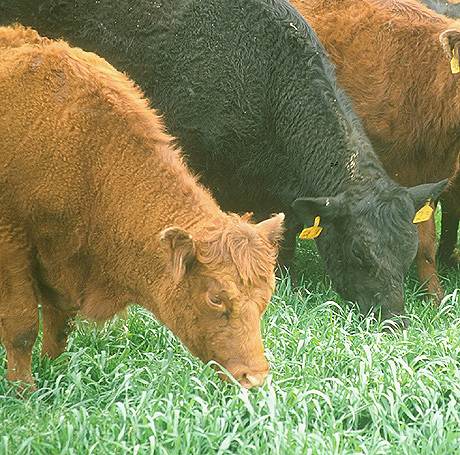
 Guidelines to achieving best utilisation and animal performance
Select a paddock using pasture objectives (growth phase, mass and quality) that meet animal production targets. To determine predicted production levels and expected daily pasture intake by cattle:
1. Define the class of cattle in terms of sex, weight, stage in reproductive cycle (if female) and growth target (to gain or lose weight at a specified rate – kg/day).
2. Use the MLA Pasture Ruler to look up the pasture performance criteria (minimum quantity and quality) required to achieve targeted production levels.
In most grass and legume based pastures, the best utilisation and animal productivity are achieved when grazing is completed between a minimum of one day and a maximum of three days in each paddock of the planned grazing sequence. In some paddocks, tactical grazing may be applied to achieve seasonal objectives, for example to encourage desirable species such as clover to set seed, and discourage undesirables such as weeds.
In practice…
Where the graze duration is more than three days:
• Pasture regrowth will be re-grazed before leaf area has recovered, reducing stores of soluble carbohydrate in roots and slowing the regrowing process. Repeated re-grazing can cause plant death and loss of productive pasture species.
• Animal performance is lowered through wastage (fouling and trampling) of pasture.
Where the graze duration is less than one day:
• Labour and capital (fencing and water) costs are high to accommodate more frequent movements of herds.
If there are insufficient stock numbers and the grazing pressure is too light:
• Useable pasture is not fully utilised and pasture energy is wasted due to an increasing rate of leaf senescence (death) before the next grazing.
• Patch grazing can occur and lead to under- and overgrazing of pasture areas within the grazing unit.
A combination of tactical grazing and adjusting the cattle class or herd size is the most practical method of ensuring that the grazing duration will achieve best pasture use and animal performance targets. If pasture mass is over the desired maximum and a larger herd is not available, reduce pasture through grazing with a lower priority herd (for example dry cows), fodder conservation (if cost effective) or pasture topping by mowing, slashing or chemical treatment to manage weeds.
What to measure and when
Calculations are based on:
• How much pasture is available for cattle to graze;
• An estimate of the short-term stocking rate/ha;
• What pasture allowance is required for growth or maintenance of various classes of cattle;
• The stocking rate over short grazing periods (one day); and
• The stocking rate over longer grazing periods (three days or more).
The more frequently these calculations are made in the lead-up to grazing a paddock in the planned sequence, the greater the precision in determining the grazing duration to achieve best utilisation and animal performance targets.