Coffee seedlings need shade protection for maximum growth
Bare-rooted planting
The bare-root method has been used many times in North Queensland with mixed results. With this method seed is sown and grown in rows on raised soil beds under shade cloth. The plants are dug up by shovel or by passing a cutter bar under the plants. Plants are then planted bare-rooted. The method is cheaper and less labour intensive than raising plants in pots and transporting large numbers of potted plants to the field. However unless done properly, the survival rate is lower and plants suffer more transplant shock than seedlings planted using nursery cells. As a result it takes longer to establish trees.
J root (`goose neck’)
When transplanting, take great care not to compress the seedling or bend the main root. If the tap root is bent, the seedling develops a typical J root shape which will not correct as the seedling grows. Affected plants blow over readily in the field and are easily knocked over by the harvester.
Planting cell mix
There are many combinations of planting mixes suitable for growing coffee seedlings. Soil, sand, polystyrene, vermiculite, perlite, peat moss and various commercially available seedling mixes can be used as components of a potting mix. A commonly used mix is equal parts of soil, sand, and peat moss, but soil should be avoided if it can’t be treated with methyl bromide or steam sterilised to kill weed seeds. Weed control is a major problem and is a large labour cost in nurseries. A sterile, well-drained mix which will not dry out too quickly is preferred.
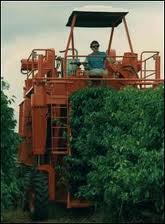
J rooted coffee plants can easily be knocked over by harvesters
Seedling maintenance
Shade is important in the growth of quality seedlings. Light shade (50%) encourages rapid and vigorous growth. Excessive shade from planting seedlings too close produces ‘leggy’ plants with poorly developed lower laterals and leaf cover. During prolonged overcast conditions, reduce or remove shade. As seedlings grow, gradually reduce shade to condition them for field planting. In the final four weeks before field planting, remove all shade to ‘sun harden’ the seedlings. Ideally seedlings should have six to ten leaves (three to five pairs) when ready for field planting. If seedlings are any smaller than this, they are difficult to look after in the field. If seedlings are any larger, roots become deformed in the pots (pot-bound). Regular watering is required to avoid water stress. Coffee is very susceptible to both overwatering and underwatering and losses can result from both. The symptoms of both are similar: wilting and poor growth. If using an overhead irrigation system, ensure that sprinklers have adequate overlap.
Fertilising is essential for good growth and seedling health. Poorly fertilised seedlings are susceptible to cercospora leaf spot particularly where air circulation is poor.
Complete fertilisers are available as foliar and slow release granules or capsules. These are more effective than fertilisers incorporated in the potting mix. Slow release fertilisers such as Nutricote ® and Osmocote® are applied by sprinkling the granules on the surface of the mix at the rate and timing recommended on the product pack. These provide a balanced and regular flow of nutrients to the growing seedling and can be supplemented with foliar fertilisers such as Nitrophoska® (2 ml/L) and Wuxal® (2 ml/L) applied fortnightly. Take care not to expose young seedlings to strong sunlight when applying foliar fertiliser as foliage can be damaged.
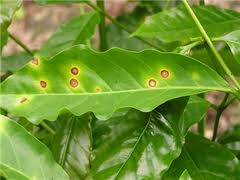
Cercospora leaf spot on coffee plant
Pests and diseases
Coffee seedlings are not attractive to insects, although grasshoppers, caterpillars and aphids may occasionally attack leaves.
Green coffee scale (Coccus viridis) is the main pest of coffee. Fortunately it is controlled by natural predators such as the verticillium fungus which is active during wet humid conditions. Parasitic wasps may also assist in scale control.
Cercospora leaf spot (Cercospora coffeicola) and damping off are generally not problems where nutrition, water and ventilation are managed properly. One or two sprays of copper oxychloride (4 g/L) are usually enough to control outbreaks of leaf spot during the nursery stage.
Source
David Peasley