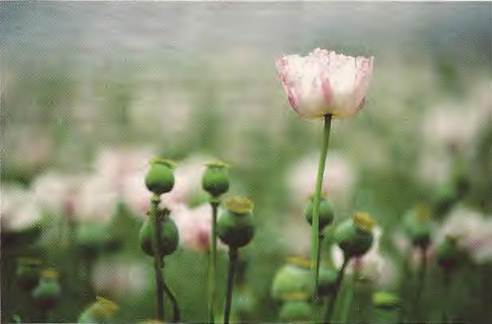
 Talk to any Tasmanian farmer these days and you can learn a lot about narcotics.
“Morphine is a very quick hit - complete pain relief,” opines Richard Gardner, who runs 2600ha of sheep and crops in the middle of the state.
“But for post-operative pain, oxycodone’s the stuff they’re using these days. It’s your longer-acting, less powerful pain-relief.”
Gardner knows this stuff because 11 years ago he started growing opium poppies (pictured) on his farm alongside his regular crops of barley and lucerne, supplying the poppies to drug companies GlaxoSmithKline and Tasmanian Alkaloids. Today he’s one of about a thousand Tassie farmers who’ve transformed the island state into the world’s largest supplier of legal painkillers.
With Tasmania recently announcing a new $88 million irrigation scheme, farmers such as Gardner think the state’s 5o per cent share of the world’s legal narcotic market could rise in coming years.
Poppies currently fetch around $2500 a hectare, more than three times the yield of barley. The industry is already valued at s6o million annually and has “kept Tasmanian agriculture afloat”, according to another poppy-farmer, Rick Rockliff.
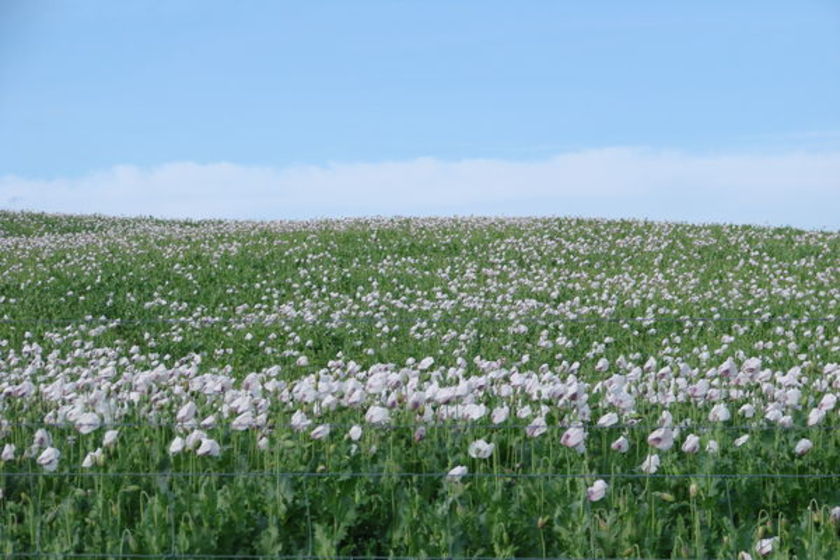 Narcotic crops first came to Tasmania in the 196os, drawn by the cold climate and “a (relatively) lawabiding population’, as the Tasmanian Farmers’ and Graziers Association artfully phrases it. The farms are tightly regulated by the International Narcotics Control Board: drug companies supply the seeds and oversee the planting and harvesting.
Tasmania doesn’t actually produce opium, the sap from the poppy’s seed-head; the plants are harvested after that has dried up. But the active ingredient is the same addictive narcotic that makes codeine, morphine and oxycodone so powerful.
“I love the industry, I find it so interesting,” enthuses Gardner, who thinks pain-relief will be a growth market as Asian nations rapidly develop their health systems.
But Rockliff isn’t convinced that Tasmania’s new irrigation scheme will ramp up production - apart from being a farmer, he’s also the field operations manager for Tasmanian Alkaloids, and cautions that the narcotics industry is governed by the usual laws of supply and demand. “It sounds sexy, but it’s no different to wheat or barley,” he says. “Over-production leads to oversupply, which causes the price to drop, and that’s not good for anyone.”
In other words, you can get too much of a good thing.
Author:
Richard Guilliatt
The Weekend Australian Magazine


