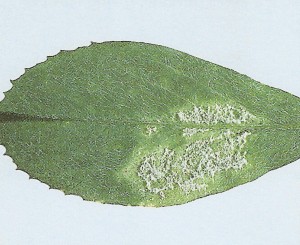
Downy Mildew
Diseases
Phytophthora root rot (caused by the fungus Phytophthora medicaginis) and colletotrichum crown rot (caused by the fungus Colletotrichum trifolii) are two major diseases reducing lucerne populations in Queensland.
Phytophthora root rot is favoured by wet soils and may occur in stands sown on poorly drained soils. These include both heavy clay soils and on soils with a loamy surface but clay in the subsoil. It exists even in fairly well drained alluvial soils, but is generally less damaging and less lethal.
Colletotrichum crown rot develops most rapidly during the warmer months and is promoted by humidity in the lucerne canopy. Lucerne grown where humidity is highest e.g. in the eastern regions, or under irrigation, suffers more seriously from this disease than dryland lucerne grown further west in the grain belt.
Root canker, caused by the fungus Rhizoctonia solani, also occurs in some areas. This disease is confined mainly to soils with restricted drainage in areas receiving less than 650 mm average annual rainfall. It is common on heavy soil in the open Mitchell grass downs of the Balonne - Maranoa basin, and sometimes on brigalow lands, but is rare in irrigated stands. No epidemics have been reported for stands on well-drained alluvial soils. There are no cultivars resistant to this disease.
A number of leaf diseases occur throughout Queensland. They can contribute to leaf drop that decreases the quality and, to a lesser extent, the quantity of hay produced. These diseases rarely kill plants. Except for the highly winter-active cultivars, their effects are generally severe only when mowing is delayed well past the optimum growth stage for cutting.
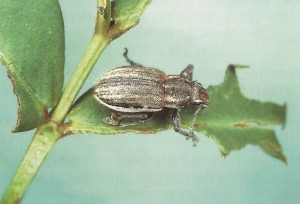
White Fringed Weevil
Insect pests
Spotted alfalfa aphid and white-fringed weevil are the most serious insect pests, but bluegreen aphid, lucerne leafroller, and jassids can all reduce persistence and production.
Root reserves
Lucerne has the potential for very high production, due to the ability of its roots to store a large energy substrate or reserve. These reserves are also referred to as ‘non-structural carbohydrates’ or ‘labile carbohydrates’, the latter term emphasising that the reserve can be mobilised quickly for the production of new shoots.
Root reserves fluctuate, mainly in response to seasonal conditions and the frequency with which shoots are removed, with cycling patterns in winter being also affected by cultivar dormancy. They are not inexhaustible, and this has management implications. If reserves are not maintained (e.g. by cutting or grazing too frequently), plant vigour, competitiveness and survival are all impaired. When plants experience poorly aerated, or waterlogged, soil (not uncommon in Queensland) the root reserve ferments. The end products of fermentation are harmful to the whole plant and cause plant death.
Waterlogging injury
Damage is caused by the production of cell-destroying substances due to fermentation during periods of severe waterlogging or flooding. Early symptoms are yellowing and wilting of shoots and the presence of localised, watery, soft areas on the taproot. If waterlogging persists shoots eventually become fawncoloured and appear scorched, and most of the taproot becomes pulpy and putrid. Plants reaching this stage seldom recover.
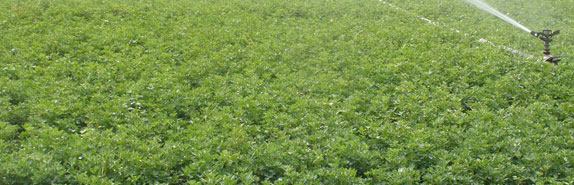
Injury becomes worse as the degree and duration of waterlogging increases, and symptoms develop rapidly when soil temperatures are high. Plants with high root carbohydrate levels, e.g. stands either approaching cutting or those recently cut, are the most at risk.
The physical and chemical changes occurring in the root at low oxygen levels also subject it to infection by the root rotting fungus phytophthora. Although cultivars resistant to phytopthora root rot have been bred, there is no comparative evidence that the current cultivars have different responses to waterlogging alone. Making the distinction between physical waterlogging injury and that due to disease is important, because even highly phytophthora-resistant cultivars succumb to waterlogging, especially during the summer months. At this time, the physiological effect of waterlogging is most severe.
Drought injury
Plant roots are desiccated so badly in severe drought that they cannot function normally, even if soil moisture is restored. Following relief from prolonged drought, some plants may produce weak shoots and then die. The relative susceptibility of cultivars to drought has not been determined.
Competition
Other plants growing in association with lucerne compete with it for water, nutrients and light. Competing species include volunteer broadleaf weeds, native grasses and improved pasture grasses that are sown with the lucerne. Lucerne populations may decline more rapidly in dryland grass/lucerne pastures than in pure lucerne stands because of competition. Competition is increased after the first year of the pasture as the lucerne fixes nitrogen, which stimulates the grass component.
Crop nutrition
A balanced supply of essential nutrients is a basic requirement for production and persistence of all crops and pastures.
Briefly, the important nutrients are potassium, nitrogen, phosphorus, sulphur, calcium, boron, zinc, molybdenum, magnesium, manganese and copper. Aluminium toxicity may occur on acid soils, usually those below pH 5.5. Nitrogen is normally adequately supplied by the N fixation process that involves rhizobium bacteria living in nodules on the roots. Seed should always be treated with Group AL peat inoculum prior to sowing.
.



