Rabbit ear mite:
 The rabbit ear mite, Psoroptes cuniculi, produces abundant red-brown crusts in the ear canal. The rabbit may shake his head or scratch at his ears or one or both ears may droop. This is a very uncomfortable disease. Mites may be seen with the naked eye, moving along the crusts. If they are not grossly visible they are easily detected via microscopic examination of the crusts and debris from the ear. These mites can also be found on other areas of the skin, most commonly just above the tail, where they cause itching and crusts.
Injectable or oral ivermectin has traditionally been the treatment of choice but Revolution, used in the same manner as for Cheyletiella has proven safe and effective. It is not necessary to clean the ears and remove the crusts which is extremely painful. Once either ivermectin or Revolution and the mites are killed, healing progresses rapidly and the crusts come out on their own. It is important as with the fur mites, the clean the rabbit’s environment after each treatment as a few mites may be present in the bedding from time to time.
Owners with high mite infestation burdening their pet’s environment, pregnant rabbits, very young rabbit kittens, rabbit breeding facilities, meat and wool rabbit producers, intensive rabbit environments, animals on immune-suppressant medicines, animals with immuno-suppressant diseases or conditions, owners of sick and debilitated animals etc should ask their vet what the safest and most effective rabbit ear mite protocol is for their situation. Rabbits can contract the mites from cats that may also carry mites.
Rabbit Fur Mite - Cheyletiella Parasitovora
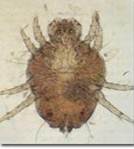
Cheyletiella Mite
During normal shedding, the undercoat may come out in clumps, but no flaking should be seen. Patchy fur loss with mild to severe flaking along the rabbit’s back is the hallmark of Cheyletiella Parasitovorax, the most common rabbit skin mite. Hairs at the border of the bald spot come out easily in clumps, usually with some coarse flakes of skin attached. Fur mites may or may not cause itching. Your veterinarian may examine a scotch-tape preparation or skin scraping under the microscope for the presence of mites, but mites are sometimes difficult to detect.
Luckily, mites are usually eradicated with relative ease. Classic treatment is with injectable or oral ivermectin, given in treatments two weeks apart. More recently, Revolution (selamectin) has been used effectively. A kitten dose of Revolution is applied between the shoulder blades and is repeated once a month for at least three doses. Revolution is usually dosed at 6mg/kg. If you have the 60mg/ml solution (ie the kitten solution), use 0.1cc per kg of body weight (1kg = 2.2lb). If you have the 120mg/ml solution, use 0.05cc per kg of body weight. You’ll need a tuberculin syringe (no needle!) from your vet to measure such a small quantity of liquid. Apply to the back of the neck or other area where the bunny can’t readily groom it off. It is essential to thoroughly clean your rabbit’s cage and exercise areas after each treatment to control reinfestation, since fur and dander in the environment may contain mite eggs.