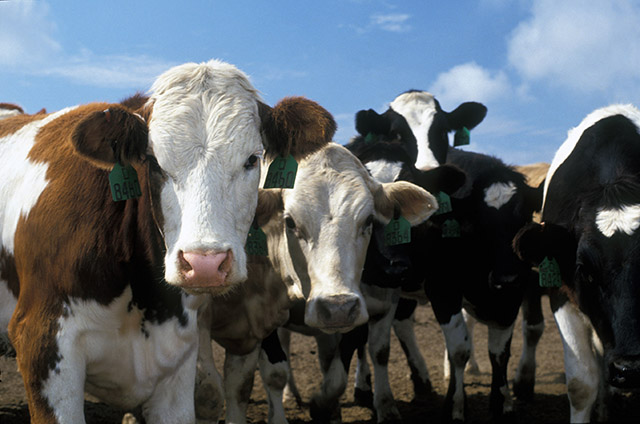
 In cow-calf production systems today, the longevity of brood cows has a substantial effect on herd economic performance. Producers can maximize longevity through wise breeding and management strategies.
With the current depressed market price for cull cows, and diminished demand for “surplus” brood cows, the need to maximize longevity of the cows in your herd is crucial. Increasing the longevity of females reduces production costs associated with raising replacement heifers, increases the number of highly productive mature cows, and reduces the number of cows culled.
Getting Their Names On The Mail Box
A brood cow has to wean several calves before she pays for the investment you have made in her. After 3 or 4 calves she crosses the economic divide from “potential profit generator” to “cash cow”. The more cows that have achieved this goal in your herd, the better off you are.
Longevity Genetics
Can we improve the trait of cow longevity through genetic selection? Genetic evaluation is possible, but research has shown that the heritability of longevity is quite low and therefore does not respond well to selection. The most effective way to improve longevity is to manage the risk factors affecting longevity. These risk factors include age at first calving, dystocia and cow body condition at weaning.
Heifers calving after 24 months of age are much more likely to be culled earlier in life than those calving at or prior to 24 months of age. The increased risk with late calvers may be attributable to reduced fertility. Late heifers become later calving cows, with many easing their way out of the herd when they come back “empty.”
Occurrence of dystocia is more likely to result in the culling of both first calf heifers (25% greater chance) and mature cows (58% greater chance). The difference in risk is due to the likelihood of first calf heifers being observed more closely at calving time and earlier intervention in difficult deliveries compared to older cows. To manage these risks, producers should breed first calf heifers to calving ease sires and select females from cow families exhibiting strong maternal calving ease.
Cows that maintain body condition through to weaning are less likely to be culled. Thinner cows take longer to cycle after calving and are thus less likely to rebreed early in the breeding season.
Cows not able to maintain condition through to weaning may be too large in mature size, produce too much milk, or just not be aggressive enough at foraging to thrive in a given production system. To manage this producers need to appropriately match the biological type and genetic potential of their cows to their feed resources and the environment.
1. Develop and manage replacement heifers so they breed early and calve within 24 months of age.
2. Match the genetic potential of the heifers for size and milk yield to the environment so that rebreeding performance is not compromised.
3. Minimize the impact of calving difficulty by breeding heifers to calving ease sires and selecting females with a history of maternal calving ease.



