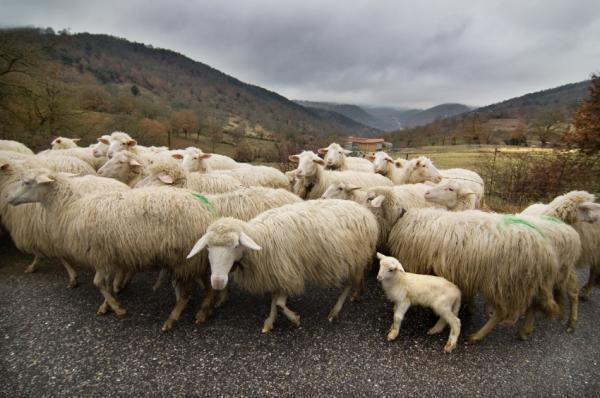
 Culling animals is essentially a ‘de-selection’ process, which helps to ensure the economic viability and health of your flock. All of the points you look for when picking breeding stock should be applied on a regular basis to the animals already in your flock. Most producers make culling decisions between weaning and the next breeding season, but you may also notice animals that should be culled at shearing, deworming or foot trimming. An advantage you have during the culling versus selection process is that you should have an extensive history on each animal’s lifetime productivity and past health problems. Records are one of the best management tools that you can use to increase the efficiency of your operation. There is also a computer management program called EweBytes that is designed for use on sheep farms (contact OSMA for details).
Culling decisions are based on genetic contribution (lamb performance) and on management considerations (i.e. structural unsoundness, temperament, or poor health). Not every farm will have the same objectives for flock improvement. Therefore, the exact culling criteria may vary widely from farm to farm, and measures of productivity will depend on your end product (e.g. replacement stock or commercial lambs). Although there are many considerations to take into account, some basic factors to keep in mind are listed below.
Ewes
Production:
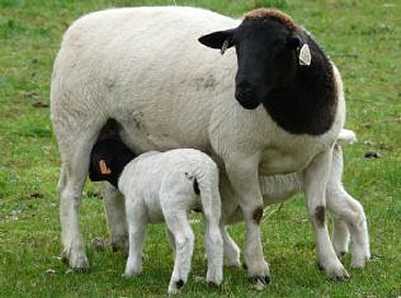
To determine how productive an individual ewe is, the producer must record information such number of lambs born per exposure to the ram, how many lambs survive to weaning, and lamb weight gain from birth to weaning. If you are trying to breed out of season, breeding and lambing dates will be particularly important. Maintaining on-going records for each ewe will help determine where she fits relative to the flock average.
Health and soundness
Ewes should be evaluated for soundness (feet, legs, and mouth) at least on a yearly basis. The ewe’s body condition should be monitored every time she is handled (e.g. during shearing, vaccinating etc.). See the
Code of Practice at the back of this binder for details on condition scoring. If a large portion of your flock has poor body condition, review your feeding practices and feed quality. If a small portion of the ewe flock is chronically thin, even with sufficient feed, try to determine the cause before culling. By simply writing these animals off as suffering from old age or just ‘poor-doers’, you may be missing the signs of a subclinical disease in your flock that is dramatically draining your profits. Check the ewe’s mouth for lost teeth or other problems that may be interfering with chewing. If there isn’t an obvious reason for weight loss, talk to your veterinarian about testing for common wasting diseases, such as Maedi-Visna, Johne’s disease, and Caseous Lymphadenitis. This may involve having a post-mortem performed at a veterinary pathology lab.
Udder
The soundness of a ewe’s udder will be important for her future productivity. Low hanging, pendulous udders may be a problem for lambs finding the teats for the first time and are more prone to injuries, which could lead to mastitis. As well, there is some indication that as an udder breaks down, the blood flow becomes restricted and milk production decreases. Some ewes have very large teats, which become particularly swollen at lambing. This makes it very difficult for newborns to nurse, and the ewe will need to be milked by hand for a time after lambing to help decrease teat size. Ewes should be checked annually for any signs of lumps or hardness of the udder. This indicates that the udder has been injured or that the ewe had mastitis during her last lactation. If both sides of the udder are uniformly hard, consider having the ewe tested for Maedi-Visna. ‘Hard-bag’ mastitis is often the only obvious sign of this disease, which can dramatically reduce milk production and weaning weights.
 Lambing complications:
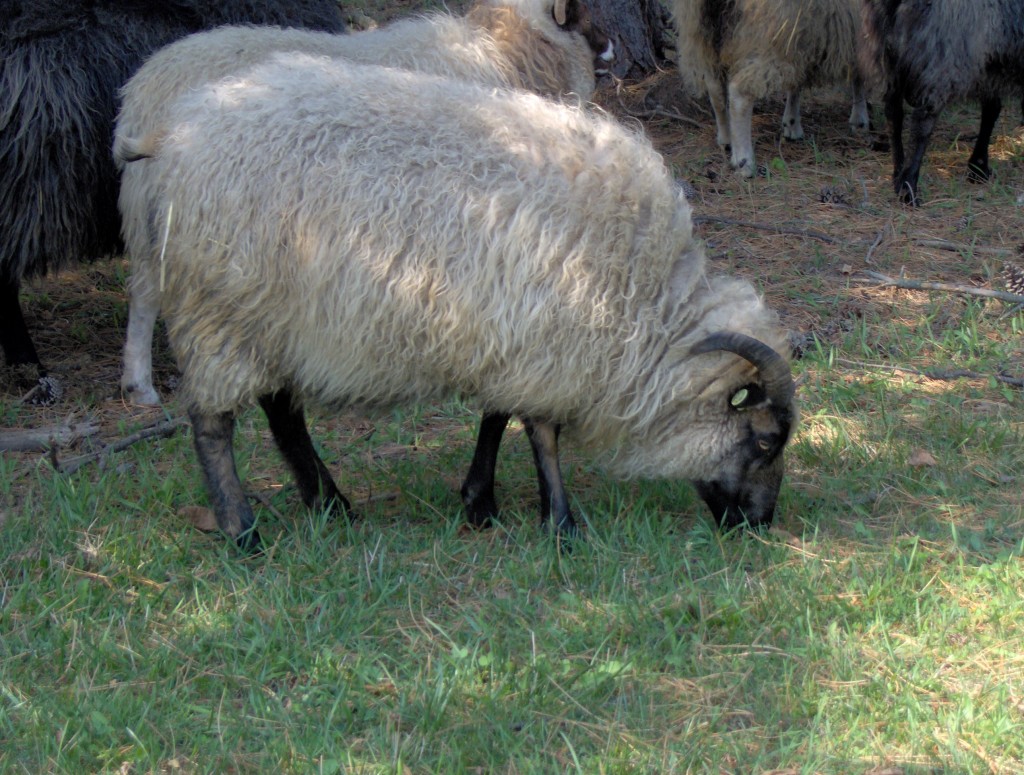
Any complications during gestation or lambing should be recorded for future reference. This may include abortions, prolapses, assistance during lambing, genetic defects in lambs, or weak lambs. Remember that problems such as lambing difficulties due to large lambs or genetic defects may also be traced to the ram. Maintaining records of which ewes are bred to which rams will help pinpoint problems originating from rams.
Temperament
Ewes that are overly flighty, or that reject or harm their lambs are candidates for culling. Some leniency should be shown to ewes lambing for the first time, as they will often be more settled with subsequent lambings. Ewes that are perpetually difficult to handle (jumping fences or frantic in the handling system), will tend to disturb the entire flock.
Age
Productivity generally declines after 6 years of age. However, many producers judge ewes on an individual basis, placing more emphasis on their production records and physical soundness than strictly on age. Some ewes will remain highly productive until 10 years of age or more, while others may decline much sooner.
Rams
Although lambs will receive 50% of their genes from the ewe and 50% from the ram, the overall contribution of the ram is much higher, as he will be mated to many ewes each year. Therefore, particular care should be taken in monitoring ram productivity and the type of lambs that are being sired by each ram.
Production:
Maintaining records of the lambing percentages and lambing details of the ewes bred to each ram is important in determining whether to keep the ram and which ram to keep replacement stock from. Difficulties at lambing due to genetic defects or overly large lambs may be traced to the ram. The exact production traits that you are looking for will depend largely on the objectives of your breeding program.
For commercial flocks, weight gain from birth to market and lamb carcass traits are important measurements of the ram’s genetic merit regarding to lamb feed efficiency and growth. For replacement breeding stock production, the productivity of a ram’s daughters may be a factor that you should consider. Obviously, the entire lamb crop from a given ram will not contain lambs of uniform quality. However, if a high percentage of the lambs are not meeting your breeding objectives, replacing the ram should be considered.
Breeding performance
Maintain records regarding when ewes lamb relative to the start of the breeding season (ram turnout). This will provide information on whether the ram is breeding most ewes on the first estrus or later in the season. Monitoring rams during the breeding season (brisket markers) helps to determine breeding behaviour as well (e.g. does the ram stay with one ewe throughout her estrus or will he breed several ewes etc.)
Health and Soundness
As with ewes this is a very important consideration in rams. Especially monitor for any signs of foot or legs problems, as pain or instability may inhibit breeding behaviour. Thin rams should be checked for dental problems or disease.
Testicle size and soundness
Scrotal measurements should be taken a few times during the year. The measurement will be smallest during the spring and largest in the fall. If the measurement does not increase between spring to the fall (and especially if it is smaller) the ram may have fertility problems. Just prior to breeding, the ram should also be examined for any signs of lumps or deformities of the testicles or scrotum, as this may be an indication of injury or brucellosis infection. Also check that the sheath and penis appear healthy and are free of infections.


