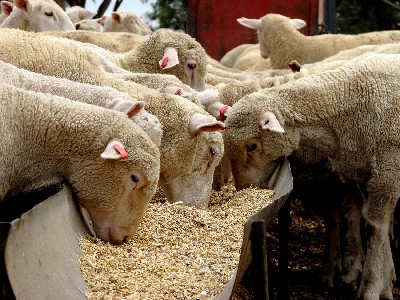
 Lot-feeding can be defined as feeding animals in a confined area with all required nutrients being brought to the animals. The area available to the animals is generally small so that their movement is restricted to minimise energy expenditure. Good quality water must be available for the animals and it is preferable to also provide them with shade and protection from inclement weather.
Lot-feeding prime lambs in Western Australia is often an opportunistic and value-adding activity with the objective to bring unfinished lambs up to market specifications when there is a shortage of quality paddock feed. Some lot-feeders operate year-round as specialists and they may house the lambs in sheds, mainly to provide protection from cold rainy weather.
Factors to consider when setting up a feedlot
Site of the feedlot
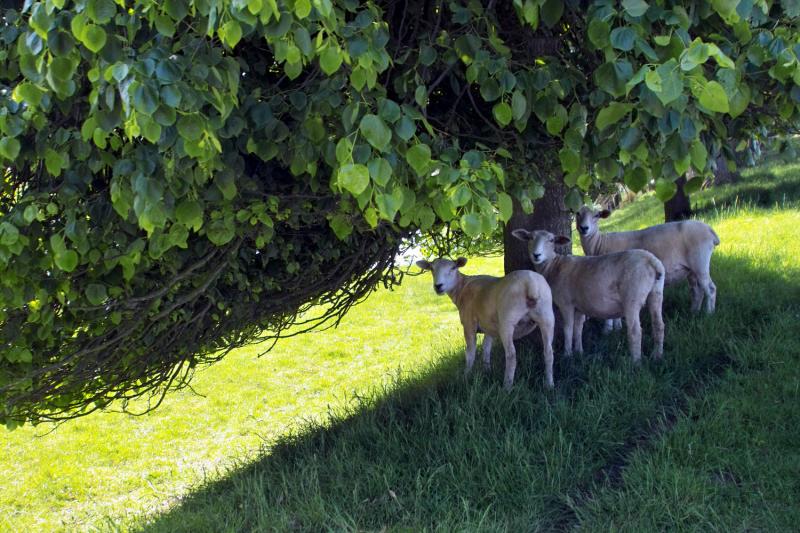
Feedlots can generate dust and smells, and water run-off from a feedlot may pollute waterways. Consideration must be given to the location of the feedlot in relation to watercourses, public roads and houses. Use natural vegetation wherever possible to provide lambs with shade and shelter from wind and inclement weather. However, the vegetation will also need to be protected from damage by the lambs.
Soil type and slope are also important factors. Sandy soils may drain well, but can be prone to wind erosion if the surface becomes bare and the soil is disturbed. Heavy soils are less prone to wind erosion, but may become muddy when wet and this can lead to the spread of footrot, foot abscesses, salmonellosis and coccidiosis. A good slope aids drainage, but if too steep the site may be predisposed to water erosion. It can be beneficial to establish the feedlot on the north or north east side of a hill or mound so the site gets maximum sun in winter.
 Water availability and quality
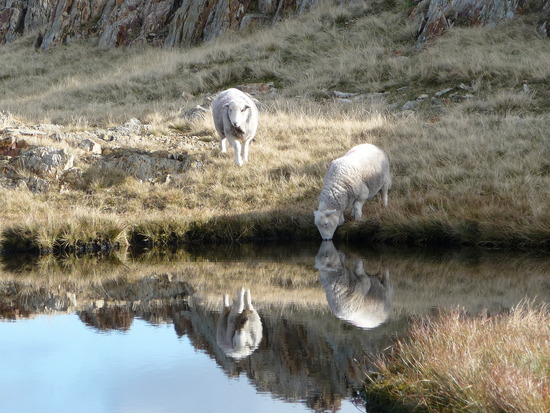
To maximise feed intake, lambs must have an adequate supply of cool, clean water with a maximum of 5000 parts per million of total dissolved salts (approximately 900 milliSiemens per metre). If the total dissolved salts in the water is above 1000 parts per million it is wise to have the water analysed so the level of minerals added in the diet can be adjusted if necessary. Allow at least four litres of water per lamb per day when calculating daily water demand and provide at least 75 centimetres of water trough length per l00 lambs on feed. Inadequate space at the water trough, high salt levels, or contamination of water with algae, feed, dust or faeces can result in reduced water intake, and consequently reduced feed intake and lamb performance.
Area per lamb
The area allocated per animal will vary with the type of feedlot. In a confined, indoor setup it can range from 0.5 to two square metres per lamb. In small paddocks the area needs to be small enough to prevent the lambs chasing ‘green pick’ thereby wasting energy, but large enough to prevent boggy conditions when it rains. It may be an advantage to have a larger area available when the lambs first enter the feedlot, and to subsequently reduce the area to prevent the generation of dust. However, if the area is too large when the lambs first go into the feedlot some may hang-back and be slow to eat from the feeders. Generally an area of about 0.5 square metres per lamb is adequate for mobs of up to 500 lambs.
Mob size
A maximum of 500 lambs per mob with mobs of 300 to 400 is preferred for ease of management. It is often wise to draft lambs into mobs based on sex, size, condition or similar feed history.
Feed Wagon
Feeding systems
Feed Wagon
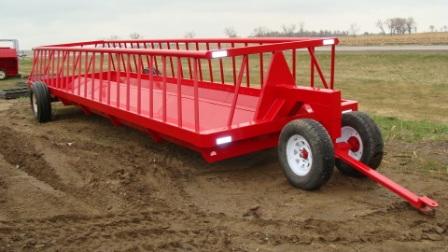
The choice of feeding system is influenced by commitment, cost and convenience. Complete mixed rations can be fed once or twice a day in open troughs. This is a more labour-intensive option. The ration is generally quite bulky because roughage (hay or silage) is mixed with the grain. This system gives good control of the diet consumed, but a mixer (Mixall) or feed wagon is required to mix the grain and feedout the ration.
Lambs generally need about 25 centimetres of trough space per lamb with open feed troughs. It is important that troughs be adequately protected so that lambs can not get in the troughs and foul the feed. Various options to provide feed at all times are available and include:
- Ad libitum access to a complete mix of grain, milled roughage, minerals and vitamins.
- Ad libitum on a grain, mineral and vitamin mix or pellet in feeders and roughage in separate troughs.
- Ad libitum access to a pellet ration of grains/roughage /minerals and vitamins.
Round Feeder
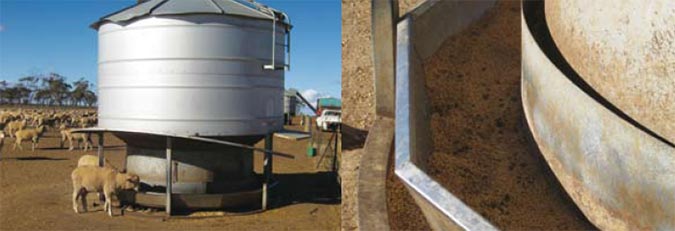
Self-feeders are convenient, reduce the need for regular feeding and require less trough space per lamb with ad libitum access (only four to five centimetres per lamb). Lambs go onto the feed quicker if there is plenty of space and if space is inadequate there may be a ‘tail’ of lambs because of shy feeders. Round feeders allow better access than straight troughs.
With the first option listed above the hay or stubble has to be milled to mix it with the grain. This requires special machinery and can be labour intensive. There can also be problems with the ration ‘bridging’ and the sheep may selectively eat the grain from the mix. Silage can not be fed in this system.
The second option requires only basic equipment to mix the grain with a mineral/vitamin pre-mix and deliver the mix or pellets to the feeders. Hay or silage can be put in racks or the bales rolled out. With this option, the lambs have a choice and may eat different proportions of the grain mix, pellet or roughage. This ability to choose their diet can affect growth rates and may result in acidosis if the lambs do not eat adequate roughage. The roughage, especially hay, must be protected from rain to avoid it getting wet and being rejected by the lambs.
The third option of using a formulated pellet is a convenient way to provide a complete diet. It may be beneficial if the pellet contains some long fibre to maintain good rumen function. There is a cost for pelleting, but as well as being convenient, appropriate pellets may allow rapid introduction and good growth from day one.
 Finishing in small paddocks
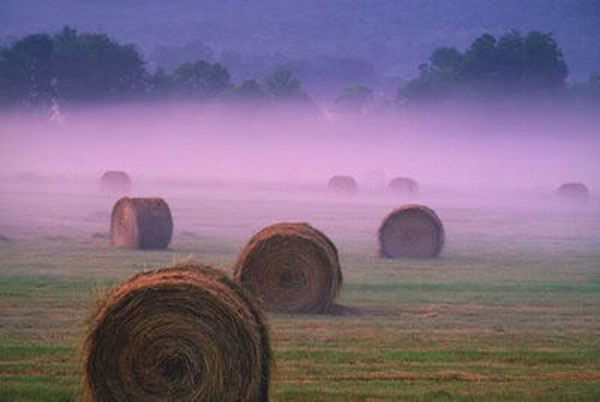
Hay or silage can be fed ad libitum with a grain trail offered two or three times per week. Conveyor belting makes a handy trough to feed silage. Guttering can be used as a trough to feed grain. It may be possible to feed silage ad libitum from a clamp with grain offered two or three times per week. The amount of grain fed is used as the ‘throttle’ to control the lambs’ growth rate. These cheap feeding systems can be used to achieve modest growth of 50 grams per head per day for carryover lambs through to higher growth rates of 175 grams per head per day to finish lambs for slaughter.
Lupins can be trail-fed on clean, hard ground. However, there is likely to be some wastage with cereal grains in wet weather and these grains are best fed in a simple trough or guttering.
In a production situation, it is possible that the mineral levels in roughage and grain may be marginal or deficient for maximum growth rates. Minerals with or without canola meal can be fed ‘free-choice’, or mixed with the grain.
Ration considerations
Introducing high grain diets
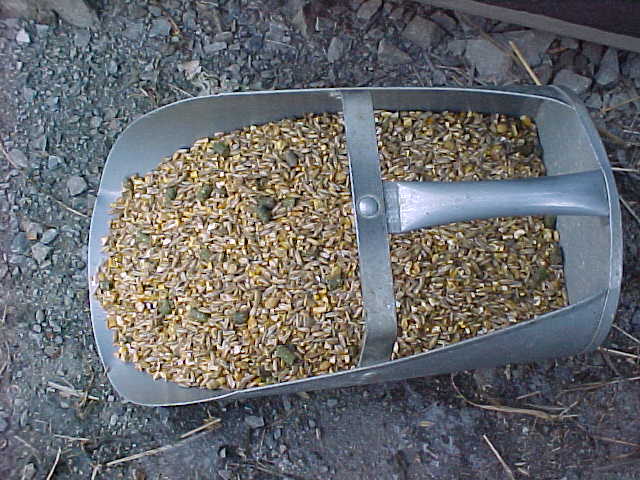
Grain mix for lambs
The risk of acidosis can be minimised by ensuring the lambs are adapted to the high grain diet and that they consume enough roughage to stimulate ‘chewing the cud’. The following practices will reduce the incidence of acidosis:
- Gradually switch from a high roughage to a high grain diet over ten to 14 days and keep adequate roughage in the ration. Growth during this introductory period is often slow.
- Start with a high percentage of lupins and roughage and gradually raise the percentage of cereal grain and reduce the lupins and roughage to the desired level. (This may allow good growth from day one).
- Whole cereal grain is less likely to cause acidosis than milled grain. Milling or processing the cereal grain component of rations provides little if any nutritional benefit to lambs and generally increases the risk of acidosis. However, coarse milling of lupins may help deter lambs from selecting out this grain from other ration components.
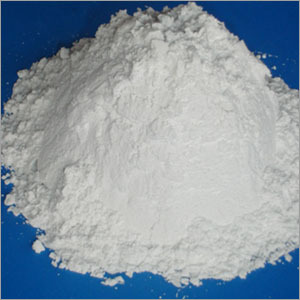
Calcium Carbonicum, Limestone
Some producers incorporate additives with the grains fed to lambs to reduce the chance of the animals developing acidosis or at least to reduce the severity of acidosis. These products and compounds include ground limestone (calcium carbonate), bentonite, and sodium bicarbonate.
For further advice on the use of additives with grain rations contact your consultant or local office of Department of Agriculture.
As discussed in an earlier section of this bulletin, the main nutrients to be supplied in rations are:
- Crude protein expressed as a percentage of the total dry matter. The protein level required in the diet depends on the liveweight of the lambs to be fed and their potential for muscle growth. The level of crude protein required is usually in the range of 14 to 16 per cent.
- Metabolisable energy expressed as megajoules of metabolisable energy per kilogram of dry matter. The dietary requirement for metabolisable energy is influenced by lamb liveweight and the desired growth rate and the potential intake of the ration to be fed. Usually it is in the range of 10.5 to 12.0 megajoules per kilogram of dry matter.
- Minerals both major (grams per kilogram) and minor (milligrams per kilogram) must be adequate to support high growth rates as deficiencies will limit performance.
- The body stores of vitamins A and E may be low if lambs have been off green feed for more than a few months. Backward lambs may need to be injected with vitamin B12 on entry to the feedlot. Lambs fed indoors may need vitamin D and vitamin B1 deficiency may be a problem with diets that do not encourage good rumen function.
It is essential to know the nutrient content of the available feeds. There is a wide variation in crude protein and metabolisable energy between feeds and within feeds between years. Season, fertiliser inputs, variety and yield all influence the level of protein and energy in feeds. It is recommended that feeds be analysed for dry matter, crude protein and energy content so that a ration can be formulated to meet the nutrient requirements that will achieve the desired growth rate and degree of fattening. Feed analysis information can also be used to compare different feeds based on their cost per unit of crude protein and metabolisable energy.
 Economics
It is important to do an economic analysis before starting to feed. The economics of lotfeeding relies on the cost to effectively combine feedstuffs to supply all the nutrients required for optimum lamb growth and to achieve carcases with meat of desirable eating quality.
- Know the buy-in price of lambs (put a value on your own lambs).
- It is preferable to have a signed contract with an agreed sale price for lambs.
- Estimate the ratio of feed intake to liveweight gain (feed conversion ratio).
- If possible, know the genetic ability of the lambs fed (potential growth rate and fatness). Calculate the costs per kilogram of weight gain, including:
- The cost of capital items used for lot-feeding.
- Feed stuffs (realistically value your own feed ingredients).
- Labour.
- Health and management costs.
- Lambs fed that are unlikely to finish (this may be up to 20 per cent). Performance indicators for 35 kilogram lambs finishing at 45 kilogram liveweight are: 1st cross lambs:
- Growth rates of 250 to 350 grams per head per day. Feed conversion ratios of 7:1 to 5.5:1 for rations of about 90 per cent dry matter. Merino lambs:
- Growth rates of 220 to 320 grams per head per day. Feed conversion ratios of 7.5:1 to 6:1 for rations of about 90 per cent dry matter.
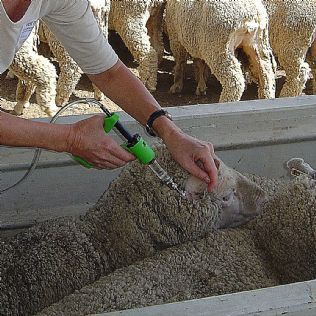
Drenching Sheep
Health
Drenching Sheep
- Drench on entry to the feedlot with an effective broadspectrum drench.
- Control lice - they affect performance and can cause cotting of fleeces.
- Vaccinate with 3:1 or 6:1 (with or without selenium and Vitamin B12) to control Clostridial diseases, especially enterotoxaemia or pulpy kidney that is favoured by diets high in starch. Selenium can be deficient in many areas of Western Australia and can be administered in drenches as well as with vaccines.
- Inject vitamins A, D and E if the lambs have been off green feed for more than two months and these vitamins are not being supplied as a pre-mix. Low vitamin E levels must be corrected with the use of a powdered formulation, either as a drench or mixed with grain.
- Inject with vitamin B12 if lambs are low in condition on entry to the feedlot.
- Avoid feeding lambs affected by lupinosis, especially those showing signs of jaundice.
- Urinary calculi (water belly) can occur in lambs fed grain rations for prolonged periods, especially wethers. Add calcium to the ration to correct the calcium to phosphorus imbalance from cereal grain and ensure there is adequate roughage so that lambs ‘chew the cud’. Finely ground limestone is probably the best source of calcium, but gypsum can also be used.
- Check for grass seeds in the skin and/or eyes.
- Pink eye - reduce dust and remove infected lambs. Provide good access to feed and water, especially if lambs are blind.
- Scabby mouth - avoid abrasive roughages. The virus can quickly spread to many lambs, but mortality is generally low. Feed intake is probably affected with severe lesions on the lips causing a reduction in growth rates. A vaccine against the disease is available and is now widely used in Western Australia. Animals with an unknown vaccination history should be vaccinated before entry to a feedlot.
- Coccidiosis - caused by overcrowded, unhygienic conditions and faecal contamination of feed, especially in wet weather. The problem is precipitated by stress and infected lambs may remain poor doers. Lasalocid is registered for use in sheep diets and is effective for the control of coccidiosis.
- Pneumonia - is a bacterial infection aggravated by dust and cold stress. The disorder can be treated with antibiotics, but it is important to adhere to withholding periods.
 Husbandry/management
- Weigh and fat score lambs to monitor growth and to check that they are on target for the proposed slaughter date. Adjust the rations if necessary to keep lambs on target to meet specifications.
- Only send those lambs for slaughter that will meet the specifications. Fat score, weigh and make an assessment of the likely dressing percentage after allowing for the factors that affect dressing percentage; time off feed, length of wool, fat score and transport stress.
- Woolly lambs are best shorn on entry to the feedlot, but consider their skin value at slaughter. Shearing raises feed intake in warm weather and can improve growth rate. Shorn lambs need less feed space, are less prone to fly strike but are very prone to cold stress.
- With large numbers of lambs, separate the ewes from wethers to facilitate monitoring so that the ewes in particular do not get too fat. It may be necessary to feed ewes and wethers different diets if ewes are to be lot-fed to produce heavy carcases.
- Sick lambs are best removed from the feedlot.
- Shy feeders need to be drafted off early and fed separately or put out on pasture.
- Minimise stress; dogs must not be allowed to annoy lambs. Handle lambs carefully at all times.
- If feeding-out a complete mixed ration, feed at the same time each day and by the same routine. Keep selffeeders full at all times once the lambs have adapted to the ration.
- Be vigilant for things going wrong, for example, dirty water troughs, fly strike, lambs not ‘chewing the cud’, lambs scouring, lambs not eating roughage or selecting out individual components of the ration. Problems can quickly turn into financial disasters with lambs under intensive management, so attention to detail is essential.
Welfare and safe food issues
Follow best practices, keep records of all health and husbandry practices. Follow withholding periods for drenches, chemicals and antibiotics. Clean up daggy lambs and allow lambs to empty-out for at least 8 hours, preferably on grating, before trucking.
Further reading
Farmnote 72/2000. Sheep health in a feedlot.
Farmnote 73/2000. Lot-feeding prime lambs.
Farmnote 74/2000. Achieving production targets for prime lambs.
Farmnote 25/99. Preparation and assessment of sheep and lambs for slaughter.
Maximum meat: the complete guide to producing quality sheep meat. Department of Agriculture. 1998
Author: John Milton, Department of Agriculture, based at The University of Western Australia, Nedlands



