Description:
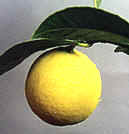
Lemons are oval citrus fruits with smooth porous skin. Some fruits have a pointed tip on the bottom of the fruit while other lemons, such as Florida lemons are rounded at the base.
Ponderosa lemons are quite larger than other lemon varieties and resemble elongated grapefruits.
Lemon fruits color range from greenish yellow to bright yellow. Lemons look very similar to limes, but lemons tend to be a little larger and are yellow (when ripe), where limes are green.
The true lemon tree reaches 10 to 20 ft (3-6 m) in height and usually has sharp thorns on the twigs.
The alternate leaves, reddish when young, become dark-green above, light-green below; are oblong, elliptic or long-ovate, 2 1/2 to 4 1/2 in (6.25-11.25 cm) long, finely toothed, with slender wings on the petioles.
The mildly fragrant flowers may be solitary or there may be 2 or more clustered in the leaf axils. Buds are reddish; the opened flowers have 4 or 5 petals 3/4 in (2 cm) long, white on the upper surface (inside), purplish beneath (outside), and 20-40 more or less united stamens with yellow anthers.
The fruit is oval with a nipple-like protuberance at the apex; 2 3/4 to 4 3/4 in (7 -12 cm) long. The peel is usually light-yellow though some lemons are variegated with longitudinal stripes of green and yellow or white. It is aromatic, dotted with oil glands; 1/4 to 3/8 in (6-10 mm) thick. Pulp is pale-yellow, in 8 to 10 segments, juicy, acid. Some fruits are seedless, most have a few seeds, elliptic or ovate, pointed, smooth, 3/8 in (9.5 mm) long, white inside.
Care of Lemon Trees:
The best position for a lemon tree is in a sunny, but frost-free position, where there is protection from prevailing winds. The soil must be well-drained. If you have heavy clay soil, then planting the tree in a raised bed is a good idea. Make the planting hole very wide and basin shaped.
Lemon trees have shallow, fibrous root systems than can dry out easily in hot or windy weather. Regular watering is essential to keep the tree healthy. Water the area around the drip-line and beyond. If the soil dries out, flowers, leaves and immature fruit may drop.
Fertiliser:
Lemon trees need fertiliser that is high in nitrogen. You can use a special citrus fertiliser or a mixed fertiliser with a high N component. (Most mixed fertilisers have an NPK of around 5:1:4 so you would look for one with a higher N content.) Blood and Bone is an organic fertiliser high in nitrogen.
Thrive is a liquid fertiliser with a high N content and can be used as a “quick fix” if the tree is showing signs of nitrogen deficiency i.e. yellowing mature leaves. However, yellowing may be a sign of other problems. If the young leaves are turning yellow in between the veins that remain like a green skeleton, then the problem is most likely to be iron deficiency and this is often caused by alkaline soil or poor drainage. Apply iron chelates. If the tip and the edges of the old leaves turn yellow, leaving a green triangle at the base, then it may indicate a magnesium deficiency. Treat with Epsom salts. Remember though, that yellowing of leaves may be caused by water stress, cold weather, or other factors, so eliminate these first!
Mulching:
Mulching is important to keep roots moist and to prevent weeds from growing around the tree. Lemon trees dislike competition from grass and other plants. Mulch should not be deeper than 7cm and must be kept well back from the trunk to prevent the development of collar rot.
Pruning:
Lemon trees often do not need pruning much at all. Tidy up any wayward branches and cut out dead wood. It is a good idea to prune off lower branches to allow air to circulate freely under the tree as this discourages the development of some fungal diseases.
Pests and Diseases
Gall Wasp - These wasps lay their eggs in the stems of lemon trees. Thickened, lumpy stems indicate the presence of these wasps. The galls must be cut out and destroyed. Burn them if you can, or place them in a well sealed black plastic bag and leave them in the hot sun for several weeks, before placing in the rubbish bin.
Scale - Lemon trees are susceptible to many different kinds of scale insects. These can be controlled by an application of Pestoil or white oil.
Black Citrus Aphid - Hose these insects off with a concentrated blast from the hose and squash the ones you can reach. Use pesticide only as a last resort. Pyrethrum is a safe one to use though, like all contact insecticides, it can kill beneficial insects as well.
Leaf Miners - Leaf miners live inside the leaf tissue on the young leaves and make them silvery and distorted. Trim off the affected leaves and destroy them. Usually this is all that is needed.
Care of Lemon TreesPosition
 The best position for a lemon tree is in a sunny, but frost-free position, where there is protection from prevailing winds. The soil must be well-drained. If you have heavy clay soil, then planting the tree in a raised bed is a good idea. Make the planting hole very wide and basin shaped.
Watering
Lemon trees have shallow, fibrous root systems than can dry out easily in hot or windy weather. Regular watering is essential to keep the tree healthy. Water the area around the drip-line and beyond. If the soil dries out, flowers, leaves and immature fruit may drop.
Fertiliser
Lemon trees need fertiliser that is high in nitrogen. You can use a special citrus fertiliser or a mixed fertiliser with a high N component. (Most mixed fertilisers have an NPK of around 5:1:4 so you would look for one with a higher N content.) Blood and Bone is an organic fertiliser high in nitrogen. Thrive is a liquid fertiliser with a high N content and can be used as a “quick fix” if the tree is showing signs of nitrogen deficiency i.e. yellowing mature leaves. However, yellowing may be a sign of other problems. If the young leaves are turning yellow in between the veins that remain like a green skeleton, then the problem is most likely to be iron deficiency and this is often caused by alkaline soil or poor drainage. Apply iron chelates. If the tip and the edges of the old leaves turn yellow, leaving a green triangle at the base, then it may indicate a magnesium deficiency. Treat with Epsom salts. Remember though, that yellowing of leaves may be caused by water stress, cold weather, or other factors, so eliminate these first!
Mulching
Mulching is important to keep roots moist and to prevent weeds from growing around the tree. Lemon trees dislike competition from grass and other plants. Mulch should not be deeper than 7cm and must be kept well back from the trunk to prevent the development of collar rot.
Pruning
Lemon trees often do not need pruning much at all. Tidy up any wayward branches and cut out dead wood. It is a good idea to prune off lower branches to allow air to circulate freely under the tree as this discourages the development of some fungal diseases.
Pests and Diseases
Gall Wasp: These wasps lay their eggs in the stems of lemon trees. Thickened, lumpy stems indicate the presence of these wasps. The galls must be cut out and destroyed. Burn them if you can, or place them in a well sealed black plastic bag and leave them in the hot sun for several weeks, before placing in the rubbish bin.
Scale: Lemon trees are susceptible to many different kinds of scale insects. These can be controlled by an application of Pestoil or white oil.
Black Citrus Aphid: Hose these insects off with a concentrated blast from the hose and squash the ones you can reach. Use pesticide only as a last resort. Pyrethrum is a safe one to use though, like all contact insecticides, it can kill beneficial insects as well.
Leaf Miners: Leaf miners live inside the leaf tissue on the young leaves and make them silvery and distorted. Trim off the affected leaves and destroy them. Usually this is all that is needed.


