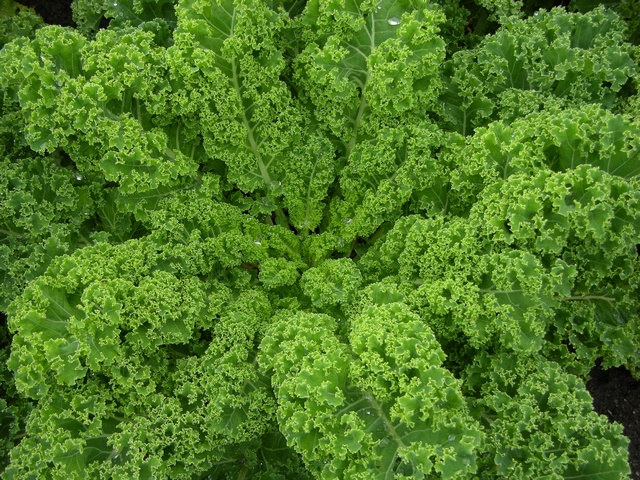
Kale plant
Scientific name
Kale plant
Brassica oleracea ssp. acephala
Strengths
Drought tolerant, winter-active fodder crop with excellent feeding value
Limitations
A slower growing Brassica. Requires high soil fertility and high levels of moisture.
Kale flower
Plant description
Kale flower
Plant:
Short and tall (2 m) varieties.
Leaves:
Flat, long. High leaf to stem ratio in modern varieties.
Seedhead:
Yellow, cross-shaped flowers with four petals; produce sickle shaped pods
Seeds:
Pods contain tiny round seeds
Pasture type and use
Sown in spring adjacent to a run-off pasture to provide autumn-winter grazing in ~5-6 months time. Some varieties can be managed to provide grazing through winter-early spring in Tasmania and southern Vic.
Where it grows
Rainfall
>650 mm or irrigation
Soils
Tolerates a broad pH range. Some varieties are unsuited to soil with low fertility. Ensure Mo and B not deficient.
Temperature
Kale is the most cold tolerant of the Brassica fodder species. Some varieties are well able to withstand heavy frost and retain leaf.
Kale
Establishment
Kale
Companion species
Herbs: plantain, chicory
Legumes: white clover, red clover
Sowing/planting rates as single species
3 - 5 kg/ha. A high rate improves stem quality and aids a rapid early yield. Sow shallow (5-10 mm) in a finely worked firm, moist seedbed, cover with roller/mesh. Only suitable for direct-drilling in friable soil.
Sowing/planting rates in mixtures
2 kg/ha
Sowing time
Sow in spring for grazing from autumn onwards
Inoculation
Not applicable.
Fertiliser
Sow with ~20 kg P/ha as triple super or MAP/DAP. Ensure molybdenum and boron adequate. Molybdenum coated seed is available.
Planting of Kale
Management
Planting of Kale
Maintenance fertliser
Monitor nitrogen carefully for yield vs health. N (50 kg N/ha) maybe applied late to maintain leaf in stored feed but can increase health risks.
Grazing/cutting
Can graze at any time. Matures at 5-6 months and holds feeding value so can delay grazing. Strip-graze along a long front - to reduce wastage and to minimize trampling losses. A back fence may maximise regrowth. Short types may regrow if not cut or grazed lower than ~8 cm. Use a maximum 33% in the diet of dairy cows - 100% OK for lambs but they are best suited to the short varieties. Beef cattle OK up to 70%. Late maturing varieties can be saved for use in early spring. Crops thin after each grazing. Allow access to pasture/stubble, hay/silage for fibre.
Seed production
-
Ability to spread
-
Weed potential
-
Major pests
Not as vulnerable as rape. Red-legged earth mite, slugs, Aphis, cabbage moth, cabbage white butterfly, diamond black moth, cutworms, lucerne flea and leafminers. Insecticide coated seed is available to aid establishment.
Major diseases
Rarely a problem. Varieties tolerant of clubroot and dry rot are available. Fungicide treated seed is available to protect damping off of seedlings. Some varieties have increased tolerance to Turnip Mosaic Virus.
Herbicide susceptibility
Glyphosate
Curly Kale
Animal production
Curly Kale
Feeding value
Excellent feed. ME approx 11-12 MJ/kgDM. The stem is of low quality, poor protein so utilisation of this can be a problem; palatability better with a higher seeding rate.
Palatability
Readily acceptable.
Production potential
Up to 12 t DM/ha where moisture is available and soil fertility is good. By sowing sections of paddock to different maturity types or by sowing at different stages, feed can be provided over a wide range of the feed year.
Livestock disorders/toxicity
Vaccinate and drench before grazing stock on Brassica. Monitor stock frequently. Scouring, nitrate poisoning (especially if molybdenum is deficient and/or if overcast conditions prevail), red water and photosensitisation/rape scald may occur if grazed while immature. Avoid unrestricted access; do not provide Brassica crops as the sole ration straight off scarce/low quality pasture. Begin 1-2 hr access daily and take 7-10 days before reach maximum allowance.
Cultivars
| Group | Kale cultivar | Seed source/Information |
| intermediate | Sovereign | PGG Seeds |
| Proteor | PGG Wrightson Seeds | |
| Regal | PGG Wrightson Seeds | |
| Pinfold | AusWest Seeds | |
| tall | Gruner | PGG Wrightson Seeds |
| short | Kestrel | PGG Wrightson Seeds |
| Coleor | AusWest Seeds |
Author and date
K Reed
8.12.2008


