Introduction:
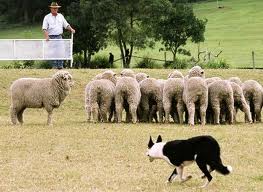
A Sheep Dog herding.
The very best working sheep dogs, with their incredible natural instincts, are remarkable animals. They are born knowing how to work stock, with that knowledge housed in athletic body of speed, stamina and agility. Then, once a competent handler harnesses that knowledge, they preform amazing feats in trying conditions, far from the eyes of most. Only a lucky few are privy to witnessing such magic, and working dogs such.
However, in contrast to this very small number of top dogs, most modern working dogs are very poor. One important reason for this general lack of quality is poorly designed sheep dog trials, because this is where most of the breeding originates. The necessity for good practical dogs has, in case of most serious breeders, been replaced, diluted or moditfied by a ‘necessity’ for trial dogs. Many people believe that dogs successful at trials are good working dogs, but this not usually the case. Dog trials need a complete rethink in light of these facts.
The secret- if the working breeds are to be improved - is to bring the two together (that is, trials and practical work) so that the type of dog that excels at one is the same as that which excels at the other. Only then will we see a dramatic improvement in the breeding.
Most present day handlers and breeders have not been fortunite enough to own a top dog, and so they have nothing worthwhile to compare their own - or other’s - dogs with. They don’t realize the amazing feats that the best dogs are capable of, and nor do they realise how poor their own dogs are. With today’s technology of ease of travel, communication, artificial insemination and so forth, it should be much easier to breed good dogs than it was in the past, provided that breeders have the necessary knowledge, and provided they have the necessary motivation. (Motivation is a role that the sheep trials don’t often fill, particularly when real practical necessity doesn’t apply.
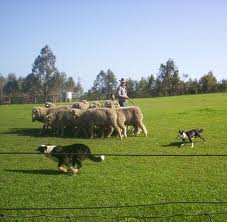
Two sheep dogs in action herding sheep.
Perhaps the following quotes will help to show the heights that working dogs can attain, C.E.W Bean, had this to say in On the wool track, written in 1910: And if there is any one agent in that long process from the paddock to the lom who shifts it (wool) swifter than any other, and from more awkward corners, through longer, hotter, wearier, dustier distances, by more continual use of his quick body and almost quicker brain, it is the sheep dog.
If breeders put their minds to it, more dogs with these abilities can exist in the future - dogs with real holding ability, cover and balance, enormous searching casts, natural mustering ability, steady but with great force, without fear, very calm and with great intelligence. Such dogs are eminently possible, and breeders should be able to enjoy this ability with in working for the better of their farms.
Many trial breeders will want to breed dogs suited to farmers, and obviously want to sell these dogs to farmers.! But the catch is that even breeders breeding farm dogs often have little idea of what a good dog is. As far as training is concerned, a few simple points can greatly impact on a dog’s effectiveness and it’s ease of training. One such point is the slight modification to the commanding system that can result in a great improvement in performance, with no real extra effort. I hope the notes on training will help both these very ambitious handlers wanting the highest calibre dog work, and also make things easier for those wanting enough to get by. It is essential to outline methods for training various skills in the quickest, easiet, and most effective manner.
There is a real magic in witnessing and working the truly good mustering in rough country, and in the partnership between man and animal when the animal plays such a large role, or seeing the top dog handling wild sheep out in the hills among the rocks and the timber, but unfortunately such dogs are rare and only few farmers have been so lucky.


