Barb Horses:

Barb Breed
The Barb is a light riding horse which originated in the Maghreb region of northern Africa. There are several varieties including Algerian, Moroccan and Tunisian. This is the foundation breed of the West African Barb and the Spanish Barb which was developed in the United States.
Boer:
Also Known By: Boerperd
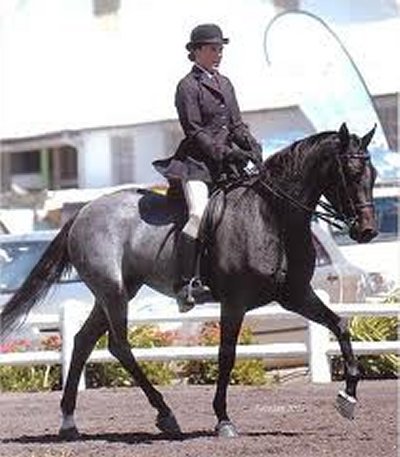
Boer Breed
The history of the Boer horse is as old as the history of the white civilization in Southern Africa. The growth and development of the breed were parallel and inseparably connected to the history of the white settlers. The breed developed shortly after arrival of Jan van Riebeeck in the Cape in 1652. The history of the Boer horse can be subdivided into three phases, namely:
- Jan van Riebeeck until the Great Trek (1652 - 1836)
- Great Trek to the beginning of the Boer war (1836 - 1899)
- Boer War (1899) to present (1995)
The period from the arrival of Jan van Riebeeck until the Great Trek (1652 - 1836) The first horses were imported from Java during Van Riebeeck’s reign in the Cape. The Dutch East Indian Company sold the first horses to the Free Burghers in 1665. Due to inbreeding, Persian Arabs were imported and for about 150 years these horses in the Cape were inbred with the Eastern blood. Thus a definite type of horse, which became known as the Cape horse, developed.
In 1793 Andalusian and Isabella horses arrived in the Cape. It is however unlikely that these horses had a significant influence on the horse population. Already between 1750 and 1800 these horses in the Cape were renowned for their endurance and intelligence and were sought after as a military horse. Lord Charles Somerset further improved and stimulated the breeding process by importing thoroughbred stallions. At this stage there were about 200,000 horses in the Cape. In short, it can be said that the Cape horse was established in these 150 years as a specific type and it was worldwide known and sought after as a military horse.
The period from the Great Trek to the beginning of the Boer war (1836 - 1899) uring the first years of the Great Trek the Cape horse remained unchanged. During the latter half of the century various horse breeds were imported into the Cape and the republics, and probably these horses could have had some influence on the Boer horse, but more so in the Cape than in the northern regions. Examples of these horses are Flemish stallions from the Netherlands, Hackneys, Norfolk Trotters, Cleveland Bays etc.
During this period the Basotho under Moshesh raided the Boer and became a mounted nation. Due to the opening of the Suez canal the main sea routes to India changed and horses were no longer exported to India. This resulted in a decline in the horse breeding. In 1870 a horse-sickness epidemic wiped out many horses. However, above mentioned factors did not have any influence on the horse breeding programs in the republics and breeding of the Boer horse continued.
The period from the Boer War (1899) to present The war again proved the stamina, hardiness and mobility of the Boer horse and Basotho Pony. Under difficult conditions they had to live off the veld and thousands of these horses perished. The First World war and the advent of the bakkie also contributed to the fact that the Boer horse on the farm almost disappeared. The Calvinia breed was developed from the Boer.
Buckskin:
The Family of “Duns”
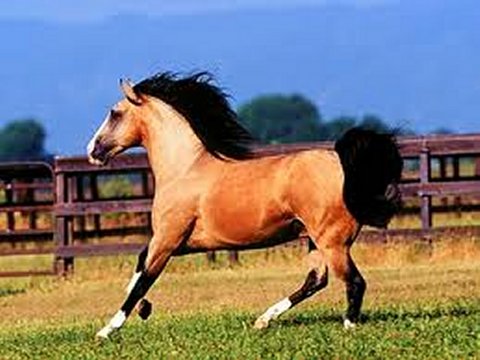
Buckskin Breed
Contrary to the belief of many, the Buckskin or Dun horses are not a mere “color” in the equine world. Those who studied genetics some time ago believed that the Dun horse was the result of a dilution gene, and that breeding Duns and Buckskins to each other often resulted in the birth of an Albino foal. More recent studies have proven this to be in error. The true Buckskin horse may trace his lineage through a direct line of Dun or Buckskin colored ancestors, as far back as recorded history of the animal are available.
The Buckskin is thought to of originated from the Spanish Sorraia. The Norwegian Dun, found today in Norway and other Scandinavian countries is a breed so old that his actual origin is lost in antiquity. However, there are many indications that even he obtained his Dun Coloring from the horses of Spain. The blood of the Sorraia (and the Norwegian Dun as well) filtered into nearly every breed found in the world today, hence the fact that the Buckskin, Dun or Grulla may be found in nearly every breed.
No-the Buckskin horse in not a mere “color.” Buckskins, Grulla and Duns are noted for many qualities that are not characteristic of other types of horses. Their color is an indication of the superior genetic heritage they possess. Buckskins have been long noted for their superior qualities and strength. They have more stamina, more determination, harder feet, better bone, and are generally hardier than other horses. A Buckskin with weak or spavined legs is a rarity. “Tough as wet leather” is a good description of the true Buckskin.
- Buckskin gelding. Golden body color
- Buckskin mare. Light body color showing dun factor or “primitive” markings.
- Dun Mare. Typical of Smutty appearance found in the dun colors.
- Lighter Dun gelding. More golden with smutty appearance.
- Red Dun gelding. Points redder than body color.
- Grulla (Grullo) Stallion. True mouse color
- Family of Buckskin horses, 3 generations showing various shades of gold body colors with the dun factor or primitive markings inherited through the generations.
Camargue:
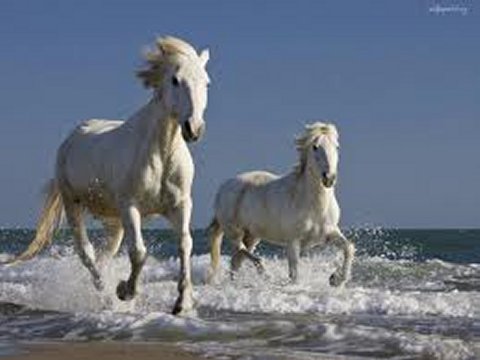 Some say that the Camargue horse has an oriental or Saracen origin, due to the forsaking of Arab horses during the barbaresque invasion in the south of France in the 8th century. We can presume that those horsemen only rode males, not females. So, if crossings have been done, they were absorbed into the local horses. According to some scientific research, the origin of the Camargue horse would be the solutre horse, who lived in a marshy land, near the Quanternary Sea. Both have the same characteristics (same skeleton, same stature…) From his cradle, they went down to the Rhone Delta.
So, we can admit that the foreign crossings had no influence on the present Camargue horse and that he’s really the descendent of the solutre quaternary horse, with the same characteristics, thanks to the deep and permanent action of the environment in which he lives in half-liberty. Main characteristics of the Camargue horse (according to the standard of the specie Approved by the National Stud-Farm in 1978.)
- Rustic saddle-horse.
- Pale gray coat when adult.
- Stature: from 1,35 meters to 1,45 meters.
- Weight: from 300 kg to 400 kg.
The Camargue horses live in marshes. This hard way of life (lack of grass, heat) makes the Camargue horse resistant to abstinence and bad weather (no stable). The only work of the breeder is to choose a stallion who will stay in the breeding the whole year. The breeding happens in total liberty, without any human intervention. The births, from April to July, happen in total liberty too. The foals are born black or dark gray, with a white blaze on the forehead (most of the time).
To 6 months, time of the weaning, he will always follow his mother. He will then lose his birth hairs to become, at 5 or 7, white (exactly pale gray). At 1 year old, he will be lassoed to be branded on the left thigh. Each breeder has a different brand (Blazon, initials, symbols) to recognize his cattle. From 3 to 4 years old he begins breaking in. He will then be caught to be led to a stable, where he will get used to man, and then, gradually, to the saddlery. Now, the Camargue horse is a real saddle-horse. He’s absolutely necessary to the “Guardians” for the work bulls. He’s also used for leisure ridings.
Canadian Horse:
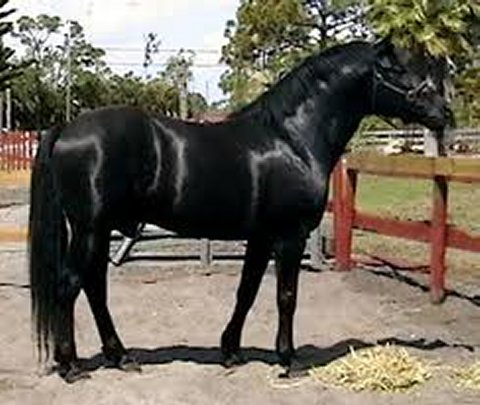
Canadian Horse Breed
The Canadian Horse is a little known national treasure of Canada. This hardy breed descended from horses originally sent to the “New World” by King Louis XIV of France in the late 1600’s. These Norman and Breton horses were felt to be of Arab, Andalusian and Barb ancestry – traits of which can still be recognized in the Canadian Horse today. For hundreds of years, the French horses bred with little influence from outside breeds. They eventually developed into their own distinct breed - the Canadian Horse or Cheval Canadien. Because they evolved under the adverse conditions of harsh weather, scarce food, and hard work, the Canadian Horse remains the sturdiest and most acclimatized horse in Canada today. They are tough, strong horses, tolerant of inclement weather conditions, and are extremely “easy keepers”. Because of these traits, the Canadian Horse is often referred to as “The Little Iron Horse”.
In the mid-1800’s, the Canadian Horse numbered about 150,000 and could be found throughout Canada and the United States. The Canadian was used for crossbreeding to improve the strength and hardiness of other breeds, and helped to found other North American breeds such as the Morgan, Tennessee Walking Horse, Standardbred, and the American Saddlebred. Increasingly, Canadian Horses were exported out of Canada for the Boer war, for working the sugar plantations in the West Indies, and to the United States for use on the stage-lines and for the American Civil War.
The number of horses began to dwindle rapidly. With the advent of mechanized farm machinery, the Canadian Horse almost became extinct. During the 1960-70’s, there were fewer than 400 horses in existence and 20 or less registrations recorded per year. By the late 1970’s, the peril of Canada’s national breed was finally recognized, and efforts were made by diligent breeders to try to bring the Canadian Horse back from the verge of extinction.
Under the leadership of Dr. J.A. Couture, DVM, a few concerned admirers of the “Little Iron Horse” banded together to try and preserve what remained of the breed. Their efforts produced a first stud book in 1886. Progress was slow however, and it was not until 1895, when the Canadian Horse Breeders Association was formed that any real expansion took place. In 1907 under the leadership of Dr. J.G. Rutherford, the Federal Government livestock commissioner, a new stud book was started with improved standards.
In 1913 the Federal Ministry of Agriculture set up a breeding program at Cap Rouge, Quebec, where Albert De Cap Rouge, one of the foundation studs was bred. There were other breeding programs set up in Quebec at St. Joachim and La Gorgendiere that continued to breed the Canadian Horse until 1981. Now, the breed is slowly gaining in popularity, and currently numbers just over 2500 horses in existence. The Canadian Horse is still classified as “critical” on the American Livestock Conservancy list.
The Canadian Horse can be called a general utility animal. From the very beginning of New France it was valuable not only for plowing, but also as a carriage horse. Breeders appreciated the qualities of strength, willingness, and small food requirements. The breed is long lived and still useful at an advanced age. The mares are extraordinarily fertile, and reproduce regularly until the age of 20 or older. The historian Taillon depicts the old Canadian Horse as follows:
“Small, but robust, hocks of steel, thick mane floating in the wind, bright and lively eyes, pricking its sensitive ears at the least noise, going along day and night with the same courage, wide awake beneath its harness; spirited, good, gentle, affectionate, following his road with the finest instinct to come surely home to his own stable. Such were the horses of our fathers.” The Canadian Horse typically stands 14 – 16 hh and weighs 1000 – 1400 lb. Although most frequently black, they may also be dark brown, bay or chestnut. They are characterized by their finely chiseled heads, arched necks, and thick, long, wavy manes and tails – all reminiscent of their Barb and Andalusian ancestry. They have strong, sturdy legs and short cannon bones often exceeding 9” in circumference. Their feet are exceptionally well formed and tough, and generally require little more than routine trimming. Best of all, Canadian Horses are renowned for their kind, sensible, sociable natures, intelligence and willingness to please.
Breed Standard:
Head
Head: Rather short with straight lines, lean, carried high and slanting Ears: Set well apart, thin, active, rather short Forehead and face: Broad and flat Eyes: Wide apart, flush with head, large, moderately convex, bright, kind, active Eyelids: Thin, clean, mobile Nostrils: Large, wide apart Lips: Thin, firm, mobile with delicate skin Mouth: Rather small Jaw: A bit wide through the jaw, broad at the lower angle Jaw cavity: Wide, lean, well hollowed Cheeks:Well developed, firm not fat
Neck and throat:
Throat:
Wide, throatlatch slightly smaller Neck: Fairly arched, broad at base and thin at top, medium length, sides slightly rounded and firmly muscled, gracefully attached to head and shoulders Mane: Abundance of fine hair
Body:
Chest: Broad and deep, legs well apart Ribs: Long, broad, well arched Girth: Well developed Withers: Lean, clean, slightly raised, long Back: Strong, straight, well proportioned, broad, short Loins: Broad, well proportioned to back, well attached to croup, strongly muscled Belly: Somewhat large but not pendulous, following curve of ribs and short,well-rounded flanks.
Frontquarters:
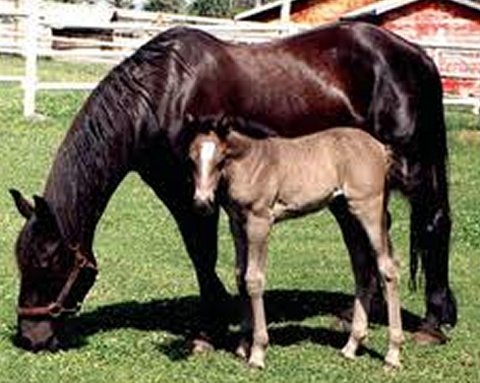 Shoulders: Long, sloping, well muscled Forearms: Long, straight, covered with hard, projecting muscle Elbows: Parallel to axis of body, broad Knees: Lean, long, broad, thick, clean, straight Cannons: Short, flat, thick, lean, clean, perpendicular, tendons well attached Fetlocks: Thick, lean, clean, hair acceptable Pasterns: Thick, average length, moderately slanting Feet: Average size, resting squarely on ground, frontline following pastern’s inclination, heels open, same size, landing vertically on the ground, sole hollow, thick with well-developed fork
Hindquarters:
Hips: Slightly protruding, even Croup: Long, fairly broad, slightly sloped, well muscled Tail: Large at root, attached rather high, carried well, abundance of fine, long hair Stifles: Clean, close to belly, turned slightly outward Thighs and buttocks: Broad, thick, long, descending as close to hock as possible, well muscled Legs: Proportionate length, large, lean, well-developed muscles, protruding slightly to out-side Hocks: Clean, lean, large, thick, flat-faced, parallel to incline of body, very flexible Cannons: Short, broad, flat, lean, clean, perpendicular, tendons well separated from bones, large, firm Fetlocks: Broad, thick, lean, clean Pasterns: Broad, thick, lean, clean, average length, slightly slanting Feet: Same size and qualities as front feet but less developed, oval shape with heels higher and more spread
Evaluation of type:
Height: 14hh to 16hh Weight: Proportionate to height Outline: Shows power and agility through well-balanced and proportioned good quality body parts Quality: Coat soft and shining, mane thick and long, skin soft and elastic, bones dense and clean, joints lean and clean Gaits: Free and vigorous movement, hocks, knees, fetlock, pasterns bending well in higher movements, harmonious Appearance: Graceful carriage and symmetry of shape, stands squarely on ground Temperament: Energetic and spirited without nervousness, calm, docile Colors: Black, chestnut, bay, dark brown
Cayuse Indian Pony:
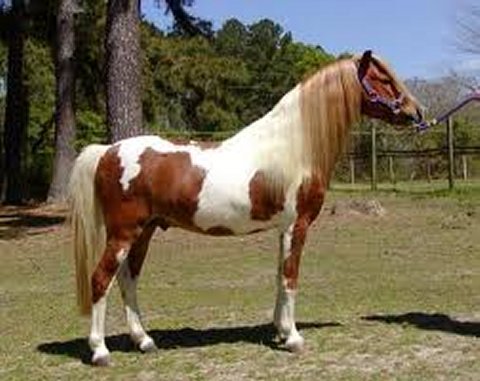
Cayuse Indian Pony Breed
Cattle drives, shootouts and the U.S. Cavalry all added excitement to the Old West. It was the wild horse, however, that became a symbol of everything the West stood for — freedom, stamina and the ability to survive hardship. One little known horse from that period of American history is the famed Cayuse Indian Pony of the Northwest. Although the settlers called most horses raised by the American Indians “cayuse ponies”, the Cayuse Indian Pony of the Northwest is a distinct breed which originated in the 1800′s. Its conformation and its background set it apart from the mustang, Spanish Barb or other wild horses.
Small and stocky, the Cayuse Indian Pony has high withers and an unusually long canon bone. In addition, its distinctly sloped pastern gives it a broken walking gait. Any rider, especially younger children, will find this an extremely pleasant and easy seat. Frederic Remington, who is famous for his artistic representations of the Old West, sketched many of the wild horses he found in the late 1800s. He described the Cayuse Indian Pony as “generally roan in color, with always a tendency this way, no matter how slight.” Remington wrote that his subject was heavily muscled, and while only about fourteen hands high, was still very powerful.
The breed’s history is obscure and difficult to trace. It has been generally accepted that the Cayuse Indian Pony descended from the French-Norman horses imported into Canada in the 1600s. Most of these French horses were Percherons, which the Canadians used to improve their domestic breeds. The Percheron was a good choice — it continues to be one of the only work horses which can easily trot for extended periods of time. Years later, the French Canadians brought their horses into what is now American territory. It was recorded that they bartered their horses in St. Louis with the Pawnee Indians, who then took them further west. Eventually, the Indians crossed their sturdy French horses with the lighter Spanish Barbs to produce a horse which had not only speed, but endurance.
By the 1800s, the Cayuse Indian Pony had become a separate breed. The Cayuse Indians, known throughout the Northwest for their expert horsemanship, continued to develop this French-Spanish Barb strain through selective breeding. Because the French horse had the ability to pass on its tendency for spots or a profusion of white markings, the Cayuse Indians were able to produce some very colorful horses. In fact, the Appaloosa, Paint and Pinto breeds have all been influenced by the blood of the Cayuse Indian Pony.
Today, the breed is seldom seen outside California. Only a handful are even still in existence. Jeff Edwards, co-founder of the Wild Horse Research Center in Porterville, California has gradually been trying to rebuild a herd and protect it from extinction. Over 100 head of Cayuse Indian Ponies were lost several years ago when their pasture land was sprayed with a toxic herbicide. But the Wild Horse Research Center is optimistic about the breed’s recovery. Recently, they donated a Cayuse Indian Pony to the Kentucky Horse Park near Lexington with the hope that more people could discover the saga if this unique horse. They are also working with one small stud bunch at the farm and anxiously await the spring foals each year.
The Center has also established a registry for wild horses and ponies possessing barb blood. The Cayuse Indian Pony can now be officially registered as one of the “Horse of the Americas” breeds. Edwards determined the purity of each horse based on its physical characteristics and charts researched by the Wild Horse Research Center.
Chilean Corralero:
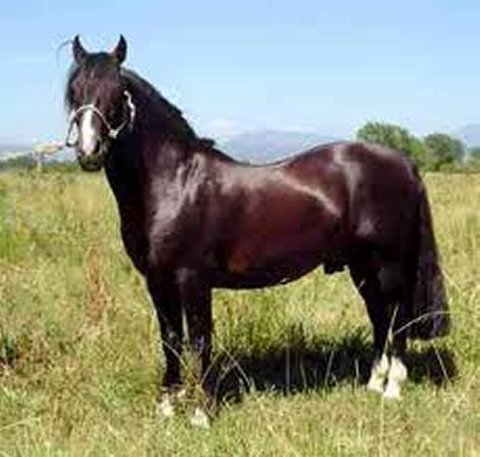
Chilean Corralero Breed
The Chilean Corralero has its origins in the Spanish horse. Spanish horses arrived with the Spanish conqueror Pedro de Valdivia (1541). These horses were obtained from southern Peru (they arrived there with Francisico Pizarro in 1514). In 1557 Garcia Hurtado de Mendoza, the new governor, arrived in Chile with 42 horses of the famous caste of the Guzmanes and Valenzuelas, marking the beginning of the Chilean horse breed. A pure Chilean breed appeared by the beginning of the 19th century, and the Chilean Corralero appeared by the end of the century.
Historical View As in many places of the world, in Chile the horse is a work animal. First it was used by Spanish conquerors for war and for agriculture. When Chile got its independence, the horse was a indispensable partner and used daily; in war for the Army, in the plantations for the countryman and for transportation for everybody. The Chilean Corralero has its major ties in use for working cattle and is now used heavily in Chilean rodeo, which had its origins in the countryside as a game of chasing cattle. It is in this modern event that the Chilean Corralero shows all of its abilities.
Physical Description The Chilean Corralero has a very distinguished appearance. It is a horse with very good proportions for the work that it is destined to do. The characteristics of the Chilean Corralero are a proportional flat head, small and separated ears, eyes and nasal apertures must go behind the facial profile, a fine and small muzzle, manes must be abundant and undulated in tuft of hair and tail, broad and deep chest, a voluminous center and arched ribs, full and short flanks, rounded hindquarters, a hard musculature, short extremities and 1.40 to 1.43 meters height.
All these characteristics make it possible for a horse of 370 kilograms to stop and press a 500 kilograms bull.
Reference:
Hendricks, Bonnie L., International Encyclopedia of Horse Breeds, Univ of Oklahoma Press, 1995


