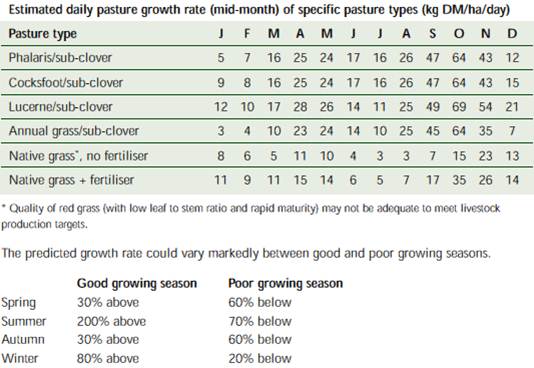
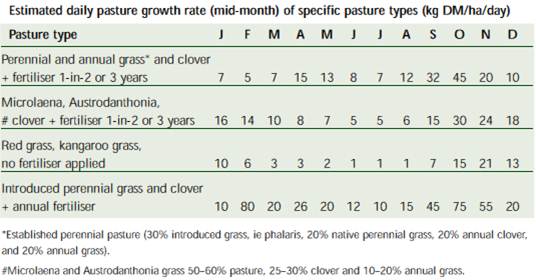
 The mid-monthly estimates of pasture growth rates (kg DM/ha/day) below are for average seasonal conditions for a range of localities and regions across southern Australia. They are from state PROGRAZE manuals, available from your state department of agriculture, and based on a combination of research results, growth predictions and practical experience. Although there is a large variation in rainfall pattern and feed supply within any year, when put together these monthly values reflect pasture growth in a ‘typical’ year for the locality or region without a reference to what growth occurred in the previous month.
These estimates provide a basis to assist with the calculations for short- to medium-term decision making in the beef business. They are intended as a guide and will assist with the calculations in Grazing management options to convert pastures into beef production. It is recommended that the MLA Pasture Ruler (or equivalent) is used to generate similar estimates of pasture growth rates for selected paddocks or the whole farm.
Assumptions
The following assumptions are made for the range of pastures/pasture mixes unless otherwise stated in the estimates:
• Pastures are of moderate to high density;
• Soil has good moisture holding capacity, such as a clay loam;
• Pasture is maintained in an active growth phase at all times during the growing season;
• Pastures are well managed and fertilised to avoid nutrient deficiencies;
• Estimates are for the middle of each month.
The following important variables need to be considered and adjusted against the expected local, district or regional patterns, and practical experience:
– Climate (rainfall and temperature)
– Soil type and variability
– Pasture species
– Fertiliser (nutrient) requirements
– Grazing management
Estimates of pasture growth rate
Unless stated, the estimates are for expected availability of feed of adequate quality and are based on:
• Pastures or pasture mixes with a good balance of legumes, grown on suitable soils;
• Pastures that are well managed to be maintained in the active growth phase so that quality is at a high level;
• Using some form of rotational grazing to enable pastures to rest and grow between grazing events; and
• The growth rate of the pasture, stocking rate, degree of wastage through trampling and fouling and the previous management of the pasture.
In any period the pasture type is capable of growing pasture mass of adequate quantity and quality to suit the requirements of seasonal conditions.
In the following tables, estimates are presented for localities or regions in New South Wales, Victoria, Tasmania, South Australia and Western Australia.
New South Wales – Feed year growth rate patterns
Source: NSW PROGRAZE Manual, Appendix 4, NSW Agriculture (for further information and assumptions on which these tables are based, see NSW PROGRAZE Manual or visit the department’s website, www.agric.nsw.gov.au).
Southern Tablelands and Monaro
The predicted growth rate could vary markedly between good and poor growing seasons.
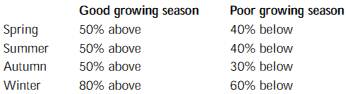
South West Slopes