 KEY MESSAGES
- The gross margins from grazing sheep on mature, grain legume crops such as lupins can be greater than that achieved by harvesting and selling of the grain.
- Weaners can be grazed at considerably higher stocking rates on mature grain legume crops than the stubbles from these crops.
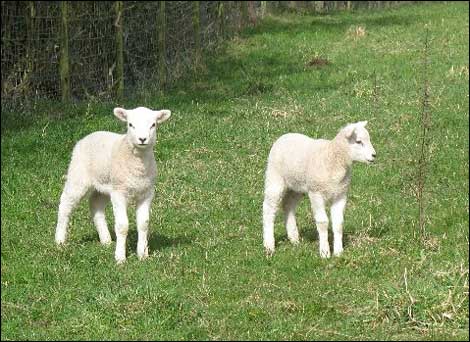
- Young sheep have achieved growth rates of 1.1 to 1.5 kilograms per head per week when grazing mature crops.
Author: Keith Devenish, Department of Agriculture, Northam
Introduction
A strategy to finish prime lambs, or shippers, during summer and autumn is to sow an area to a grain legume crop, allow it to mature and leave it standing for use as sheep feed rather than harvest the grain. Seeds from sweet lupins, faba beans and field pea crops are a good source of energy and have the high level of protein that is needed by fast-growing young sheep. Sheep can be grazed on the mature crop at higher stocking rates than are possible on pastures or stubbles during summer and autumn and still achieve good rates of animal growth.
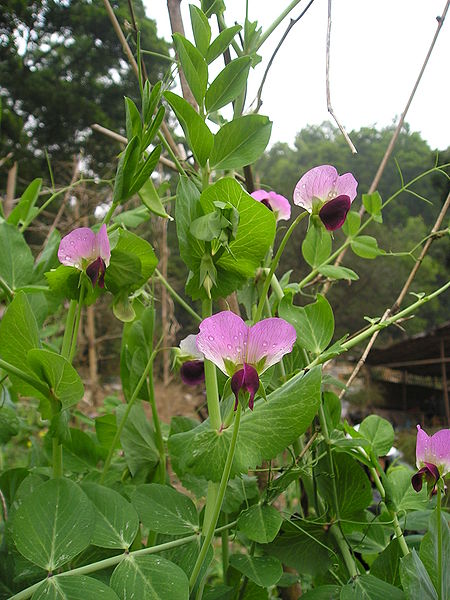
Pea flowers
Results from trials
Pea flowers
A trial using six-month-old crossbred ewe lambs (South Suffolk x Merino) conducted near Northam in 1995/96 indicated that the grazing of mature legume crops (lupins and field peas) could generate greater gross margins per hectare than are possible from harvesting and selling the grain. This result depends on grain type and prevailing commodity prices.
The higher gross margins generated in the trial were mostly due to the use of considerably higher stocking rates than those normally used to graze stubbles. The lambs were grazed for six weeks and the growth rates varied from 1.2 kilograms per head per week for the highest stocking rate of 49 per hectare to 1.5 kilograms per head per week for the lowest stocking rate of 28 per hectare.
Similarly, a South Australian study using young Merino wethers grazed at 40 per hectare for six weeks, found that under dry summer conditions grain legume crops could produce growth rates of more than 1.1 kilograms per head per week (that is, more than 160 grams per day).
Practical application
Sweet lupins are the crop most likely to show promise for this strategy because the grain is usually worth less than the other grain legume crops and there are fewer problems from acidosis. In addition, the stocking rates can be significantly higher on these crops and the grazing period will be longer than that obtained when only the stubbles are grazed.
Animal health issues
Sheep may need to be introduced to the crops gradually to avoid acidosis, especially for field peas or faba beans. They will also need to be monitored closely while grazing lupins to minimise their chances of developing lupinosis (see section on Sheep Health Issues).
Further reading
Warner, K.S.A.; Hepworth, G.W.; Davidson, R.H. and Milton, J.T.B. (1998). Grazing Mature Grain Legume Crops. Proceedings of the Australian Society of Animal Production 22: 217-220.


