 Scrotal Circumference
Measuring the scrotal circumference of young bulls is an accurate, repeatable method to assess current and future sperm-producing ability. The measurement gives an estimate of the weight of the testes, which is directly related to the level of sperm production. Scrotal measurement is also positively correlated with semen volume and quality. Table 1 contains minimum recommended scrotal measurements by breed and age. Bulls with adequate scrotal development for their age have a higher probability of becoming satisfactory breeders than bulls with smaller scrotal circumferences.
Scrotal circumference is of medium to high heritability. Fertility of the male offspring can be increased by selection for this trait. The scrotal circumference of a bull is also positively related to the fertility of his daughters. Heifers from sires with larger than average scrotal circumference tend to reach puberty earlier than those from bulls with smaller scrotal circumferences. Increased scrotal circumference in sires is also favourably correlated to their daughter’s age at first breeding, pregnancy rate and days to rebreeding after calving. Due to low heritability, direct selection for female fertility traits has not been successful. The strong genetic relationship between scrotal circumference and female reproductive traits provides an alternative selection method.
Semen Quality
The criteria commonly used to evaluate semen quality include sperm morphology (structure) and motility (rate and percent of progressive forward movement). Semen volume and concentration can also be used.
Consider the following points when assessing the results of a semen test.
• In the field, correlations between semen quality traits and fertility have been low to moderate.
• The repeatability of semen evaluations of the same bull over time have been low.
Semen tests results for young bulls may not be conclusive. A poor semen test on a bull less than 15 months of age is not a reliable indicator that the bull will have poor quality semen a few weeks later. Seminal qualities may improve dramatically for up to 4 months following puberty.
While a bull must produce some viable sperm in order to be fertile, semen quality is only one aspect of total fertility and must be evaluated in conjunction with all the other factors.
Libido
Libido (sex drive) is a critical component of fertility. It is independent of scrotal circumference, semen quality, body weight, growth rate or masculinity. One method of measuring libido is to measure serving capacity. This is done by exposing the bull to a group of restrained females and recording the number of mounts and services completed in a given time period. This method, however, is time consuming and requires confining a number of females. Serving capacity is not commonly evaluated in Ontario at present.
When 2 or more bulls are used at the same time, in the same pasture, social interactions affect breeding performance. Social rank is related to age and seniority in the herd. The most dominant bulls tend to complete the highest number of services. In this situation, the number of cows serviced may be related more to social dominance than libido as measured by a serving capacity test.
Nutrition
Proper nutrition is necessary for good reproductive performance. Balanced amounts of protein and energy are required for sperm production and the physical activity associated with breeding. Adequate amounts of vitamins and minerals are also important in reproduction.
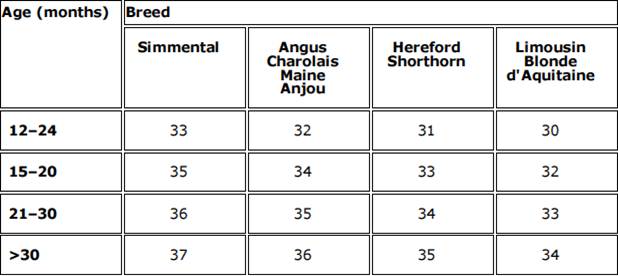
Table 1
During the breeding season, bulls tend to eat less feed than is required to maintain their body weight. At this time they use body fat for energy and may lose up to 68 kg (150 lb). Supplying a grain mix to bulls on pasture is not always effective. Proper pre-breeding nutrition is essential to ensure the bull has adequate reserves for a successful breeding season.
Excessive fat deposits in the scrotum may interfere with temperature regulation. The degree of body fat required to adversely affect sperm production has not been well defined. Extreme fatness has been associated with low serving capacity. On the other hand, large breed yearling bulls starting the breeding season with minimal levels of back fat may have poorer semen quality than similar bulls carrying a moderate level of back fat. The nutrient requirements needed to optimize reproductive performance in breeding bulls needs more research.
Cow to Bull Ratio
To produce a calf every 12 months, the cow must be bred within 80 days after calving. In order to achieve high pregnancy rates in a restricted breeding season, do not overwork the bulls. Table 2 shows the number of cows that a bull of average fertility can be expected to impregnate in a 60-day breeding season on pasture. Cow numbers may be increased by about 30% if cattle are kept in a confined area or are presented to the bull only when in heat. If cow estrous cycles are synchronized and natural mating is used, the cow:bull ratio must be reduced.

Table 2
Summary
Proper selection and management of the beef bull will increase the probability of a successful breeding season. A complete assessment of potential fertility includes an evaluation of structural soundness, reproductive organs, semen quality, libido and nutritional status. Selection for increased scrotal circumference should increase inherent fertility in both male and female progeny.



