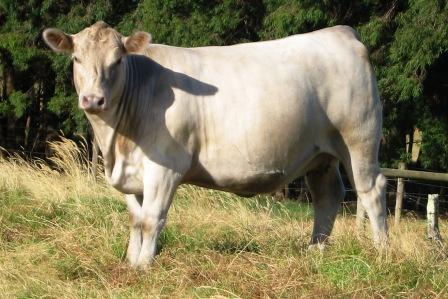
 The ezy cross system relies on having only one bull breed on the property at a time; the breed is changed every two or four years. It is possible to alternate between two, three or several bull breeds, depending on the production aims.
If two sire breeds are used, a 15% increase in the weight of calves weaned per cow joined can be achieved. If several sire breeds are used, a 23% increase is possible.
Features:
- Simplest form of crossbreeding.
- Suits small, one-bull herds or large herds.
- Relies on changing bull breeds every second year.
- Only one bull breed used on the property at any one time. No individual cow identification required.
- Self replacing.
- Breeds must be of similar mature size.
- Suits vealer, store weaner production or steer production.
- Bull costs are relatively high ifbulls are changed every second year.
In the two breed ezy cross herd shown in Example 1, after five generations the offspring will stabilise at 2/3 of the sire breed and 1/3 of the grandsire breed.
This system could just as easily change bull breeds every four years if two breeds were being used.
Two breed ezy cross herd
Market: Vealer production,150-180 kg HSCW (Hot standard carcase weight), 5-9 mm fat depth. Environment: Suit medium rainfall area, 500-700 mm (20-28 inch) with improved pasture.
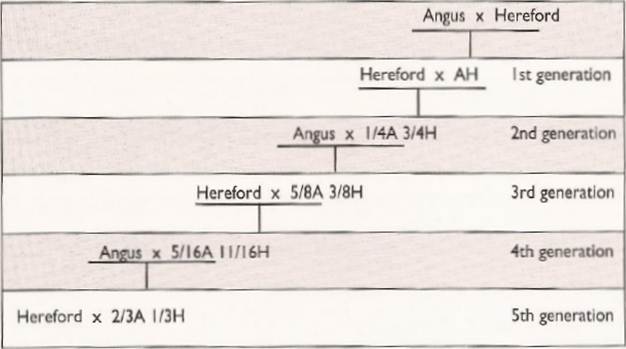
Example 1
An alternative to using two bull breeds, is using several bull breeds which could work as in Example 2.
With the ezy cross system, producers can use as many breeds of bull as they like. The more breeds used, the greater the hybrid vigour. After 3-6 bull breeds have been used, the original bull can be used and the cycle commenced again.
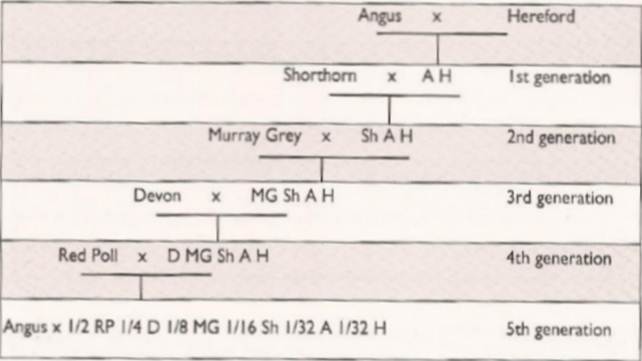
Example 2
Choice of breeds
Breeds with medium size, maturity and milk production have been chosen in these examples to eliminate calving difficulty and to produce a calf which will fatten readily at 9-10 months for the vealer market.
Alternatively, all European breeds could be used in the ezy cross system to produce weaners suitable to be grown into heavy bullocks.
The use of breeds of similar mature size eliminates the need for two separate joining groups and keeps management simple.
Heifers and first-calvers need not be joined to a different, smaller breed bull as the bull breeds used should be suitable for all females in the herd.