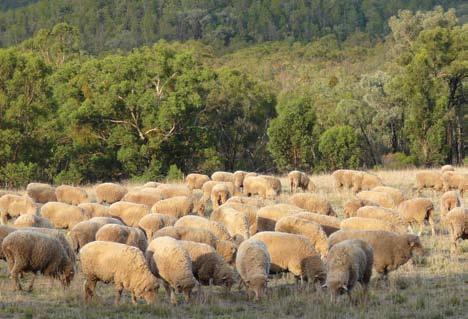
Many native grasses, such as this red grass, produce green summer feed in aseasonal or winter dominant rainfall zones
Background information
Many native grasses, such as this red grass, produce green summer feed in aseasonal or winter dominant rainfall zones
While numerous studies have shown that sowing introduced pastures can be profitable, the exercise is highly sensitive to factors such as: how successful the establishment is; the life of the pasture; what increase in stocking rate or livestock production per hectare is obtained; the gross margin of the enterprise; and the cost of purchasing extra stock to eat the extra feed. A worked example of the factors you might include in a decision to increase pasture production and animal output, is given in tool 1.12 in Plan for Success.
Introduction
Different land classes and production systems (eg, permanent pasture versus pastures in rotation with cropping) require different species mixtures. A practical way of combining soil and paddock information is presented as tool 6.1 in Healthy Soils. Use tool 6.1 to assess the most appropriate pasture system for each area of the farm.
If there is a reasonable base of desirable species present, it is always cheaper and easier to use the grazing management practices outlined in procedure 7.2 to strengthen your existing pastures, rather than sowing a new pasture. The aim of this procedure is to help sheep producers establish a new pasture in paddocks where there are insufficient desirable species present. This will require
greater intervention.
While some clovers or medics and desirable annual grasses (eg, annual ryegrass) can volunteer in pastures in many regions if the conditions are right, introduced perennial species or specialpurpose pastures have to be sown, either on their own, or under a cover crop to reduce costs.
Introducing new species and cultivars can involve a large capital expenditure, typically $150 – $300/ha, depending on sowing method and inputs required. It can also be a risky exercise, particularly in regions where introduced perennial grasses, and even annual legumes, struggle to persist due to harsh or highly variable climatic conditions.
The focus in this procedure is on establishing and managing permanent pastures. There are many different issues to be considered in selecting, establishing and managing pastures in cropping rotations, such as control of pests, diseases and herbicide resistant weeds or N fixation for following crops. These factors often influence pasture selection and management more than the potential for animal production.
Key decisions, critical actions and benchmarks
Assess your pastures to determine if the existing species are limiting pasture growth and quality. A number of pasture assessment techniques are described in tool 7.6.
- Identify desirable perennial grass plants (tool 7.6). If there are some perennial grasses present, you might be able to improve their size, vigour, density and growth rates to the extent that you may not need to sow more plants. As a ‘rule of thumb’, if you have 5–10 phalaris or cocksfoot plants/m2 or 10-15 perennial ryegrass plants/m2 you have an opportunity to use grazing to improve the perennial content of the pasture
- Similar benchmarks probably also apply to native perennial grasses but, at this stage, there is no economic way to re-sow these pastures and therefore grazing management is the only option.
Note: Replacing native species with introduced pastures is restricted by native vegetation protection legislation in some regions.
Check with your regional natural resource management authority (see procedure 5.3 signposts in Protect Your Farm’s Natural Assets) before attempting to replace native pastures. For sowing new pastures, the following three steps are critical to ensure the
investment is profitable.
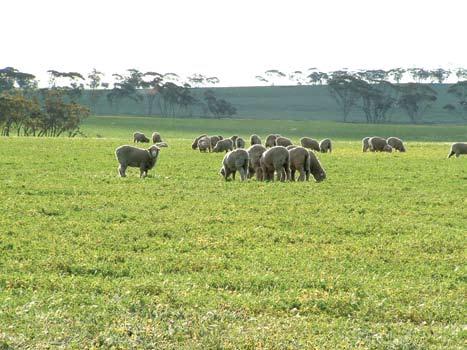 Ensure establishment succeeds the first time
Prepare for sowing at least 12 months before the proposed sowing date. Choose species and cultivars that are well suited to the land class/soil conditions and the rainfall pattern/reliability, ie, tried and proven in your local area. There is a wealth of information on this topic. Sources relevant to different states/regions are listed in the signposts.
Ensure good weed control and an appropriate sowing method. A thorough weed control program in the 3-4 months prior to sowing is a critical success factor. Direct drilling (spray and sow) is a proven, reliable technique for establishing pastures for all regions but is especially suitable in the high rainfall/permanent pasture zone. In the wheat–sheep zone, undersowing can be effective in lowering the cost, although competition from the crop usually results in lower numbers of pasture species establishing per square metre. Refer to the signposts for more information on pasture establishment methods.
Ensure the desirable species persist
The longer a pasture lasts, the more likely it is to be profitable. For longterm perennial pastures, appropriate grazing management and strategic use of fertilisers can help pastures persist almost indefinitely in the high rainfall zone (above 600mm of annual rainfall). Different rules and expectations apply to short-term pastures sown in rotation with crops, but the benefits in livestock production and grain yields still have to outweigh the costs.
Short-term or special-purpose pastures (eg, cereals, brassica, chicory, plantain) have a role in filling specific feed gaps and for finishing lambs. The short-term nature of many of these pastures means that substantial increases in livestock production per hectare (higher stocking rate or heavier lamb turn-off weights or savings in supplementary feed) are required to make sowing the pasture profitable.
Increase livestock production
Pasture introduction cannot increase returns by itself. The value has to come from turning off more wool or meat per hectare or, in fewer cases, by increasing the value of the product. In many cases, the investment in the extra animals needed to utilise the increase in pasture will be greater than the investment in the pasture itself. An additional investment in improved management skills may also
help ensure a strong profit flow from an investment in pasture establishment.
Feed supply can be varied to meet animal demand by introducing new pasture species at critical times, increasing pasture growth as described in this module, or through better alignment of animal demand with pasture supply. Additional investment in improved pasture management skills can help ensure the extra investment in pasture establishment is profitable. Many native grasses, such as this red grass, produce green summer feed in aseasonal or winter dominant rainfall zones.
 Read
Read
Eight Steps to Successful Pasture Establishment: download your copy from the NSW DPI website:
http://www.agric.nsw.gov.au/reader/past-establishment
The MLA Pasture Health Kit: a field kit for producers to assess pasture health in the paddock. The kit can be ordered from MLA by:
- Calling: 1800 675 717
- Emailing: publications@mla.com.au
- Ordering on-line: www.mla.com.au/publications
The Graziers’ Guide to Pastures (2003): sowing and managing profitable pastures in the Southern Tablelands, Central Tablelands, Monaro and the Upper South West slopes of New South Wales.
Download a free copy from the NSW Department of Primary Industries website: http://www.dpi.nsw.gov.au/aboutus/resources/majorpubs/guides/graziers-guide-pastures
Perennial Pastures for Western Australia, 2007: covers all perennial options from herbaceous legumes to temperate and sub-tropical grasses, herbs, fodder shrubs and saltland pastures.
Download the order form from the DAFWA website: http://www.agric.wa.gov.au/content/past/dsc_chapter_1.htm
Evergreen Farming: a WA farmer group showing that perennials can substantially increase farm profitability and also combat water-logging, salinity and erosion. Visit their website at: http://www.evergreen.asn.au/
Species for Profit: will help you choose the most appropriate species and cultivars for your specific site, for pastures, forage or cash crops. Download a copy from the Department of Primary Industries, Water & Environment (DPIWE), Tasmania at: http://www.dpiw.tas.gov.au/inter.nsf/Publications/CART-6NA5S2?open
View
The Grassland Society of Southern Australia: sheep producers can access this website to find a listing of currently available cultivars of grasses and legumes. The list includes details on growth pattern of the cultivar, preferred soil conditions, annual rainfall required and sowing rates. Visit: http://www.grasslands.org.au/
On-line Pasture Planner: information on over sixty species of pasture - temperate and tropical legumes and grasses, pasture herbs and forage shrubs. Visit: www.agric.nsw.gov.au/reader/past-varieties Pastures: information on introduced and native pastures, mixtures, pasture management and weeds for Queensland sheep producers. Visit: www.dpi.qld.gov.au/pastures.
Note: Tools available from source website.


