Chronic Wetness Leads to Problems:
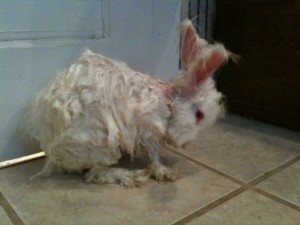
Cronic wetness can lead to rabbit health problems
If a rabbit’s skin is chronically exposed to moisture, then baldness, redness, and crusting may develop, and bacterial infection may follow. The source of the moisture may be the environment (water crocks, leaky water bottle, damp litter, overgrooming by another rabbit) or the rabbit’s own body fluids (urine leakage, fecal staining, drooling due to dental problems, or eye discharge). Infection by the bacterium Pseudomonas aeruginosa sometimes causes a moist dermatitis which shows as a blueish discoloration of the fur. If drinking water is contaminated with Pseudomonas, rigorous disinfection or replacement of water containers is essential.
Finding out where the moisture is coming from and eliminating the source is the first and most important step toward a cure. Steps may include veterinary treatment for problems like arthritis, bladder problems , or conjunctivitis (see HRJ III, 5), or a change in diet to correct obesity (see HRJ III, 3,4). Rabbits with these problems should not be allowed outdoors because they are at for fly strike.
Daily care of the affected area is necessary and may include clipping, cleansing with chlorhexidine or tamed iodine solution, and applying topical antibiotic/anti-inflammatory powder or ointment. Intensive or prolonged use of topical corticosteroids can have systemic effects and should be avoided. Systemic antibiotics (based on culture/sensitivity testing) are needed if there is pus, fever, or lethargy.
Problems associated with bathing rabbits:
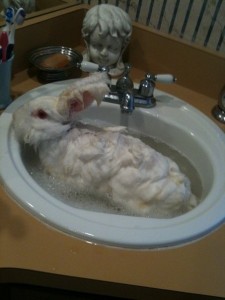
Bathing rabbits can lead to health problems
Even an occasional bath is quite stressful to the average rabbit, and is not recommended.
NEVER-unless your veterinarian advises it to bring down a fever-should you give a sick rabbit a bath. Because seemingly healthy rabbits can have undiagnosed problems, it’s best not to subject them to the stress of a bath. If your rabbit is very badly infested with fleas, there’s a good chance that he is already compromised and may go into shock when bathed. There are many safe alternatives to flea control (see these under “Fleas,” above). Also, a thoroughly wet rabbit takes a very long time to dry, so spot cleaning the dirty area with an application of baby cornstarch (available at any supermarket in the baby section) (do not use talcum, as it is carcinogenic) and then gently combing out the dirt with a fine flea comb is better than a wet bath.
A wet rabbit can quickly become hypothermic. If your rabbit is wet to the skin for any reason, be sure to thoroughly blow dry the bunny until even the undercoat is dry and fluffy. Normal rabbit body temperature ranges from 101oF - 103oF. Because rabbit skin is very delicate, and rabbits are sensitive to heat, never use a blow dryer on a setting higher than “warm,” and constantly monitor the temperature of the air on the bunny’s skin by placing your hand in its path.