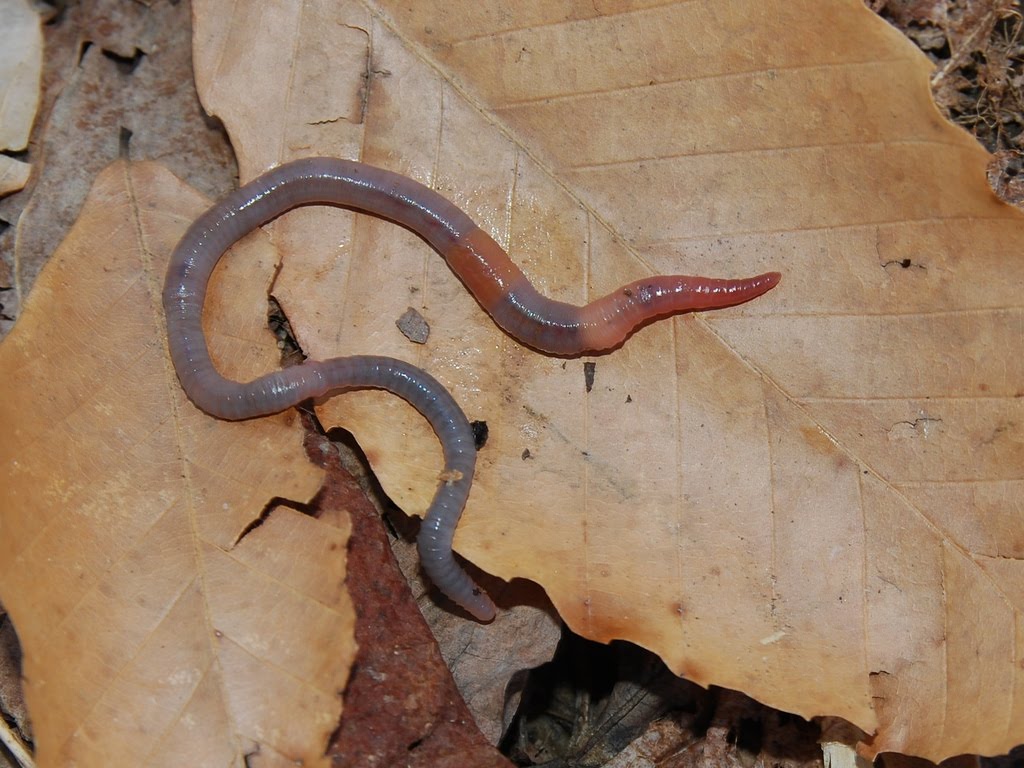
Aporrefoda caliginosa
Soil with a good population of earthworms will also have a large population of bacteria, viruses, fungi, insects, spiders and other soil animals. This is called a biota as related to soil. It will also be rich in humus. All this is invisible to us, walking on the surface, but the presence of the worms and the accompanying biota is shown by the lush plant growth surrounding our feet and the springy soft feel beneath them.
A worm population of 500 per square metre may not be considered large. But if the worms average a weight of one gram each, then there will be 500 grams per square metre, or 5 tonnes per hectare. In a healthy soil, the presence of worms encourages the development of a biomass which can reach a mass six times that of the worms. Therefore, in a hectare containing five tonnes of worms, there can be another thirty tonnes of biota, which amounts to no less than thirty-five tonnes of life beneath the surface far in excess of what you will ever have walking on top of it!
Remember too, that these worms will eat half or more of their own weight daily and, as they do, will till, aerate and fertilise at the rate of more than 90 kilos of soil per square metre each year. This is a massive 900 tonnes of soil per hectare soil which should become progressively more moisture retentive and more productive as the years pass.
EARTHWORMS AND SOIL FERTILITY
However, worms cannot work for you 365 days of the year, but only when the soil is sufficiently moist. But, because worm-populated soils wet more quickly and more deeply and retain their moisture longer, the better it gets, the better it gets.
Crop Yield Comparisons
A good, or even better than average, crop yield in Australia is around five tonnes per hectare:, In Europe, four times this yield can be achieved. There are a number of factors influencing this figure, such as the quantity and reliability of the rainfall, but it is significant that worm populations of 2000 per square metre have been recorded in Europe. It is partly for this reason that England, which has a land area which can be fitted into Victoria several times, can sometimes produce more wheat than Australia.
On 19 December 1971, the Wall Street journal reported the results of soil comparisons made in a joint operation by the US Agency for International Development and the Canadian International Development Centre. They found that worm-populated soil when compared to similar soil without worms produced the following increases in productivity:
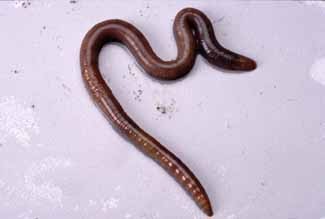
Aporrectodta Trapezoides
Peas 300 per cent
Corn 250 per cent
Potatoes 135 per cent
Rye 64 per cent.
Dr Thomas]. Barrett, an American of remarkable and various talents and a pioneer in the 1930s and 1940s of the practical uses of worms. achieved quite significant results. He reported consistent yields from his Earthmaster Farm of:
Turnips weighing 3.2 kg each Carrots weighing 2.8 kg each Parsnips weighing 1.8 kg each.
He also reported harvests of potatoes of 78 tonnes per hectare and onions of 54 tonnes per hectare. (Source: Gadde, Ronald, Jr., Earthworms for Ecology and Profit, Vol. 1.)
Introducing Earthworms to your Soil
In New Zealand pasture soils, after the introduction of earthworms, researchers have found an immediate increase in productivity, usually to the order of 70 per cent, reducing in time to around 20 to 25 per cent, providing the numbers of earthworms are kept at least constant. (Source: Stockdill, S. M. J., ‘Effects of introduced earthworms on the productivity of New Zealand pastures’,)
How can we explain this increase in soil productivity?
Later, I will describe how different species of worms are found working harmoniously together, and how their functions and behaviour differ slightly between species, even though basically all burrow through the soil. This tunneling results in soils of different strata being mixed together and quantities of this mix being deposited on the surface as castings. After a time, the surface deposit builds up as a thick stoneless layer.
Making Topsoil
In Europe worms can deposit a 200 mm thick layer of topsoil over one hundred years. Here in Australia because few of our indigenous worms surface frequently to deposit their castings, the surface rate of build-up due to worms is closer to 25 to 40 mm. This difference would be due not just to the different species of worms, but also to Australia’s harsher environment, the sunnier, dryer climate resulting in an uncomfortably higher surface temperature, and also the ancient nature of the soil.
Wormless pastures develop a root mat just beneath the surface, which can become quite dense and act as a barrier to the penetration of rainwater, Worms break down and dissipate this mat, thus permitting easy entry of rainwater and, of equal importance, oxygen into the soil. The result is a healthier, more moisture retentive soil which can support more vigorous plant growth. (See also the photographs in the colour pages.)
Tragically, our Australian indigenous worms, having evolved in relatively nutritionally poor soils, have no liking for improved pastures. It is imported worms like Aporrecfodea caliginosa, Aporrectodta trapezoides (European), Lurnbricus rubellus (a European manure worm which does quite well in richer soils) and Microscaex dubius (probably South American), together with some twenty-five to thirty other species now widely distributed throughout the improved soils of Australia which are our beneficial agricultural worms. Many of these were brought in unknowingly on the roots of plants by the early settlers. Had this introduction been a planned and deliberate campaign, say as with cattle and sheep, then the numbers and species of worms in our soil could by now have been much increased



