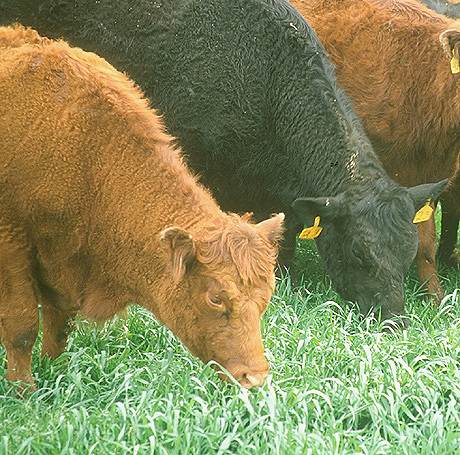
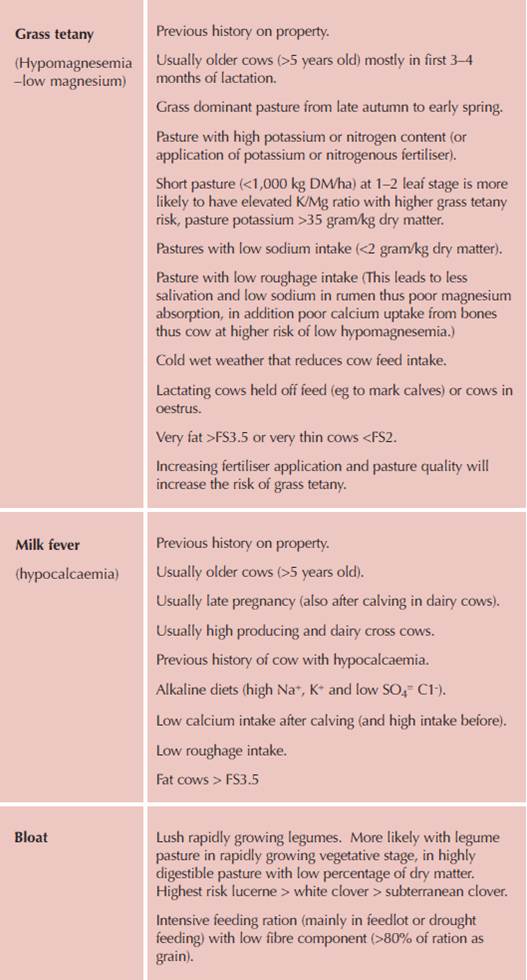
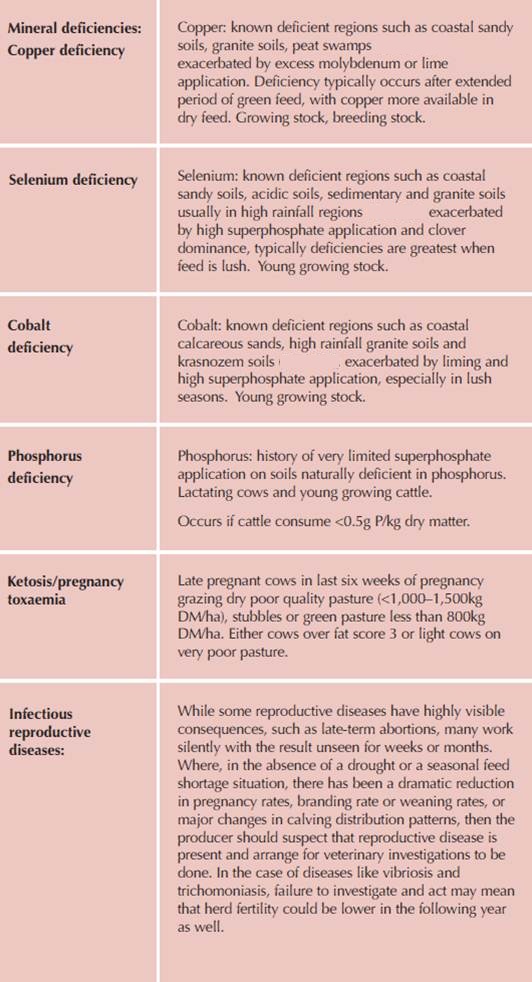
 The table below will help you identify the conditions likely to influence the development of the widespread diseases that can lead to significant economic loss when left untreated or treatment is delayed, such as:
• Gastrointestinal parasites
• Liver fluke
• Grass tetany (hypomagnesemia)
• Milk fever (hypocalcaemia)
• Bloat
• Mineral deficiencies (copper, cobalt, selenium, phosphorus)
• Ketosis/pregnancy toxaemia
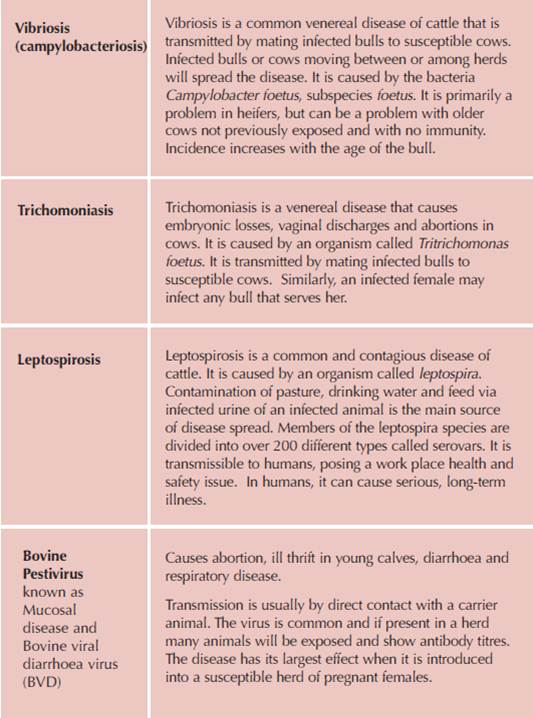
Important reproductive diseases include:
• Vibriosis
• Trichomoniasis
• Leptospirosis
• Bovine pestivirus or mucosal disease
Conditions that exist for the development of common cattle diseases
If suitable conditions exist for the development of disease on your farm, management strategies should be adopted to prevent the listed diseases occurring.
With all diseases and nutritional deficiencies, assess the risk based on previous local district history (seek information from local veterinarian, state government officers and local consultants) and if available property history.
Intensification of the beef production system is likely to increase risk of diseases such as gastrointestinal parasitism, bloat and reproduction and exacerbate some trace mineral deficiencies (copper, selenium, cobalt).