Introduction
The introduction of machine harvested coffee in Australia has impacted to revive an industry that declined due to hand harvesting labour costs that weren’t competitive with the costs of employing lower paid workers in other countries. Many coffee estate owners and companies have recognised the economic potential of on site retail marketing in the form of coffee shops that can further contribute to their retail and wholesale marketing image, advertising and tasting of their own unique blends of coffee. The following coffee recipes will likely be of interest for retail, educational or hobby purposes…or merely for reasons of enjoying good company and pleasurable coffee sampling.
Ways to Drink Coffee
Americano: A single shot of espresso with about 7 ounces of hot water added to the mix. The name for this coffee drink stemmed from an insult to ‘uncouth’ Americans who weren’t up to drinking full espressos.
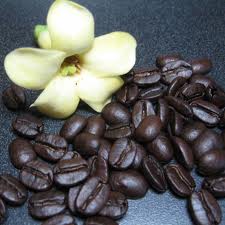
Flavoured Hawaiian Coffee
A Shot in the Dark: See ‘Hammerhead’.
Black coffee: A drip brew, percolated or French press style coffee served straight, with no milk.
Cafe au Lait: Similar to Caffe Latte, except that an au lait is made with brewed coffee instead of espresso. Additionally, the ratio of milk to coffee is 1:1, making for a much less intense taste.
Cafe Breva: A cappuccino made with half and half milk, instead of whole milk. The theory is that the mix gives a richer, creamier flavor. You should be aware, before trying this for yourself, that half and half is much harder to foam.
Caffe Latte:Essentially, a single shot of espresso in steamed (not frothed) milk. The ratio of milk to coffee should be about 3:1, but you should be aware that latte in Italian means ‘milk’, so be careful ordering one when in Rome. Skinny Latte: A reduced calorie latte made with steamed non-fat milk and artificial sweeteners, such as Splenda or Equal. Soy Latte: made with steamed soy milk.
Cafe Macchiato: A shot of espresso with steamed milk added. The ratio of coffee to milk is approximately 4:1.
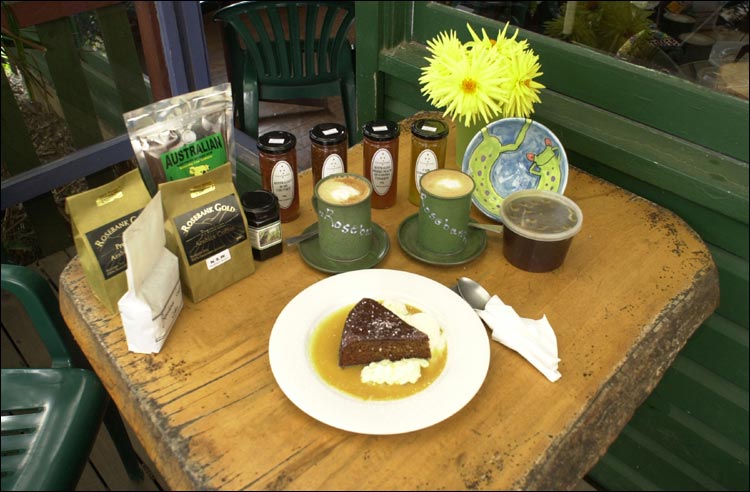
A Lismore, Australia coffee shop selling coffee from a nearby coffee plantation
Cappuccino: Usually equal parts espresso, steamed milk, and frothed milk, often with cinnamon or flaked chocolate sprinkled on top. Some coffee shops will add more milk than that so that the customer will get a bigger drink out of the deal, but that makes the coffee itself far weaker. Click here for how to make Cappuccino
Double, or Double Shot: Just as it sounds, this is two shots of espresso mixed in with the regular amount of additional ingredients. For example, if you were going to make a double hammerhead, you would put two shots of espresso into a coffee cup and fill it with the drip blend, rather than the usual single espresso shot.
Dry Cappuccino: A regular cappuccino, only with a smaller amount of foam, and no steamed milk at all.Espresso Con Panna: Your basic standard espresso with a shot of whipped cream on top.
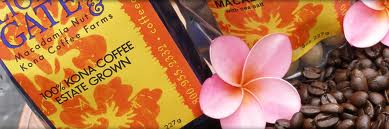
Hawaiian Kona coffee
Flavored coffee: A very much ethnic tradition, syrups, flavorings, and/or spices are added to give the coffee a tinge of something else. Chocolate is the most common additive, either sprinkled on top or added in syrup form, while other favorites include cinnamon, nutmeg, and Italian syrups.
Frappe: A big favorite in parts of Europe and Latin America, especially during the summer months. Originally a cold espresso, it has more recently been prepared putting 1-2 teaspoons of instant coffee with sugar, water and ice. The brew is placed in a long glass with ice, and milk if you like, turning it into a big coffee milkshake.
Greek Coffee: See Turkish Coffee.
Half-caf: Beverage made with half and half parts caffeinated beans and decaffeinated beans.
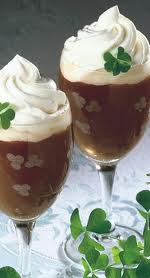
Irish coffee
Hammerhead: A real caffeine fix, this drink consists of a shot of espresso in a regular-sized coffee cup, which is then filled with drip coffee. Also known as a Shot in the Dark, although many cafes rename the drink further to suit their own needs.
Iced coffee: A regular coffee served with ice, and sometimes milk and sugar.
Indian (Madras) filter coffee: A common brew in the south of India, Indian filter coffee is made from rough ground, dark-roasted coffee Arabica or Peaberry beans. It’s drip-brewed for several hours in a traditional metal coffee filter before being served. The ratio of coffee to milk is usually 3:1.
Instant coffee (or soluble coffee): These grounds have usually been freeze-dried and turned into soluble powder or coffee granules. Basically, instant coffee is for those that prefer speed and convenience over quality. Though some prefer instant coffee to the real thing, there’s just no accounting for taste.
Irish coffee: A coffee spiked with Irish whiskey, with cream on top. An alcoholic beverage that’s best kept clear of children, but warms you up plenty on a cold winter night.
Kopi susu: Found in (at least) Malaysian Borneo and Indonesia, very similar to Ca phe sua nong. Literally, kopi susu means “coffee milk”. Served in a glass kopi susu can be made simply by mixing black coffee (arabica) with about a quarter to a half a glass of sweetened condensed milk then let stand to cool and allow the grounds to sink on the bottom. You should not drink this to the end unless you want to “eat” the ground coffee. Kopi Turbruk is as above but uses sugar instead of sweetened condensed milk.
Kopi Tubruk: An Indonesian-style coffee that is very similar to Turkish and Greek in that it’s very thick, but the coarse coffee grounds are actually boiled together with a solid piece of sugar. The islands of Java and Bali tend to drink this brew.
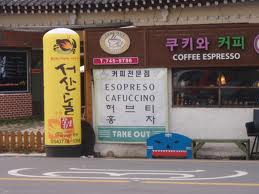
Seoul coffee
Liqueur Coffee: is a coffee brew with a 25 ml shot of liqueur. Usually served in a clear, clean, pre-heated, liqueur coffee glass with the coffee and cream separated for good visual and taste effect. The liqueur of choice is added first with a teaspoon of raw cane sugar mixed in. The glass is then filled to within an inch of the top with good, strong, fresh filter coffee. Fresh, chilled, slightly whipped cream is then poured carefully over the back of a cold teaspoon, so that it floats on top of the coffee and liqueur mixture. The sugar is required in the coffee mixture to help the cream float.
Lungo: One for the aficionados, this is an extra long pull that allows somewhere around twice as much water as normal to pass through the coffee grounds usually used for a single shot of espresso. In technical terms, it’s a 2-3 ounce shot.
Macchiato: (see Cafe Macchiato)
Melya: A coffee mixed with 1 teaspoon of unsweetened powdered cocoa and drizzled honey. Sometimes served with cream.
Mocha: A popular drink is basically a Cappuccino or Latte with chocolate syrup added to the mix. Sweeter, not as intense in coffee flavor, and a good ‘gateway’ coffee for those who don’t usually do the caffeine thing.
Oliang/Oleng: A stronger version of Thai coffee, Oliang is a blend of coffee and other ingredients such as corn, soy beans, and sesame seeds. Traditionally brewed with a “tung tom kah fe”, or a metal ring with a handle and a muslin-like cloth bag attached.
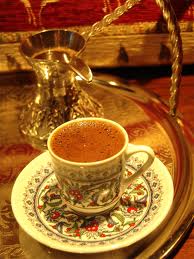
Turkish coffee
Ristretto: The opposite of a Lungo, the name of this variety of coffee means ‘restricted’, which means less water is pushed through the coffee grounds than normal, even though the shot would take the same amount of time as normal for the coffee maker to pull. If you want to get technical, it’s about a 0.75 ounce pull.
Soluble Coffee: See Instant Coffee.
Turkish Coffee (known also as Greek Coffee): Made by boiling finely ground coffee and water together to form a muddy, thick coffee mix. The strongest Turkish coffee can almost keep a spoon standing upright! It’s often made in what’s known as an Ibrik, a long-handled, open, brass or copper pot. It is then poured, unfiltered, into tiny Demitasse cups, with the fine grounds included. It’s finally left to settle for a while before serving, with sugar and spices often added to the cup.
Vienna coffee: is the name of a popular traditional cream based coffee beverage. It is made by preparing two shots of strong black espresso in a standard sized coffee cup and infusing the coffee with whipped cream (as a replacement for milk and sugar) until the cup is full. Then the cream is twirled and optionally topped off with chocolate sprinklings. The coffee is drunk through the cream top.
Vietnamese style coffee: A drink made by dripping hot water though a metal mesh, with the intense brew then poured over ice and sweetened, condensed milk. This process uses a lot more coffee grounds and is thus a lot slower than most kinds of brewing.
White coffee: A black coffee with milk added.
Additional Flavours
Gingerbread Latte:An Autumn/Winter seasonal blend of steamed milk, espresso, gingerbread syrup, topped with a pinched of nutmeg, cinnamon, and vanilla powder. Guillermo:Originally, one or two shots of hot espresso, poured over slices of lime it can also be served on ice, sometimes with a touch of milk. Raspberry Mocha: A regular mocha with raspberry flavoring. Red Tie:A traditional Thai Iced Tea, which is a spicy and sweet mixture of chilled black tea, orange blossom water, star anise, crushed tamarind, sugar and condensed milk or cream, with a single shot of espresso. White Chocolate Mocha: sometimes referred to as “White Mocha”, is a sweet mixture espresso, steamed milk and white chocolate syrup. The sugary drink is often topped with whipped cream. Yuanyang: sometimes also called Ying Yong, a popular beverage in Hong Kong, made of a mixture of coffee and Hong Kong-style milk tea, originally served at dai pai dongs (open air food vendors) and cha chaan tengs (cafe) now available served hot or cold, in various restaurants. “Yuanyang” which refers to mandarin ducks, is a symbol of conjugal love in Chinese culture. This pairing of two unlike ( differently sexed) items is used symbolically to name this drink.