 Introduction
One of the major challenges facing many beef producers is the development of replacement heifers for the breeding herd. Research has shown that the lifetime productivity of beef females can be increased by calving heifers at two years of age. This goal can be achieved by producers willing to provide the required nutrition and management to the growing replacement heifer.
Age at First Calving
Producers should aim to calve their replacement heifers by two years of age. This practice will improve the profitability of the beef operation by offsetting the high costs of feed, labour and investment in raising replacements. To produce the maximum pounds of calves in her lifetime, a cow must calve each year starting as a two-year-old. Research from Oklahoma shows that this is indeed true-heifers calving at two years of age produced an extra 330 pounds of calf on a lifetime basis over heifers calving at three years of age.
Nutrition and Development of Replacement Heifers
Optimum reproductive performance and lifetime productivity of a cow are clearly tied to proper nutritional management of replacement heifers during growth and development of structure and reproductive function.For heifers to reach puberty at 14-15 months of age, they must be adequately grown, but not overconditioned. Three factors associated with puberty in the replacement heifer are weight, age and breed. Weight is thought to be the major determining factor affecting puberty in heifers at 14-15 months of age. Larger, later maturing breeds reach puberty at an older age.Producers, who have the most control over weight gain in their cattle, should establish target weights at which heifers are to be bred and develop a feeding program to allow heifers to reach that goal in good condition. Target weight will vary with each breed.
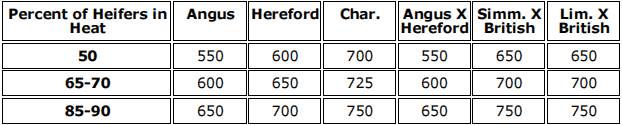
Replacement beef heifers should attain 65 to 70% of their potential mature weight by the time they are bred at 14-15 months of age. This would mean that heifers should gain an average of 1.25 to 1.75 lb. per day from weaning to first breeding or 250 to 350 lbs. during the first winter (depending on breed). For most breeds and crosses, heifers should weigh from 650 to 850 lbs. at breeding time.
Conception rates in heifers will vary depending on how well they have been grown. If heifers are to be good lifetime producers they must calve early. To achieve this they must show heat and conceive early in the breeding season.
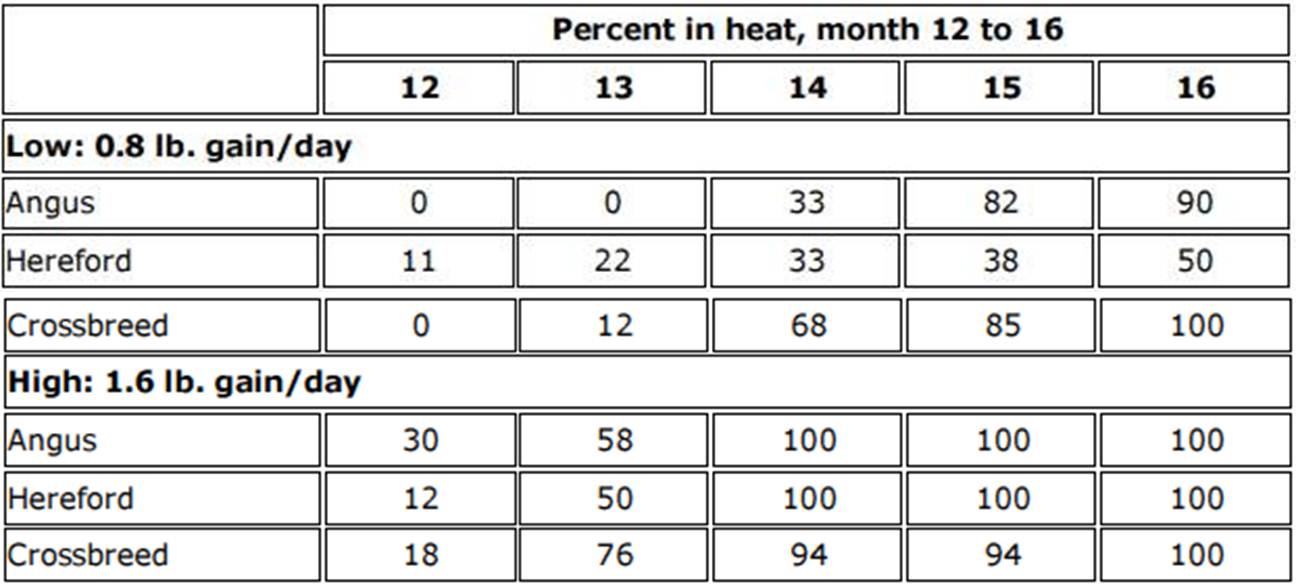
Mismanagement through over or under feeding during the critical phases will adversely affect lifetime productivity. Energy intake beyond needs for structural and muscular growth in heifers may cause problems regarding their potential of milk production (e.g. creep feeding). Research has shown that negative relationships between maximum probable producing ability of dams and milk production in offspring do exist.
The basis of the problem is the infiltration of fat into the udder which may later restrict future milk producing ability of these heifers as cows. Therefore, when selecting and feeding for milk production, the optimal level rather than maximal level must be the target to avoid impairing production of replacement heifers.
Daily Nutrient Requirements for Replacement Heifers (growing at 1.25 lb/day)
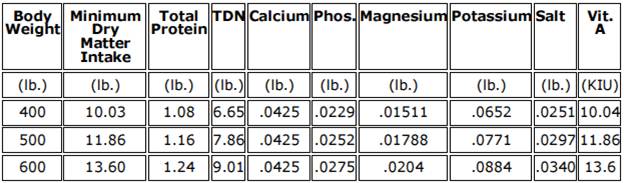
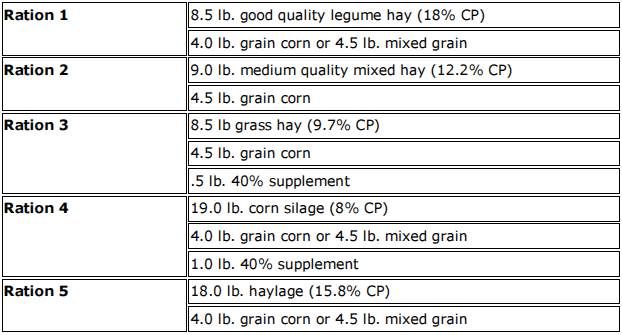 Note: Monitor body condition, especially with medium frame heifers and make adjustments to the feeding program if required (e.g. less grain).
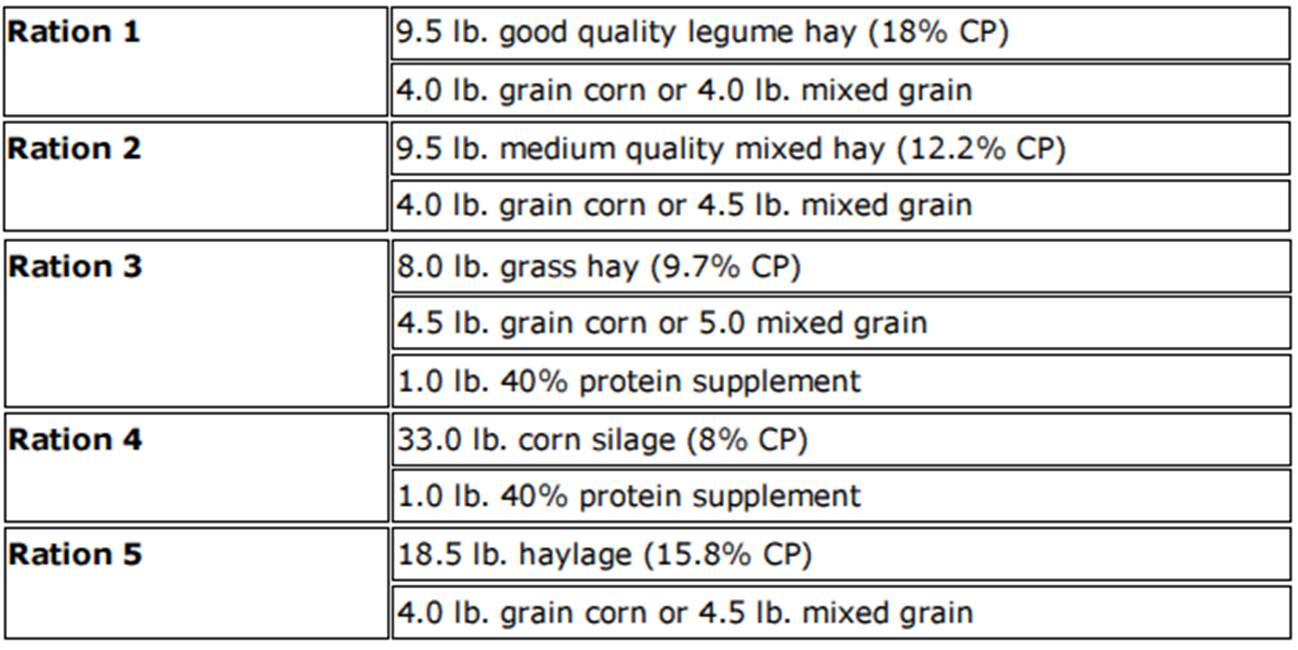
Feed Analysis and Ration Formulation
Feed analysis of home grown feeds provides the necessary information to properly formulate rations to meet the nutritional needs of the growing replacement heifer. Assistance with ration formulation is available from all OMAF agricultural offices, feed companies, etc.
Mineral and Vitamin Requirements
With accurate feed analysis and the use of a ration formulation program excesses or deficiencies can be identified in the mineral and vitamin area. Decisions regarding appropriate mineral application can be made more precisely. Mineral and vitamin requirements have to be met to ensure adequate growth and fertility. Commercial mineral mixes can either be fed on a free choice basis or mixed with the ration.
Monitor Growth
Monitoring growth with periodic weighing will tell how well heifers are growing on specific rations. Thin or overconditioned heifers should be avoided. Visual appraisal of heifer body condition can also be important in making adjustments to the feeding program. As mentioned earlier research has indicated that overconditioning replacement heifers can impair future milking ability and if continued could also result in increased calving difficulty.
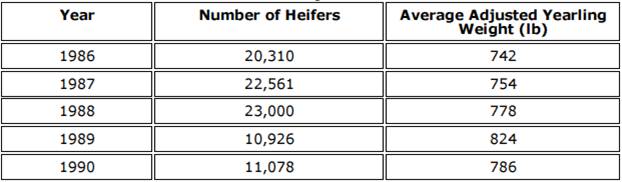
Table BHIP Yearling Heifer Performance
Breeding Replacement Heifers
Replacement beef heifers should be bred three weeks prior to the breeding of the mature cow herd since heifers require a longer period of time to begin cycling and show heat after calving than mature females. Heifers bred before the main cow herd, will calve earlier in the season and should be cycling normally by the time the main cow herd is being bred the following year, provided adequate nutrition and management are in place. If heifers are to be good lifetime producers, they must show heat and conceive early in the breeding season. A breeding season of forty-five days should be adequate for well grown heifers. Pregnancy check heifers and cull those that are open.


