FINANCIAL REQUIREMENTS:
 In conjunction with the coffee research and development program, an economic assessment of coffee production in Australia was undertaken (Hosegood et al., 1988, and Hosegood, 1991). These economic studies estimated farm profitability for machine-harvested coffee, establishment costs, rates of return and break-even yields and prices. The studies below are used to answer the most common questions about financing coffee plantations.
What is a viable plantation size?
The studies investigated the profitability of a new 20 ha plantation and a 10 ha plantation on an existing farm, with both farms using contract harvesting. Both studies found that these plantations were marginal at the then market prices of $3 to $4/kg green bean. Smaller properties than this were unlikely to be profitable.
If you have to buy a harvester you need at least a 40ha plantation to be profitable.
How much does it cost to set up?
A new 20 ha plantation required a capital outlay of at least $560,000 before any income was received. A 10 ha plantation required $135,000 until the first harvest, and an additional outlay of $20,000 - $100,000 if a processing factory was required.
When can I expect a return?
First commercial yields are expected in the third year after planting seedlings in the field.Full commercial yields are expected after four to five years where management and growing conditions are good.
How long does a plantation last?
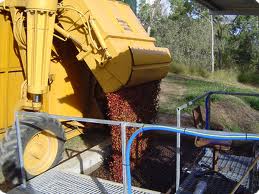 Coffee is a long-lived crop and can be expected to yield for 50 years. With machine-harvesting the plantation is regularly ratooned or pruned to rejuvenate the bearing branches. This occurs every six to ten years depending on location and cultivars grown. In practice, plantations are likely to be replanted sooner than every 50 years as managers take advantage of improved cultivars and agronomic techniques.
How much can one person handle?
If you machine-harvest you can handle 40 ha or more with casual labour during planting and harvesting. If you hand-pick you can handle 0.4 ha per person.
How is the crop sold?
The crop is usually sold as green bean or roasted coffee. Green bean is sold to wholesalers or direct to roasters who determine prices by the world price
and coffee quality. They assess quality by bean size, freedom from defects and liquor quality. Roasted coffee is sold directly to retailers or consumers. Prices are significantly better if you sell the bean as specialty or gourmet coffee. No central marketing group body or co-operative exists as yet so individual growers must develop individual marketing plans for wholesalers, retailers, consumers and/or the export market.
What is the size of the market?
The domestic market for roast and ground coffee is 7,000 tonnes a year and is expanding as coffee-drinking habits change. Total market size, including instant coffee, is 32,000 tonnes. The 1993 Australian crop was 130 tonnes. Queensland produced 120 tonnes and New South Wales 10 tonnes.
How profitable is coffee?
The economic studies estimate that for plantations to be profitable, yield must exceed 2,000 kg green bean/ha and the coffee must return $4/kg greenbean. Historically, the world price for coffee is cyclical, varying between $2 and $10/kg green bean. Australian growers have usually sold their coffee for well above the world price.
Where can I find more information?
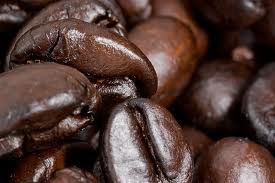
Coffee beans
The studies used to determine the profitability of coffee production are available through the Queensland Department of Primary Industries and NSW Agriculture libraries. Each of the studies provides the framework to update the profitability analysis for coffee. Since publication, there have been some significant improvements in coffee growing, harvesting and processing systems which will influence profitability.
Machine-harvested coffee yields at Walkamin Research Station have recently consistently exceeded 2,000 kg green bean/ha. Costs of production have declined. The harvester cost has reduced from $200,000 to $120,000 while harvester speed and efficiency have increased by 150%. At the time of publication world coffee prices were increasing and well above $5/kg green bean.
MANAGERIAL REQUIREMENTS:
Individual coffee growers require access to agronomic, mechanical, financial and marketing expertise. In Australia, coffee has been grown at the extremes of its climatic adaptability, particularly in Queensland, so growers have had no margin for error in crop management. Australian growers must have a knowledge of flowering and fruiting behaviour of the trees and need to monitor nutrition and irrigation programs regularly. Australian coffee harvesting and processing is highly mechanised, so growers need access to mechanical expertise to maintain equipment during the hectic harvest period.